Dance Card Entry 1: Botshabelo Cultural Village
Heritage Site Snapshot
Name: Botshabelo Cultural Village
Date: January 18, 2026
Location: Middelburg, Mpumalanga, South Africa
Start Time: 12:50 PM
End Time: 1:37 PM
Type of Experience: Cultural heritage site / contested heritage landscape
Thick Description
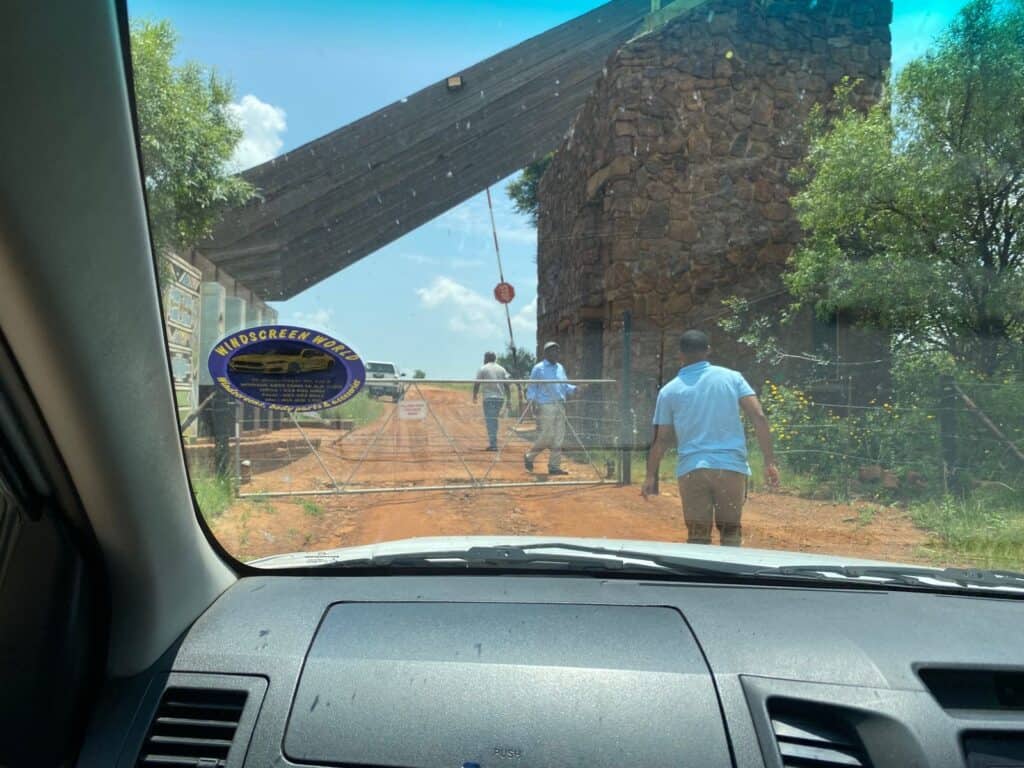
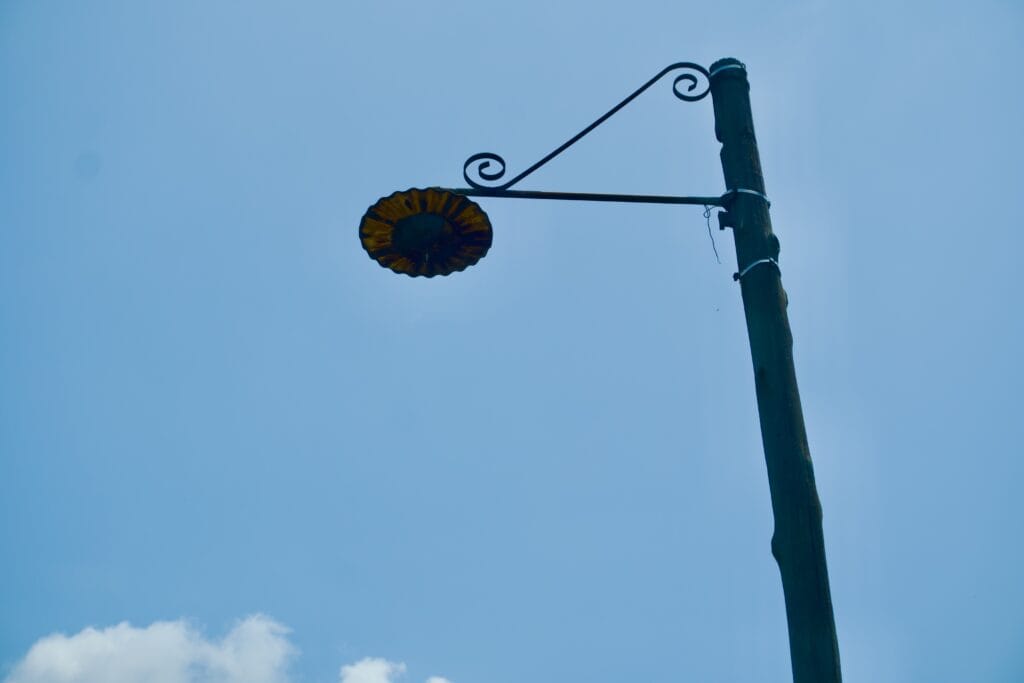
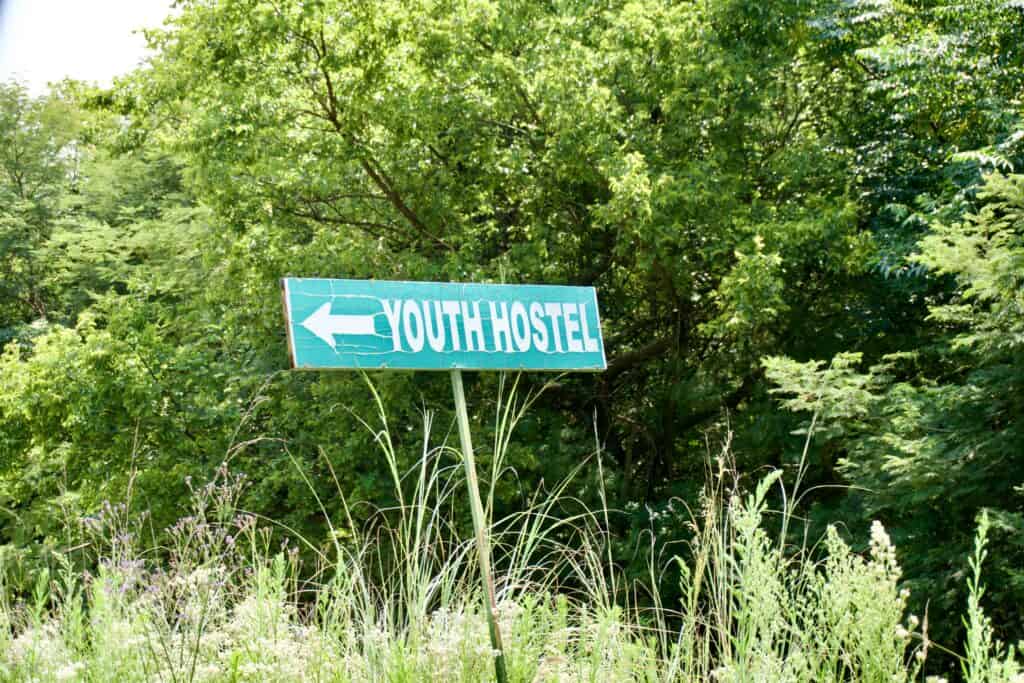
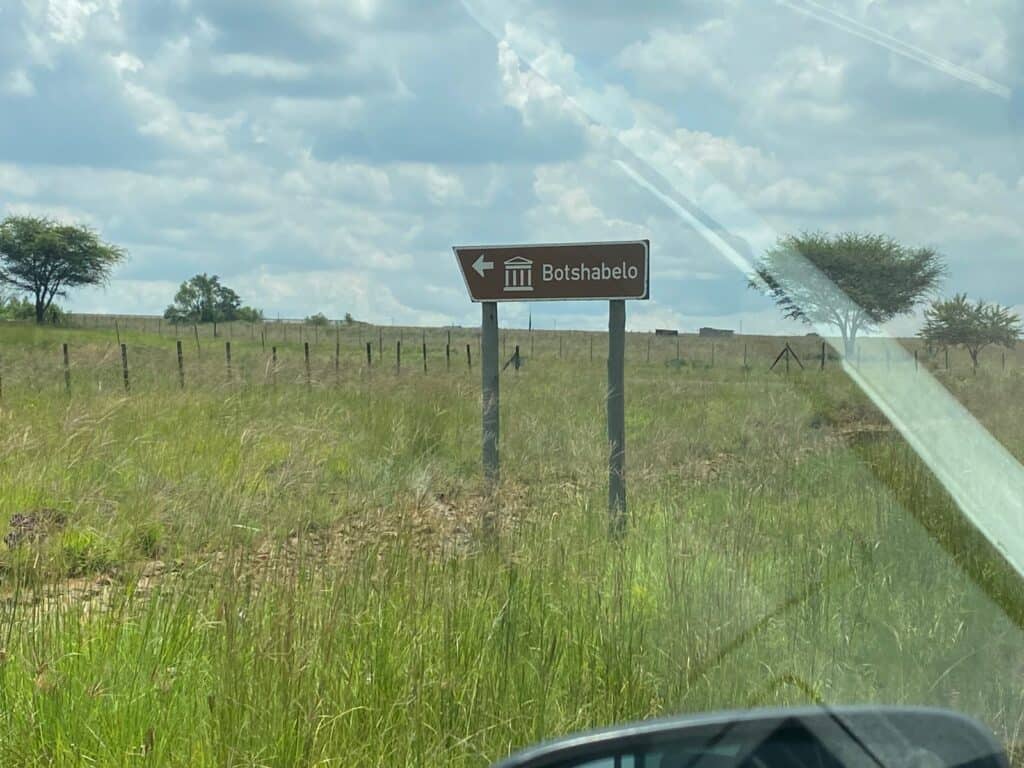
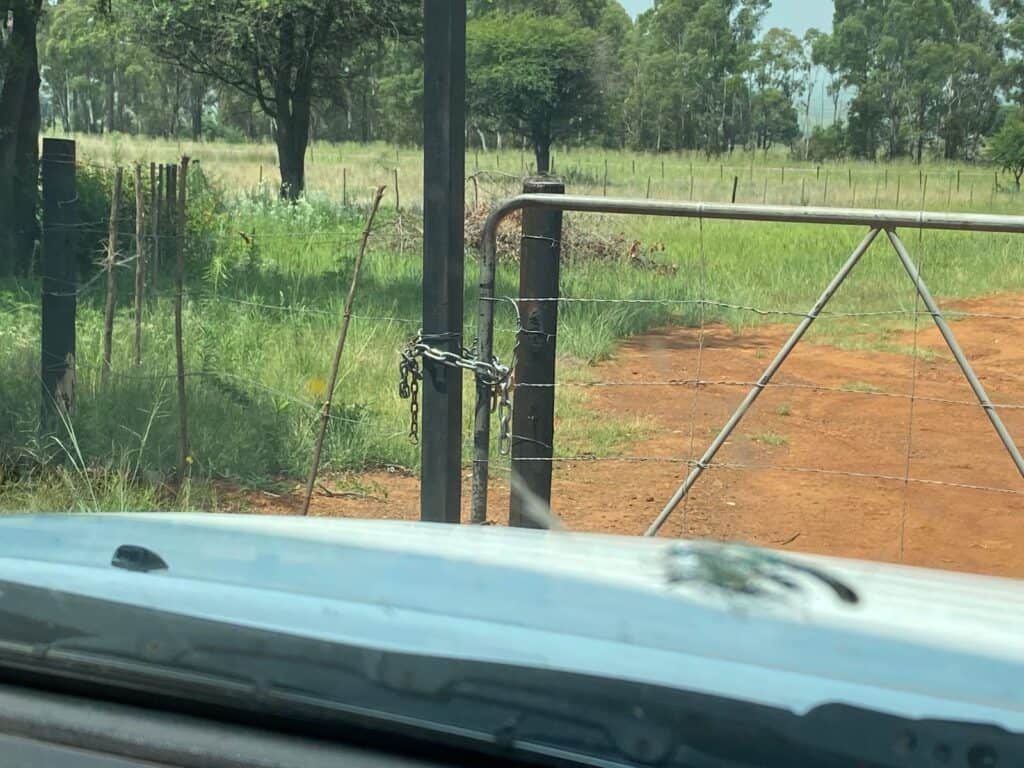
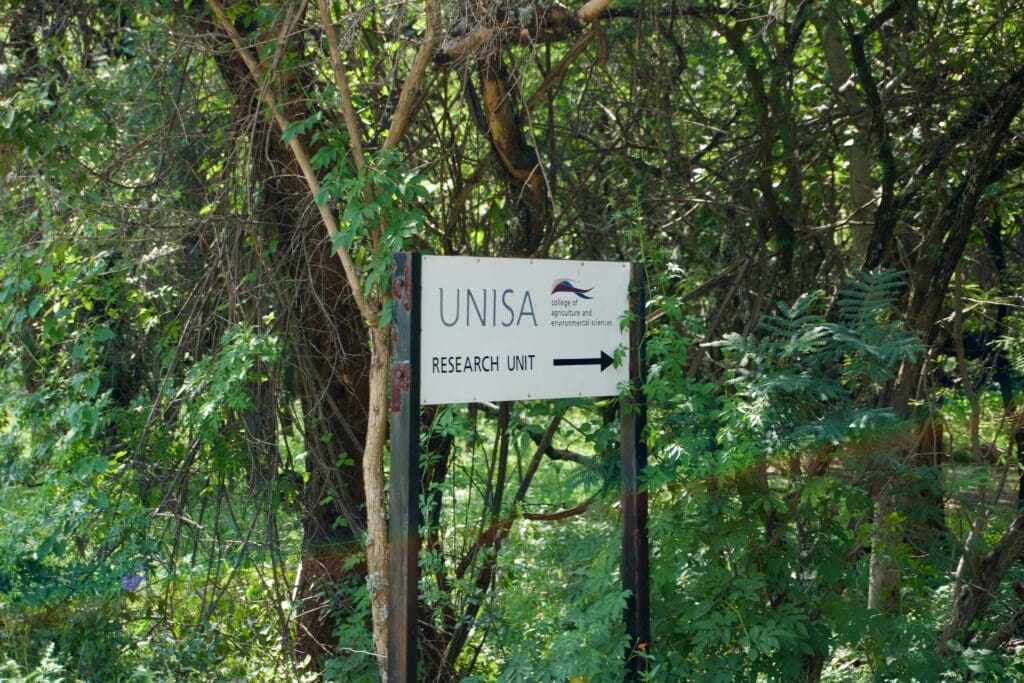
Upon entering it area, the first marker of the site’s identity is aging (displaced) signage bearing the name Botshabelo. The sign appears to be from an earlier period of operation—weathered, static, and disconnected from the current use of the land. It signals continuity in name, but not in function. Shortly thereafter, we encountered the locked traditional gate, which in the past had welcomed visitors, but now serves as a physical symbolic barrier between past presentation and present control.
Access to the site is now mediated by current residents. An older gentleman, whom I will refer to as Harold, approached us at the gate as he leapt from his white Toyota Hilux. He explained that entry was permitted with his consent following the payment of 30 Rands. There was no posted fee, formal ticketing system, or institutional presence, positioning Harold as an informal gatekeeper in practice.
During the exchange, Harold shared his understanding of the site’s historical and present condition. He described ongoing legal disputes involving government entities, heritage boards, and white individuals associated with earlier control of the land. According to his account, land claims had previously resulted in the land being granted to certain parties, but these arrangements are now being contested. This information reflects lived narrative rather than verified legal documentation (though this is rather known information in the area of Middelburg).
Harold also spoke about his ancestors’ experiences on the land, describing histories of abuse, neglect, and the systematic denial of agency throughout the nineteenth and twentieth centuries. While acknowledging the importance of Botshabelo as a site of cultural memory, he emphasized that current residents do not wish to replicate hierarchical relationships shaped by colonization and apartheid. Instead, he expressed a desire for residents to recognized as co-labourers—partners in stewardship, interpretation, and decision-making.
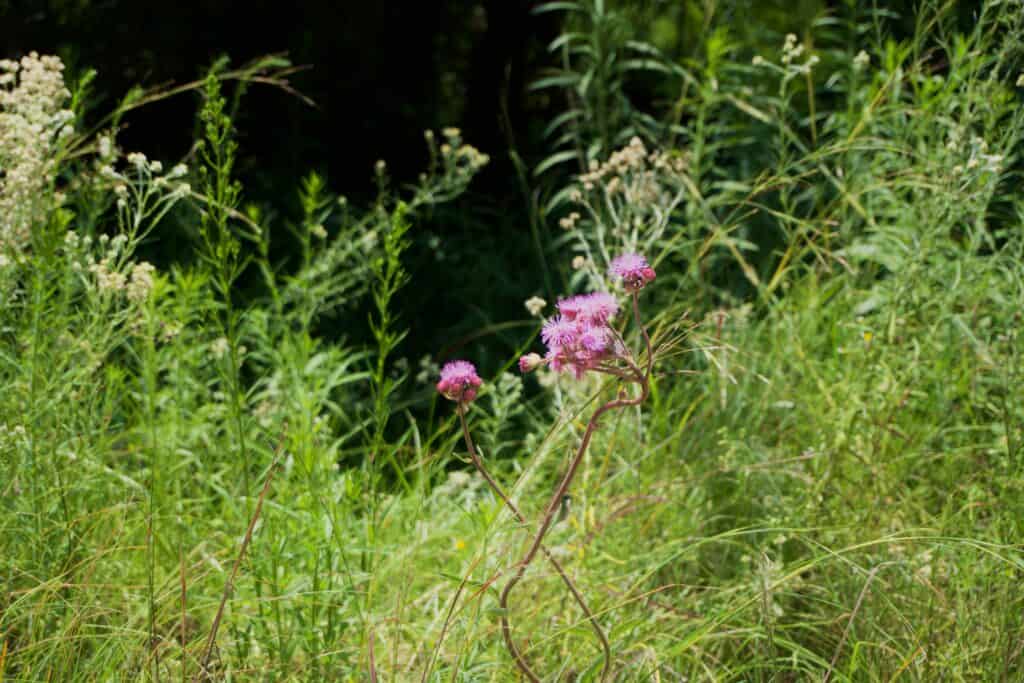
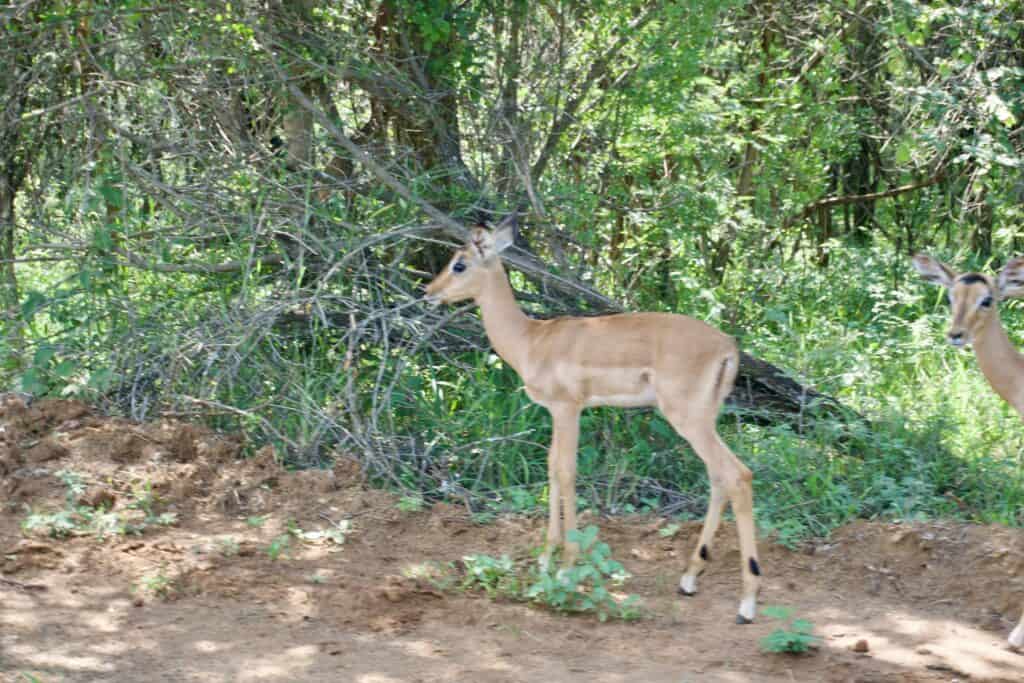
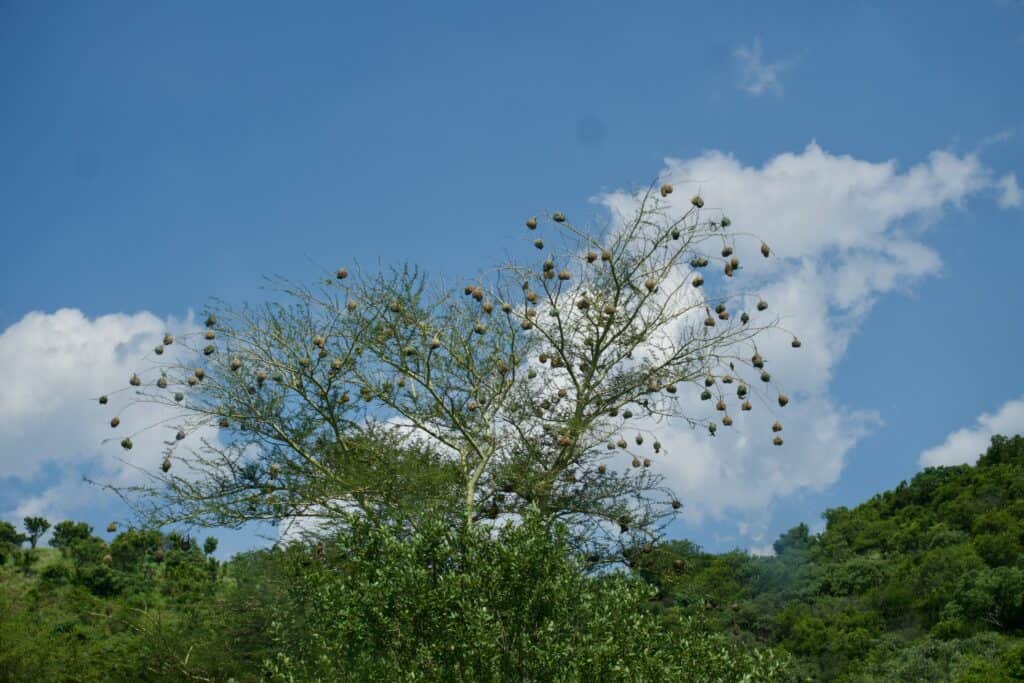
The observation took place under clear skies, with temperatures nearing 28 degrees Celsius. The surrounding landscape is expansive and open, defined by vast rolling grasslands. Intermittent trees dot the terrain, often clustered near visible or inferred water sources. Scattered throughout the grasses are small bursts of yellow and purple wildflowers, softening the openness of the land.
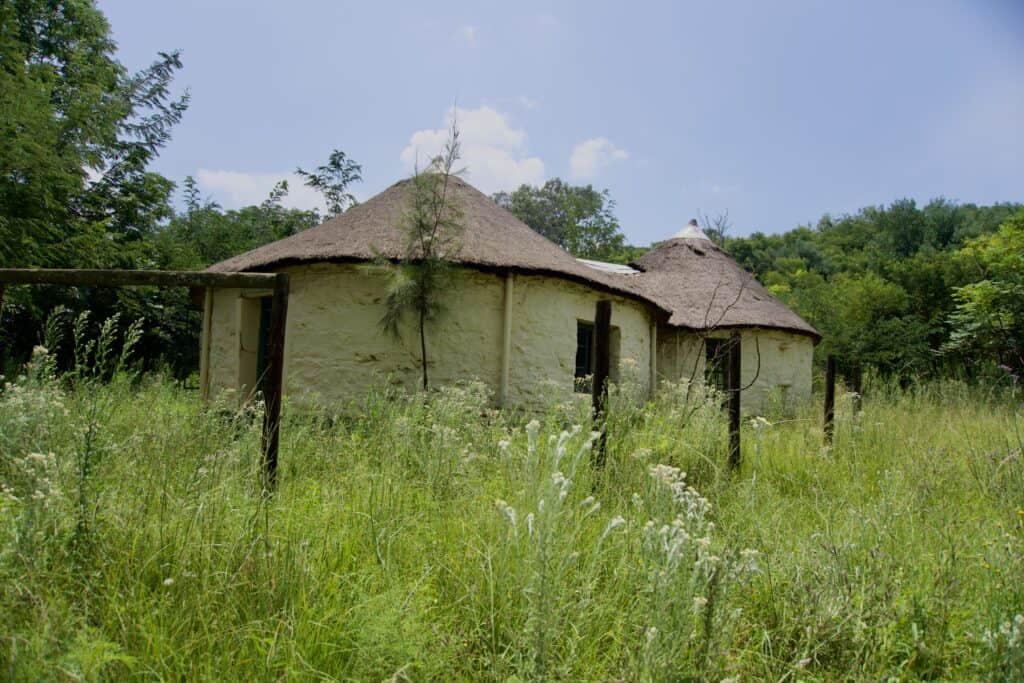
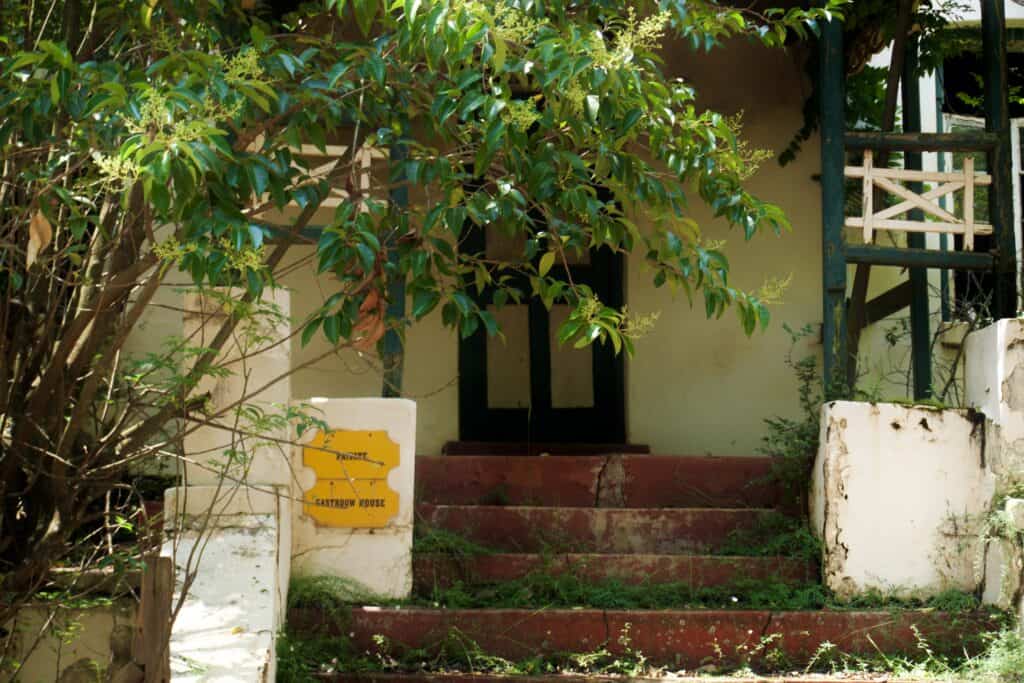
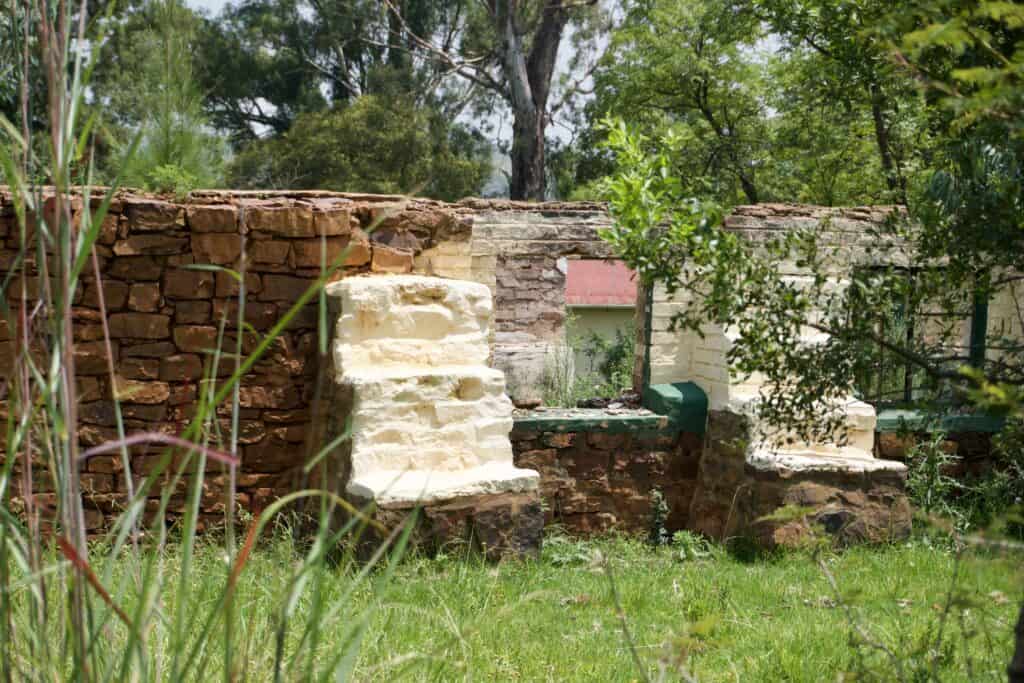
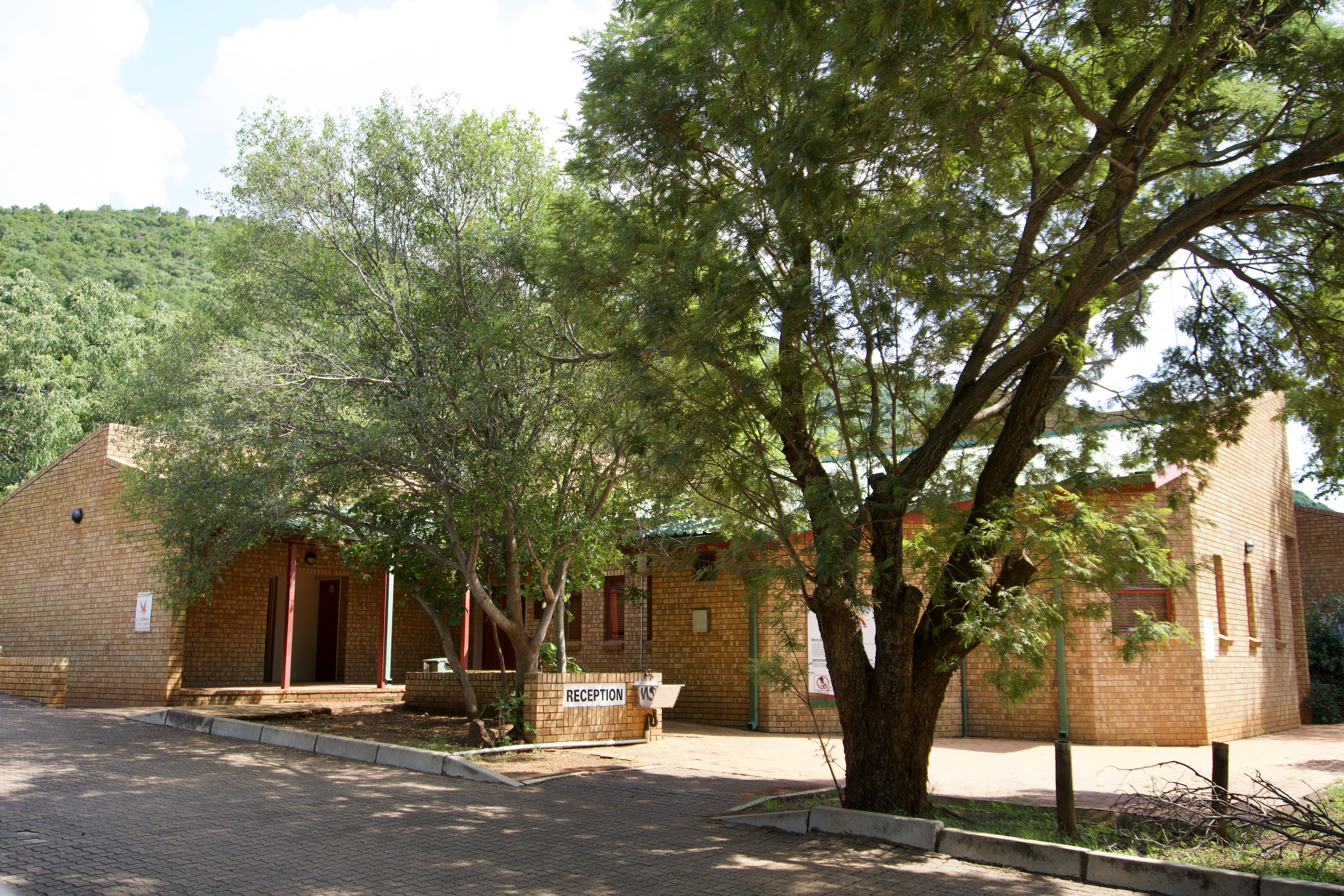
As we moved further into the site, the built environment reflected this shift. Structures associated with earlier heritage displays—including traditional Ndebele rondavels with grass roofs—are no longer present. Harold explained that these structures were deliberately removed. In their place stands a block of eleven newly constructed brick homes, built for permanence and everyday life. These homes occupy the same space where rondavels once stood, marking a deliberate departure from architecture intending for exhibition.
Harold noted that in earlier periods, government officials and external stakeholders expected visible representations of “Ndebele” culture. Today, those curated symbols are purposely absent. What remains are new homes and emerging businesses that suggest deep investment in making the land functional, inhabited, and future-oriented.
Taken together, the site reads less as abandonment and more as redefinition. The sign still names Botshabelo, but the gate controls access. The wildflowers persist, the grasslands remain open, and the built environment signals intention. Heritage here is not frozen—it is being renegotiated.
Preliminary Analysis
The visit to Botshabelo reveals a site in transition from curated heritage space to lived landscape. Material markers — the aging signage, locked gate, and absence of former exhibition structures — signal a shift in authority and purpose. Control over access has moved from institutional management to resident mediation, embodied in Harold’s role as informal gatekeeper.
The removal of the Ndebele rondavels is particularly significant. Their absence suggests a deliberate rejection of performative cultural display previously shaped by state or external expectations. In their place, the construction of permanent brick homes indicates a reorientation toward habitation, ownership, and everyday life rather than heritage consumption.
The site therefore operates as a contested terrain where historical narratives, land claims, and contemporary identity intersect. Rather than presenting a stable interpretation of the past, Botshabelo functions as a space where heritage is actively negotiated through physical changes to the landscape and through residents’ assertions of agency.
Synthesis & Interpretation
Experiencing Botshabelo underscores how heritage landscapes are not static repositories of history but dynamic sites shaped by power, memory, and lived realities. The tension between the lingering symbolic infrastructure (the sign, the name, the legacy of display) and the emerging residential environment reflects a broader process of reclaiming narrative authority.
Harold’s framing of residents as co-labourers is particularly telling — it signals a shift from being subjects of interpretation to being decision-makers about how the land is used and remembered. In this sense, the site challenges conventional heritage models that prioritize preservation of form over the needs and futures of living communities.
What remains most striking is the sense that Botshabelo is not disappearing but transforming. The landscape — open grasslands, wildflowers, and new homes — communicates continuity alongside change. Heritage here is not being erased; it is being redefined on terms that prioritize dignity, habitation, and local control.
This visit ultimately suggests that socially just heritage practice may require allowing sites to evolve beyond their original interpretive frameworks, recognizing that living communities have the right to reshape spaces that once represented them without their full agency.
Dance Card Entry 2: Loskop Dam Nature Reserve
Heritage Site Snapshot
Name: Loskop Dam Nature Reserve
Date: January 18, 2026
Location: Loskop Dam, Mpumalanga, South Africa
Start Time: 2:30 PM
End Time: 3:37 PM
Type of Experience: Nature Reserve
Thick Description
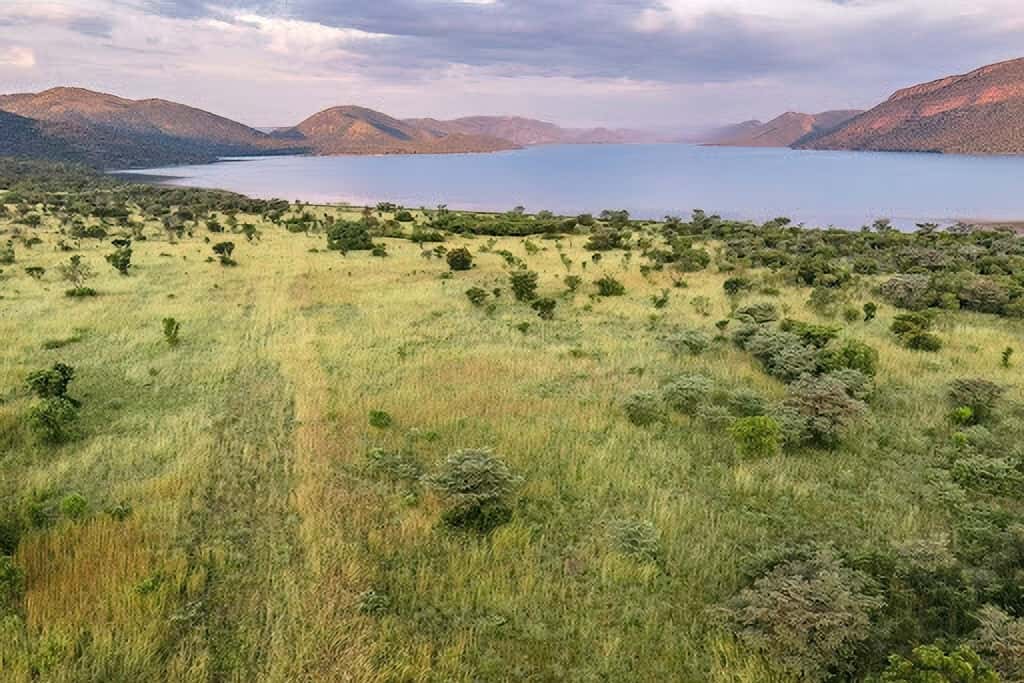
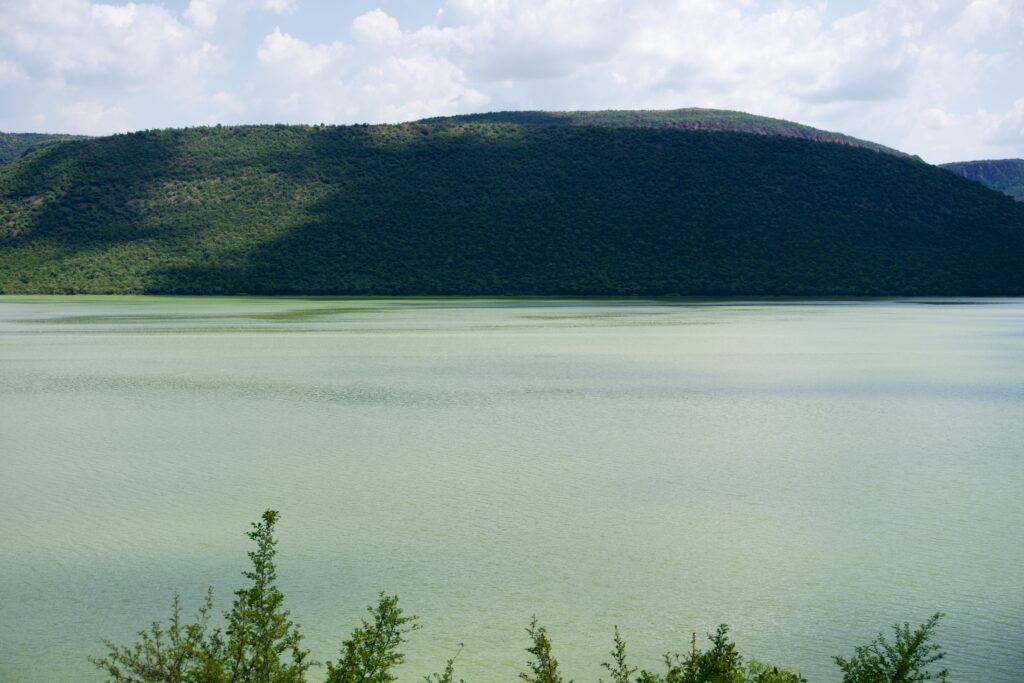
Before entering Loskop Dam Nature Reserve, the first feature that drew attention was the water itself, ribbons of green coloration were visible across the surface of of dam. These elongated streaks appeared unevenly distributed, forming soft but persistent lines that contrasted the normally blue colored water. Their visibility prior to entry suggested that ecological conditions within the reserve extend beyond its formal borders.
These green formations were not unfamiliar. Recent social media postings, particularly from Friends of Loskop, the organization involved in maintaining and advocating for the reserve, have identified these ribbons as algae. According to these posts, the flat are described as posing threat to aquatic life, with claims that they are literally strangling fish and birds alike. This information shaped expectations before any formal interaction with the reserve infrastructure or staff.
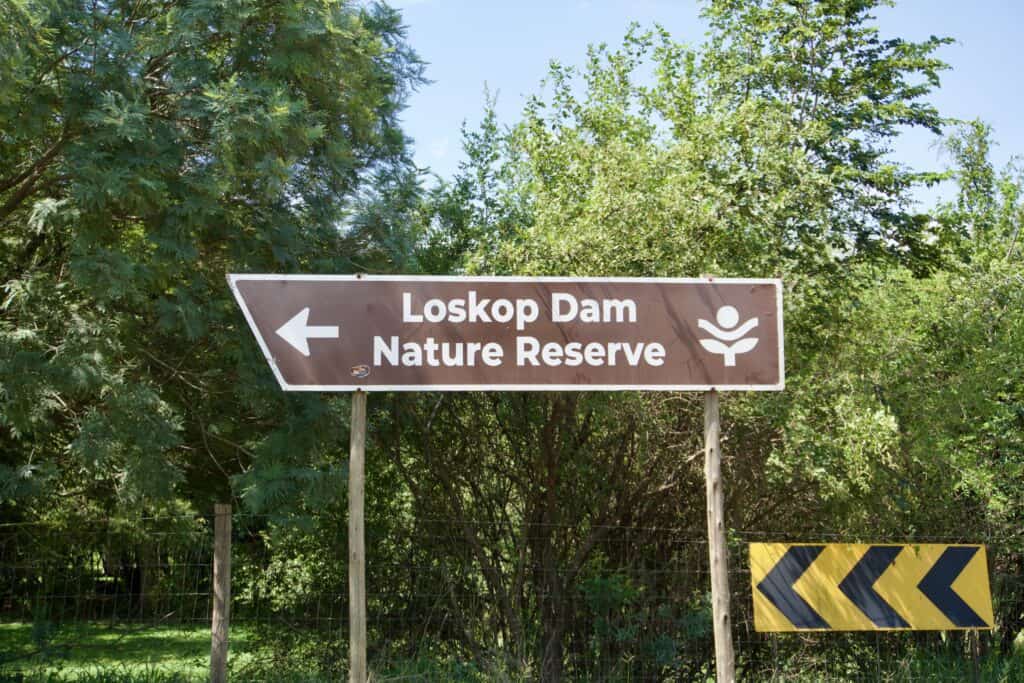
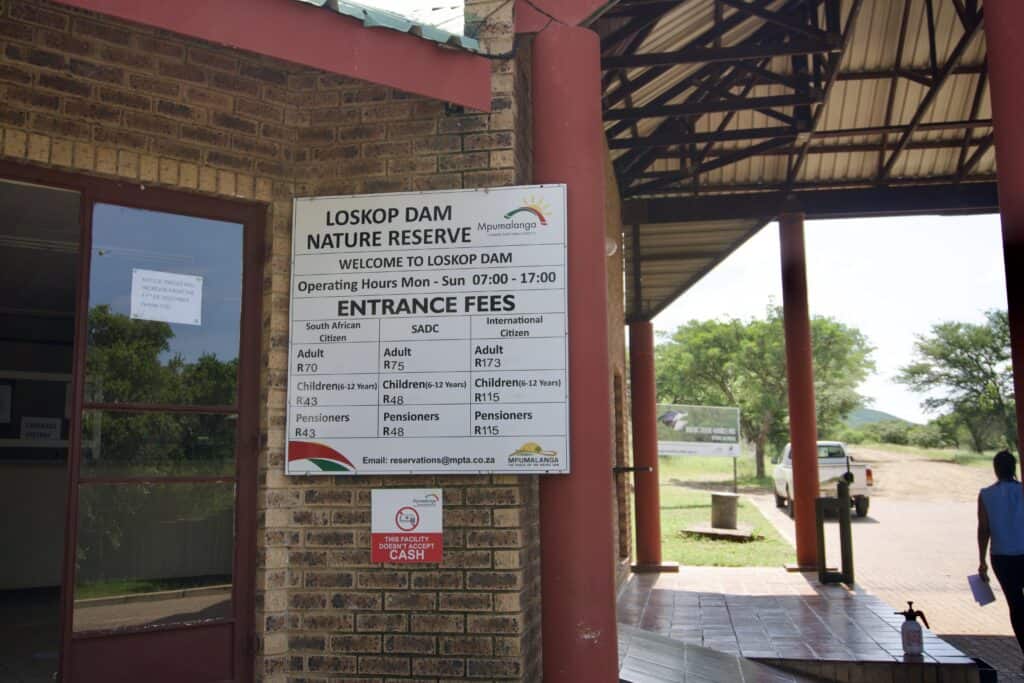
Access to the reserve required teaching along a long, winding dirt road, creating a gradual physical transition from public space into a regulated environment. Upon arrival at the reception gate, we were formally greeted by staff and instructed to sign in, providing personal details. We were also required to pay an entrance fee of 70 Rands per person. The process was structured, documented, and clearly institutional.
Before proceeding further, biosecurity protocols were enacted. The tires of the truck were sprayed as a preventative measure against foot-and-mouth disease, and I was asked to step into a container of the same solution to clean my shoes. these actions were performed methodically and without extended explanation, signaling the reserve’s emphasis on contamination control and ecological protection.
At the reception area, informational materials, however mundane, were integrated into the sign-in process. A list of animals and bird species present in the reserve was presented in the form of a checklist on white sheets of paper. Notably, the list included only written names, with no photographs or visual aids. These handouts were placed next to the register but were not actively offered to visitors. Access to this information required personal initiative; I requested further details upon noticing them. This moment highlighted how learning within the reserve is structured as optional and self-directed, rather than guided or dialogic.
Preliminary Analysis
The entry experience at Loskop Dam Nature Reserve foregrounds environmental vulnerability alongside institutional regulation. The visible algae blooms on the dam’s surface signal ecological stress before any formal engagement with the reserve, positioning the landscape itself as an initial interpretive text. This pre-entry encounter suggests that the reserve’s environmental conditions are not contained within administrative boundaries but are part of a broader watershed system shaped by upstream activities.
Once inside the reserve’s infrastructure, the emphasis shifts to control and procedure. The sign-in process, entrance fee, and biosecurity measures — tire spraying and shoe disinfection — demonstrate a structured approach to risk management and ecological protection. These practices communicate institutional authority and responsibility, but they also create a clear distinction between visitor and environment, where interaction is mediated through protocol.
The informational materials further reveal how knowledge is distributed within the reserve. The species checklist, presented without visuals and not actively offered, positions learning as optional and self-directed rather than facilitated. This suggests a model of interpretation that prioritizes access to information but not necessarily engagement, leaving visitors to determine the depth of their own educational experience.
Synthesis & Interpretation
Experiencing Loskop highlights the layered nature of conservation spaces, where ecological realities, institutional practices, and visitor learning intersect. The algae-streaked water serves as a visual reminder that conservation is not only about preserving landscapes but also about responding to ongoing environmental pressures that may originate beyond the reserve itself.
At the same time, the highly procedural entry process reflects how conservation often operates through regulation and containment. Biosecurity measures and formalized access protocols reinforce the idea that protecting ecosystems requires controlled interaction, yet they also shape how visitors perceive their relationship to the environment — as regulated participants rather than co-interpreters of the landscape.
The passive presentation of educational materials suggests an opportunity for more intentional engagement. While the reserve provides information, the lack of guided interpretation may limit deeper understanding of the ecological challenges visibly present at the site.
Overall, the visit suggests that Loskop functions as both a protected landscape and a site where environmental uncertainty is visible. The experience underscores how conservation spaces can simultaneously communicate care and constraint, inviting reflection on how reserves might balance ecological protection with more accessible, dialogic forms of environmental education.



Dance Card Entry 3: South End Musuem
Heritage Site Snapshot
Name: South End Museum
Date: February 16, 2026
Location: Gqerbeha, Eastern Cape, South Africa
Start Time: 9:15 AM
End Time: 10:45 AM
Type of Experience: Interpretive Memorial Museum Experience
Thick Description
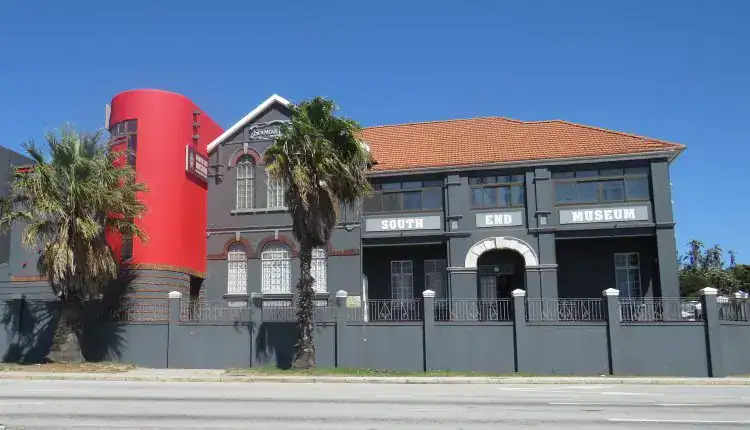
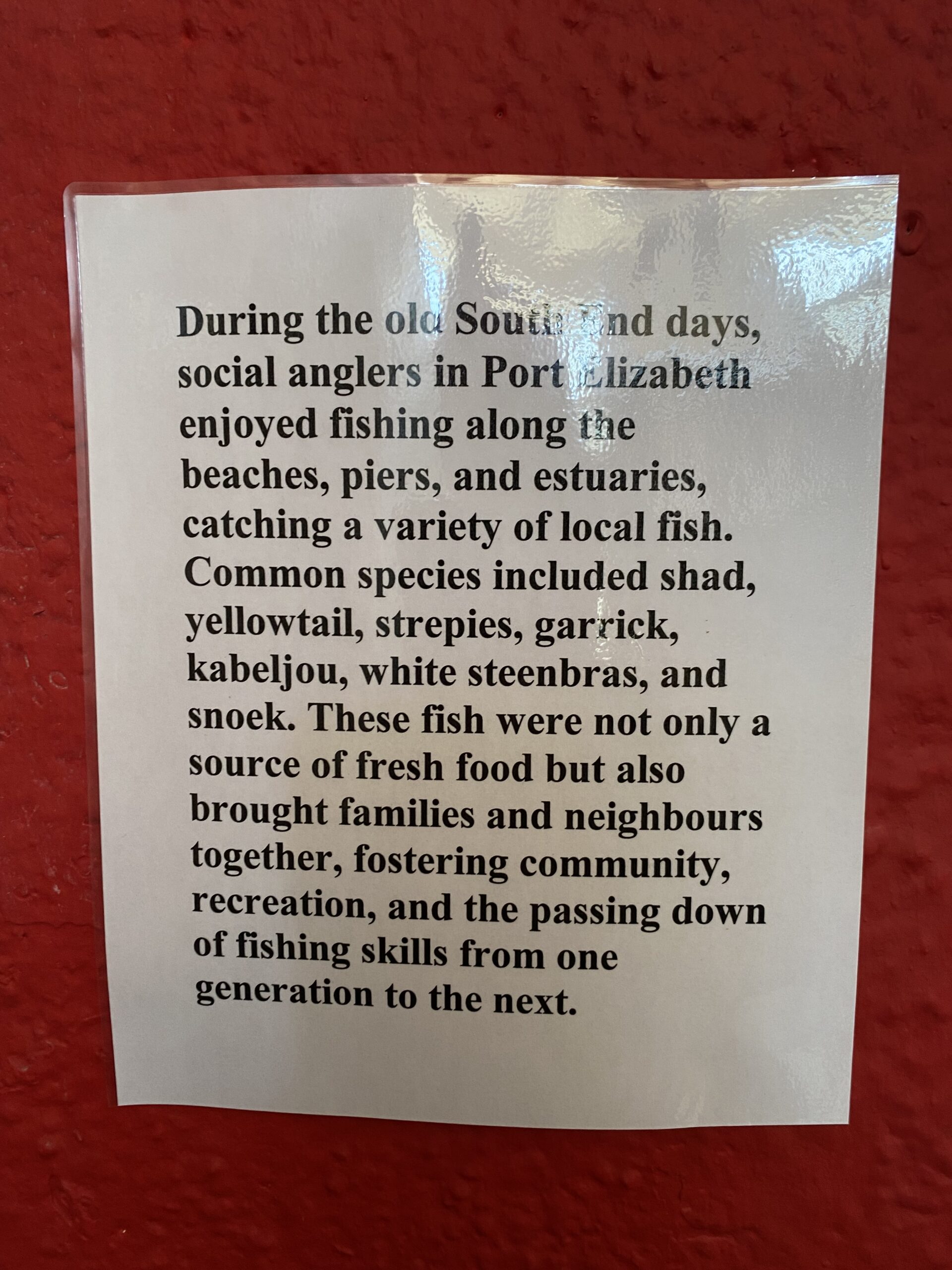
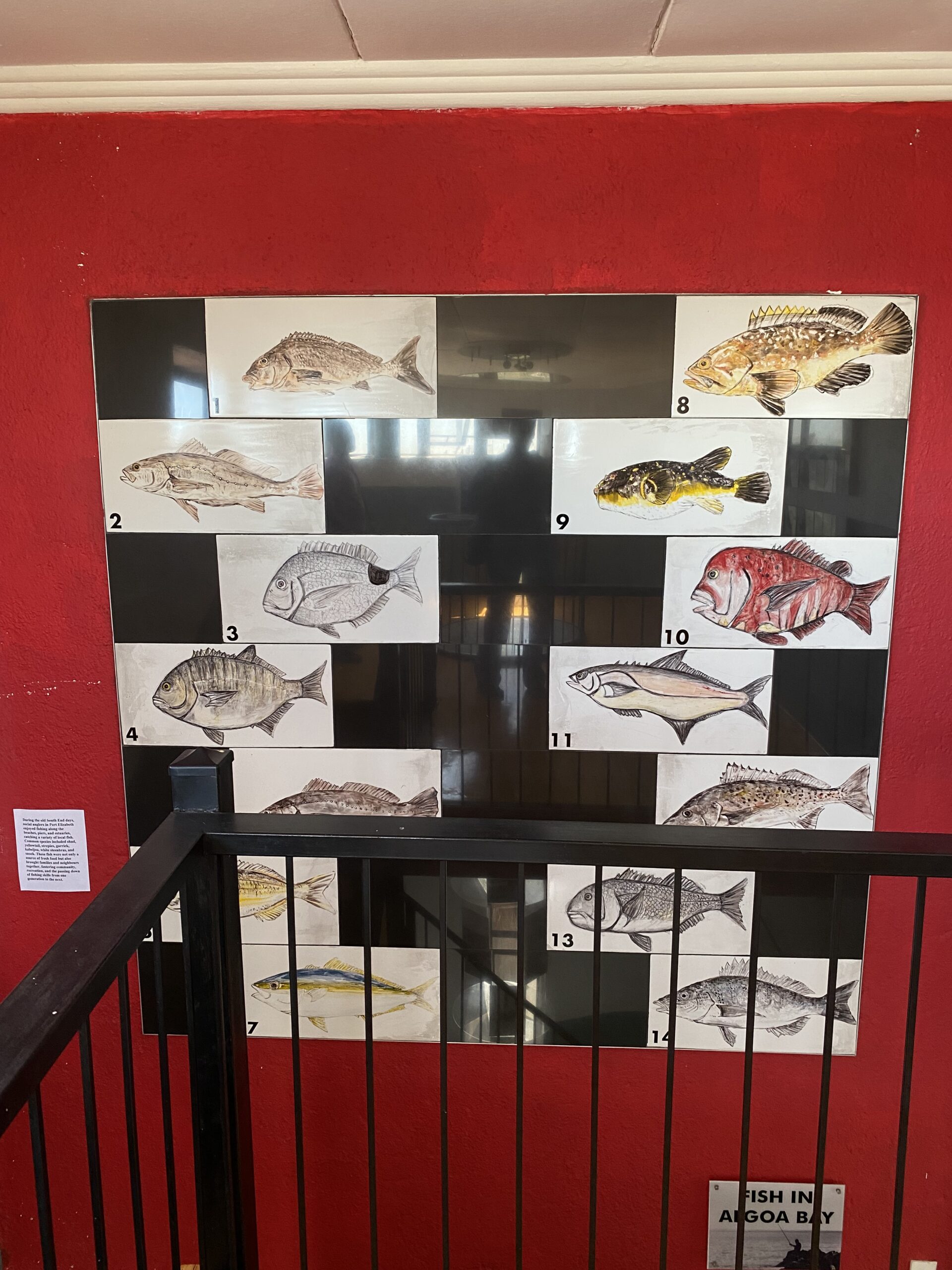
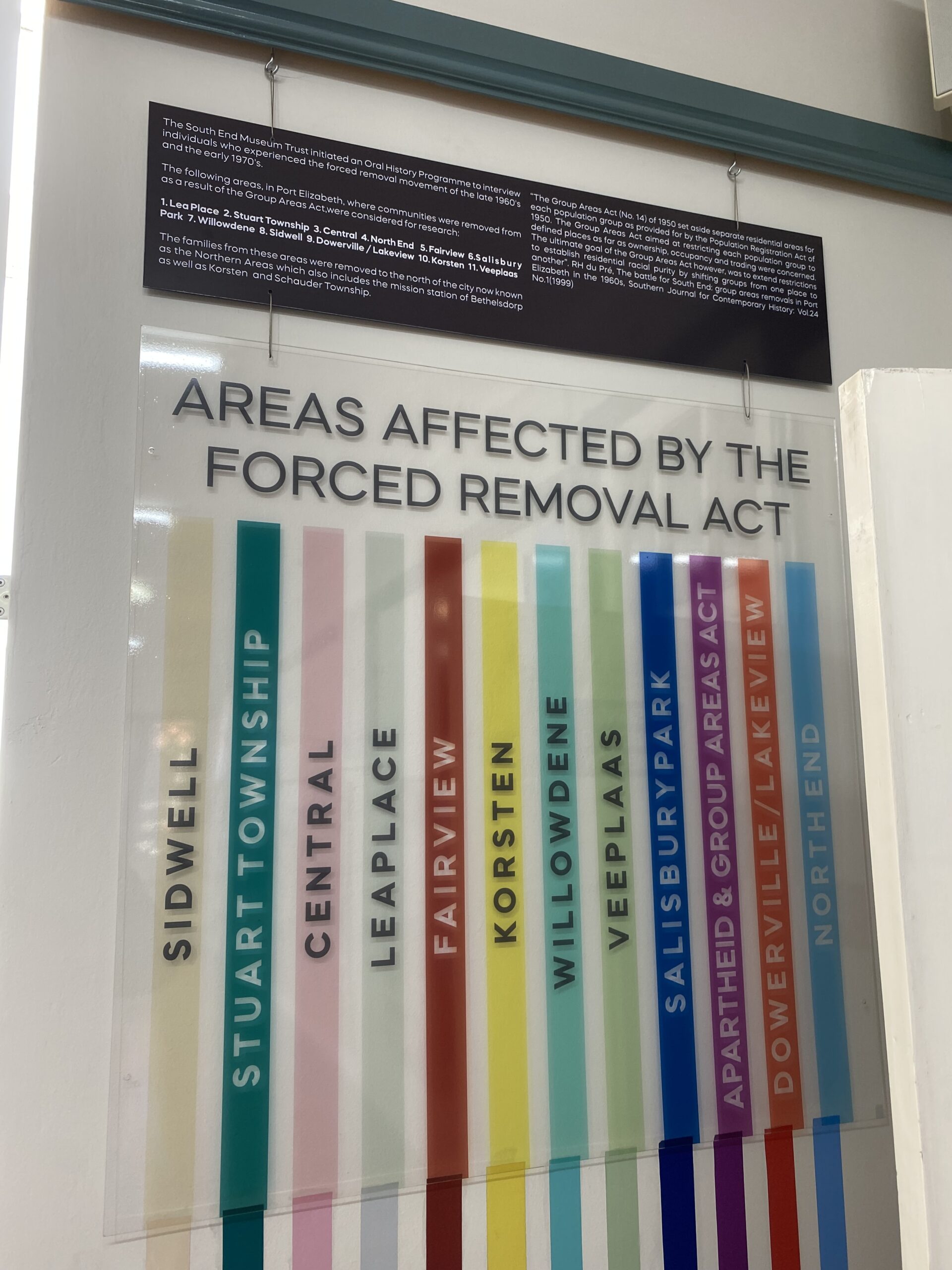
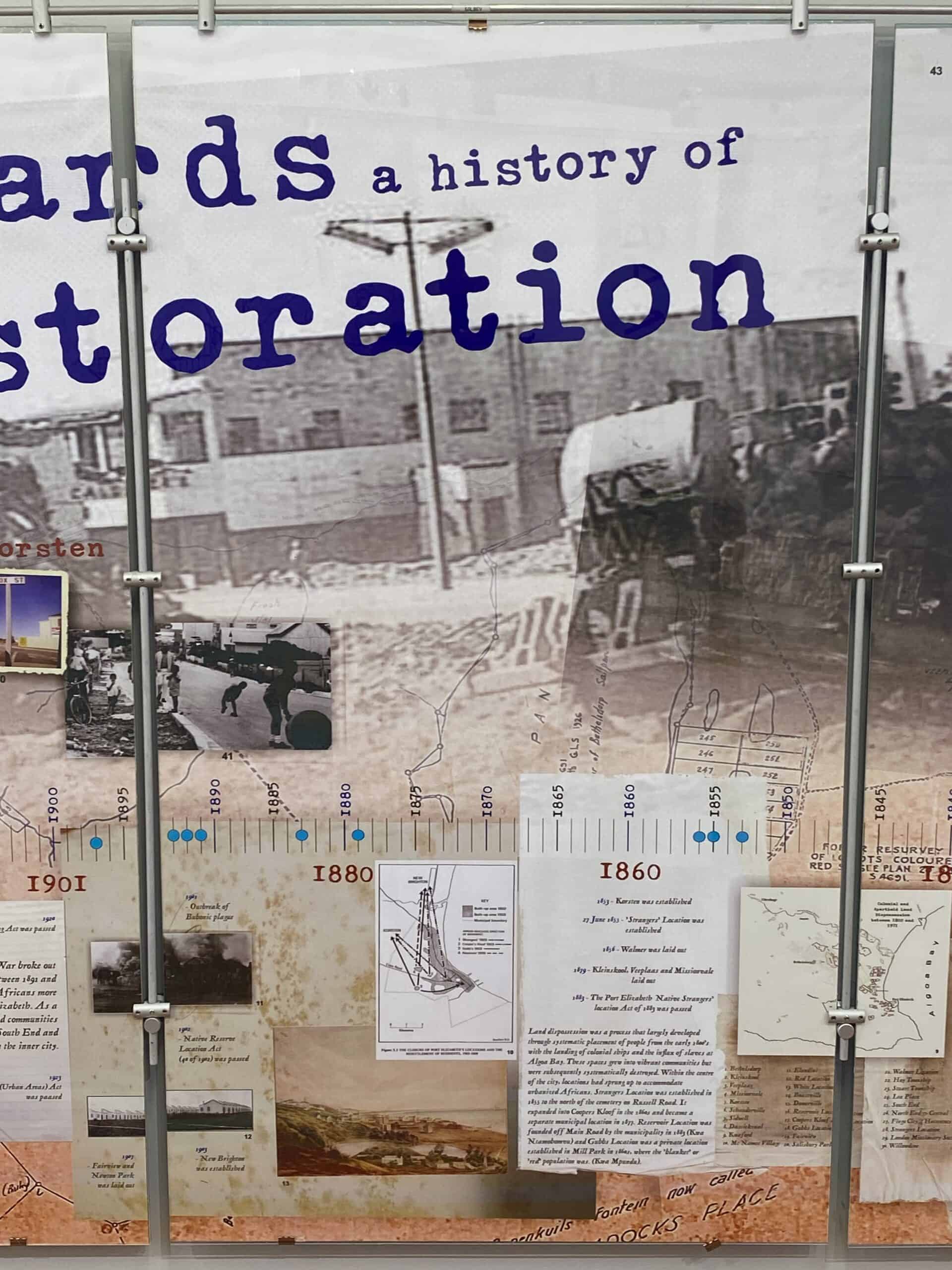
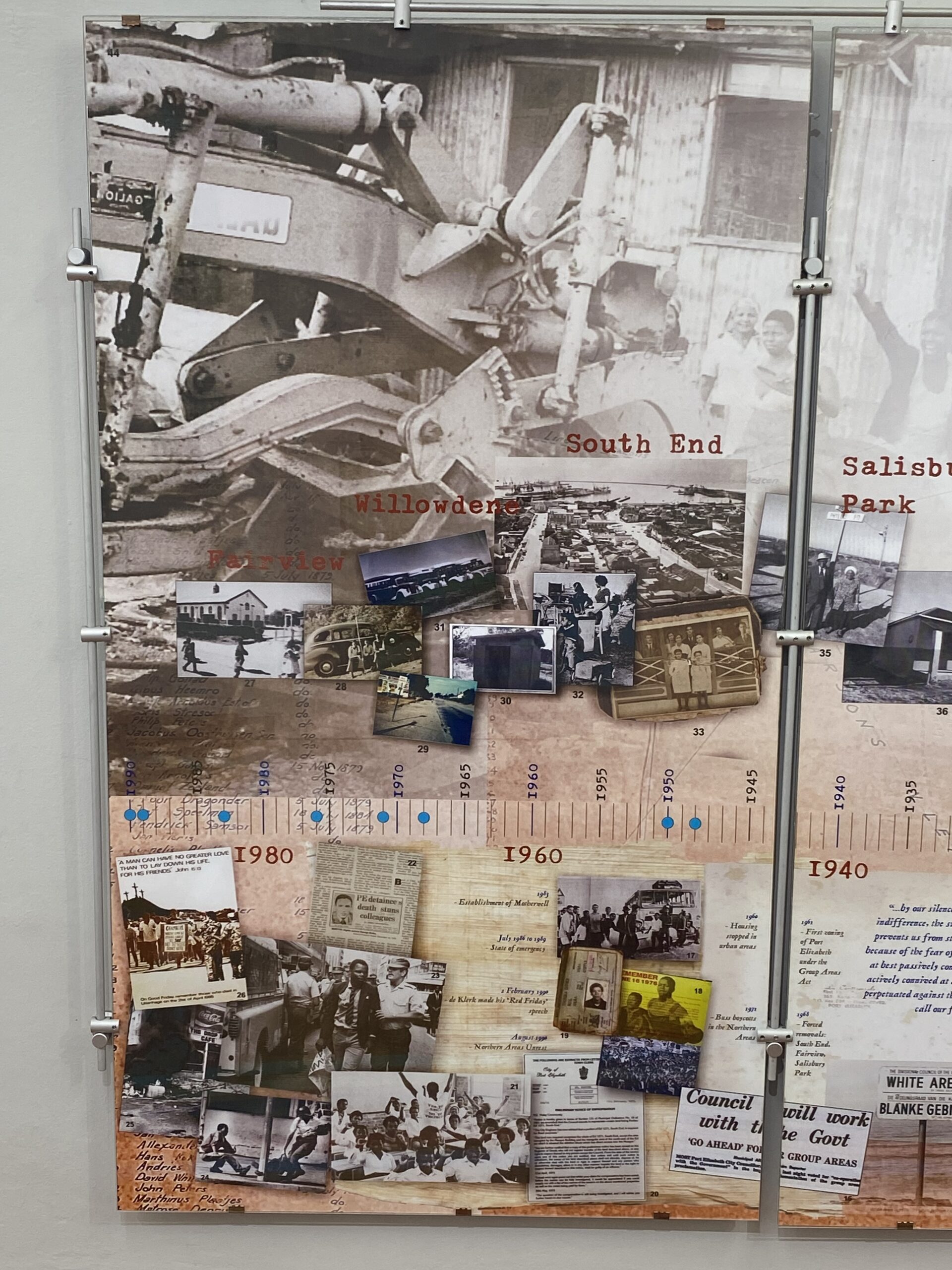
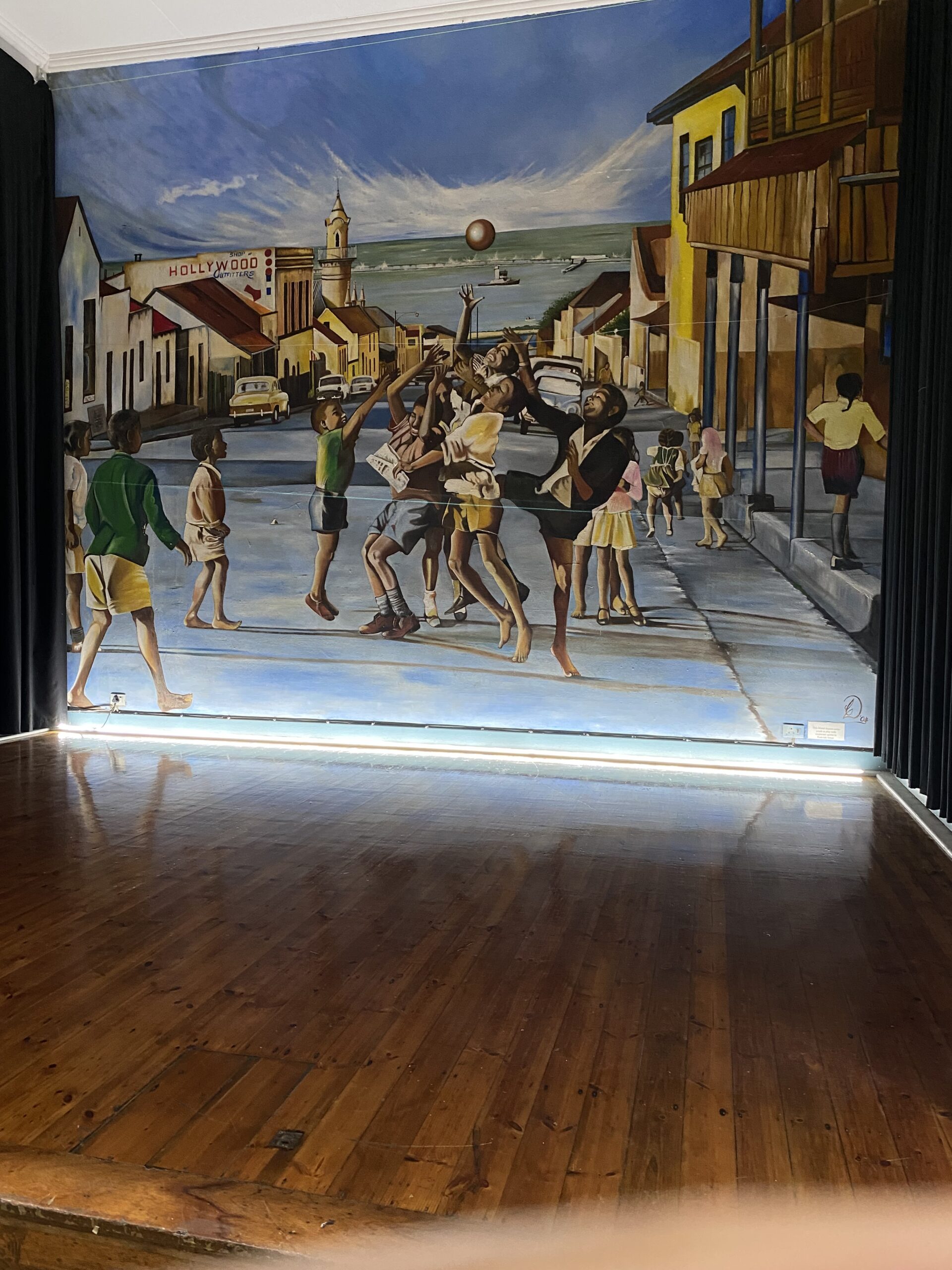
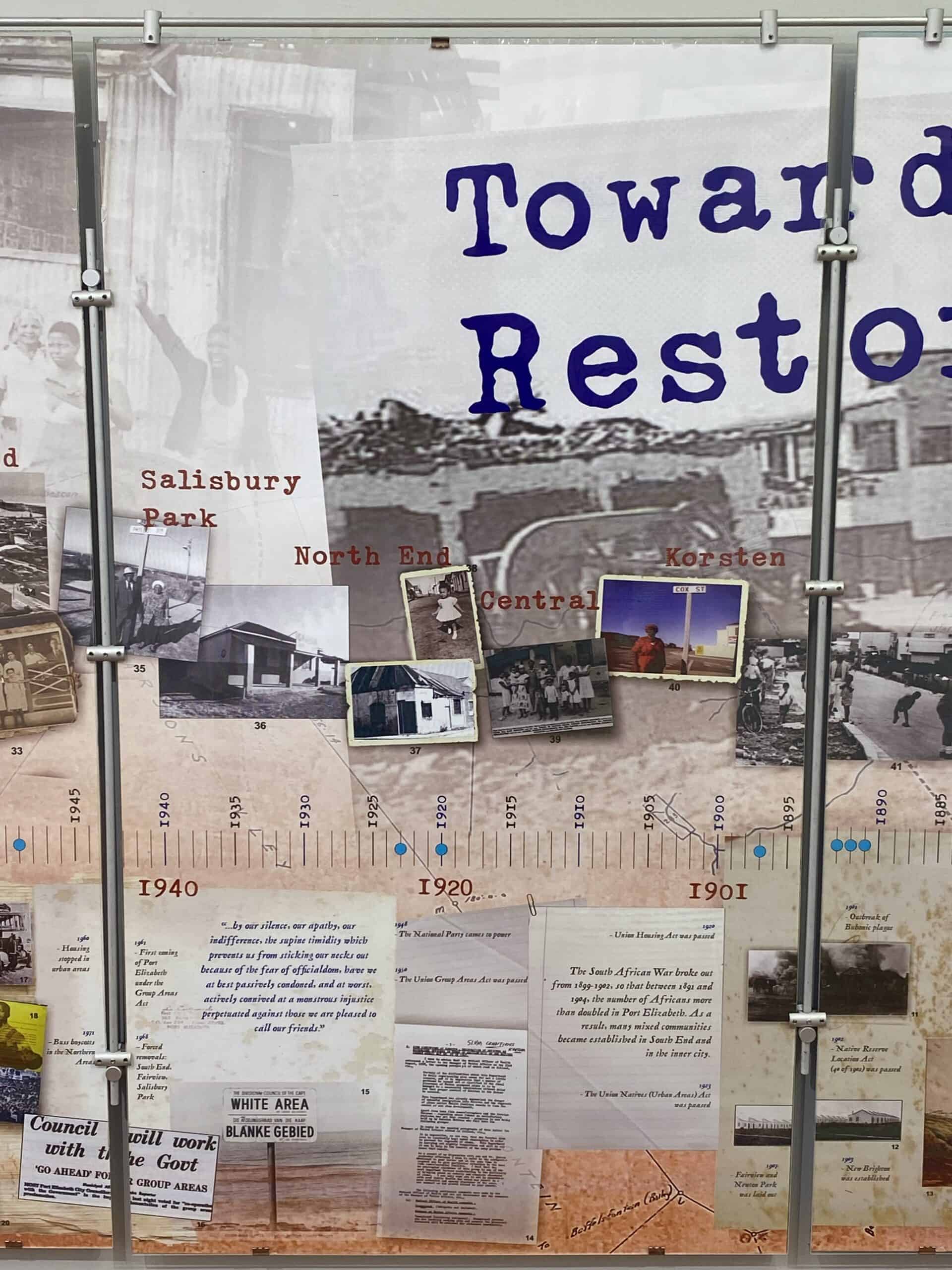
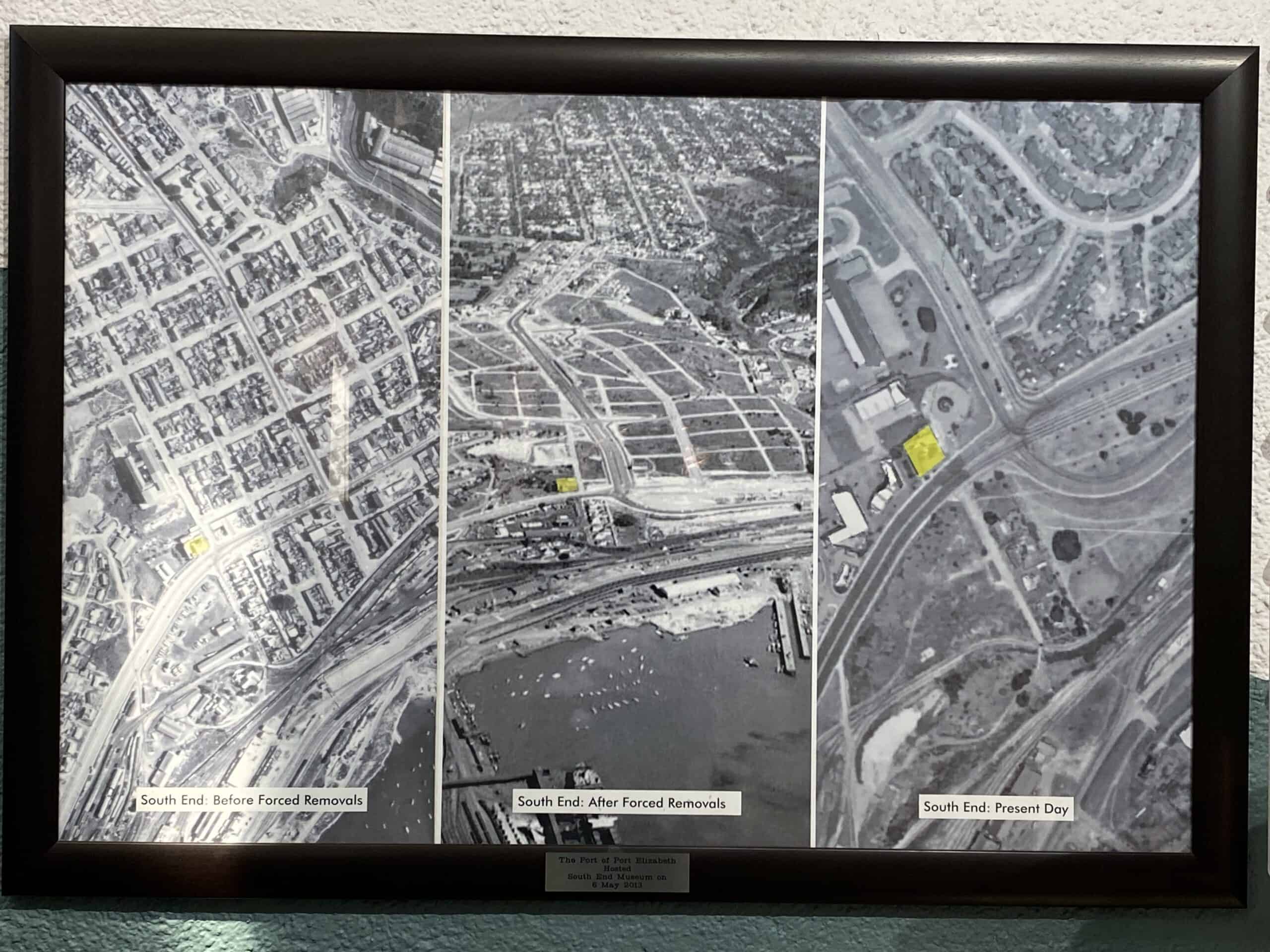
The museum sits prominently on the corner of Walmer Boulevard and Humewood Road, facing the ocean—a location that feels symbolically significant given the community’s connection to place. The building itself , painted dark grey with white accent, remained standing after the apartheid-era forced removals that dismantled the surrounding neighborhood. Its survival positions it as both a container of history and a physical witness to it. A small café attached at the rear extends the site beyond exhibition space into a social environment, hinting at the museums’s role as both a memory project and a community gathering place.
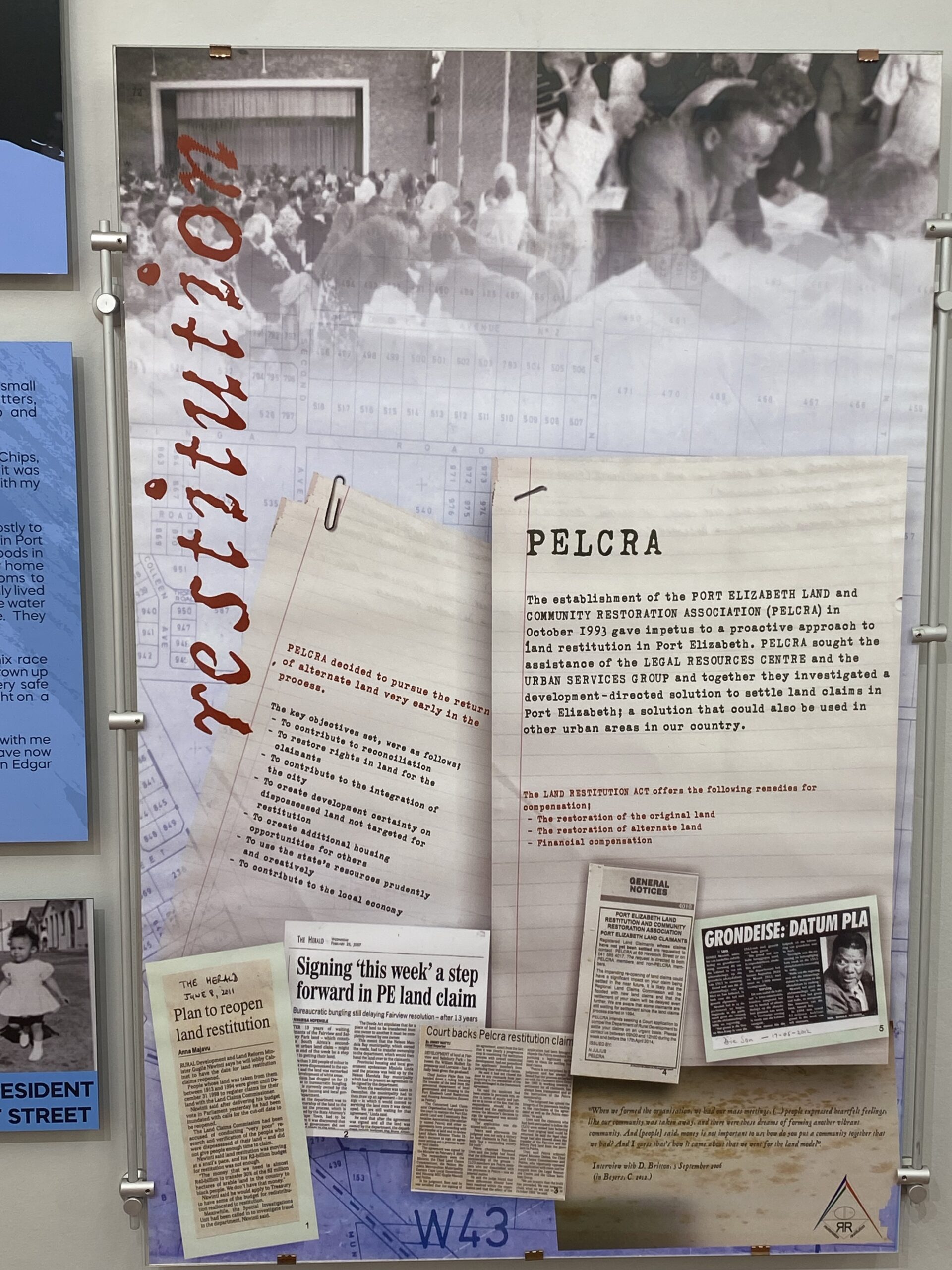
The museum’s mission is grounded in ensuring that the historical memory of forced population removals endures. It seeks to document and imaginatively reconstruct the socio-economic life and material culture of the former South End community while acknowledging the injustices of colonialism and apartheid. At the same time, it frames remembrance as forward-looking—a way to honor resilience and contribute to imagining a more equitable future. The mission also recognizes that museums have historically been unfamiliar or inaccessible institutions for marginalized communities, positioning the space as one that continues to build understanding and trust.
Our visit began at a gray gated entrance where we rang the bell and were buzzed in, an entry that felt both secure and intimate. the attendant who welcomed us was warm, engaging, and deeply knowledgeable, immediately grounding the visit in lived experience. She shared that she grew up in the area and spoke about her father’s forced removal from South End after being racially classified as “coloured” based on his complexion, despite being Xhosa. Her story underscored how bureaucratic racial categories reshaped identities and lives. We reflected together on the emotional weight of these histories and the importance of continuing to tell them.
She explained that she typically guides school groups but allowed us to move independently “for freedom’s sake,” which created a quiet, contemplative atmosphere—there were no other visitors present that morning. She also noted institutional challenges, including limited funding that had left some interactive elements nonfunctional and the recent installation of internet support funded by Volkswagen. These realities highlighted the ongoing work required to sustain community heritage spaces.
Together, the setting, mission, and entry interaction framed the museum not simply as a place to view exhibitions, but as a living site of memory where personal narratives, institutional goals, and the physical landscape intersect.
Moving from the entrance into the exhibition spaces of the South End Museum, the atmosphere shifts from conversational to contemplative. The first gallery introduces the history of forced removals through a combination of archival photographs, text panels, and personal artifacts. The room is visually organized yet emotionally dense, with narratives layered across walls that require visitors to move slowly and deliberatively.
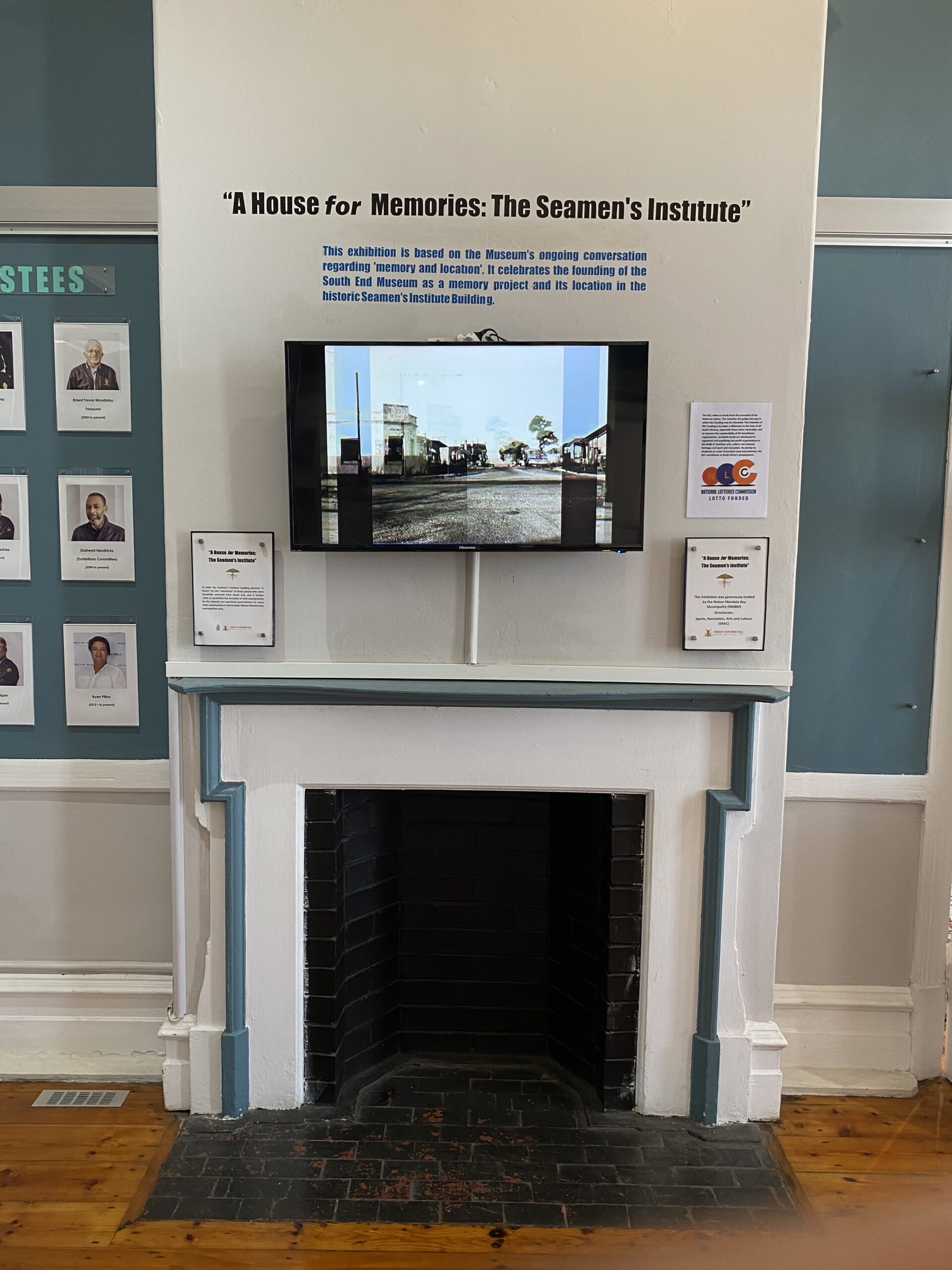
The exhibition titled, “A House for Memories: The Seaman’s Institute” situates the museum itself within the story, emphasizing memory as both a process and a place. Interpretive panels trace how the building transitioned from a community hub into a site of remembrance, reinforcing the idea that heritage here is not abstract but embedded in the physical structure.
A particularly arresting moment occurs when encounteringg a small blue T-shirt displayed among the artifacts. The object, marked by damage from violence and bearing the handwritten words “Please look after this bear, thank you,” brings the narrative from historical overview into intimate human scale. The presence of a childhood symbol (Paddington bear) contrasts sharply with the surrounding context, compelling visitors to pause and reckon with the reality that children were not peripheral to these histories but deeply and tragically affected by them.
Throughout the gallery, photographs of families, streetscapes, and community life create a visual counterpoint to the written accounts of displacement. These images offer glimpses of ordinary life—celebrations, homes, and social gatherings—making subsequent rupture more tangible. The curatorial approach invites visitors to imagine the fullness of the community that once existed, rather than encountering the removals only as an event of loss.
Despite the strength of the visual materials, the interpretive strategy relies heavily on text (English), requiring sustained reading to fully grasp the narratives. This creates a slower, more reflective pace but may also present accessibility challenges for visitors who process information differently.
Preliminary Analysis
The exhibitions at the South End Museum highlight important considerations around accessibility, engagement, and emotional care in spaces that interpret difficult histories. While photographs and artifacts are compelling, the heavy reliance on text can create barriers for younger visitors, multilingual audiences, or those who are not strong readers. Incorporating more interactive elements—such as audio storytelling or tactile components could broaden access without reducing the depth of the content.
The emotional weight of the exhibition is significant, yet there are limited opportunities for visitors to pause and process what they encounter. Reflection spaces or interpretive prompts could help support visitors as they engage with histories of loss and displacement.
The second-floor science section also offers potential for growth, particularly through the inclusion of oral histories from seamen. These narratives could highlight how removals disrupted not only homes but also knowledge systems, livelihoods, and community life.
Synthesis and Interpretation
As a person of color living in South Africa, the histories of displacement and forced removals presented at the South End Museum resonate as part of a broader shared experience across many communities. These narratives are not distant; they remain present in family stories, landscapes, and collective memory.
This raises an essential question for heritage practice: how can museums hold difficult histories in ways that allow visitors to engage deeply without simply re-experiencing harm? Remembering injustice is necessary, but healing requires more than exposure. Spaces that acknowledge emotional impact, create room for reflection, and balance loss with resilience can transform remembrance into a process of understanding rather than endurance.
Ultimately, the museum demonstrates the importance of telling these histories while also highlighting the responsibility of heritage institutions to care for the people encountering them, ensuring that memory becomes a pathway toward dignity, connection, and possibility.

Dance Card Entry 4: Bayworld
Heritage Site Snapshot
Name: Bayworld Museum
Date: February 16, 2026
Start Time: 11:05 AM
End Time: 12:24 PM
Type of Experience:
Institutional Museum & Aquarium Experience
Thick Description
As part of our visit to Gqeberha, Bayworld surfaced in my research as a site where one could encounter both the environmental and historical narratives of the region — particularly marine life and coastal heritage. I arrived without firm expectations, positioning myself primarily as an observer.
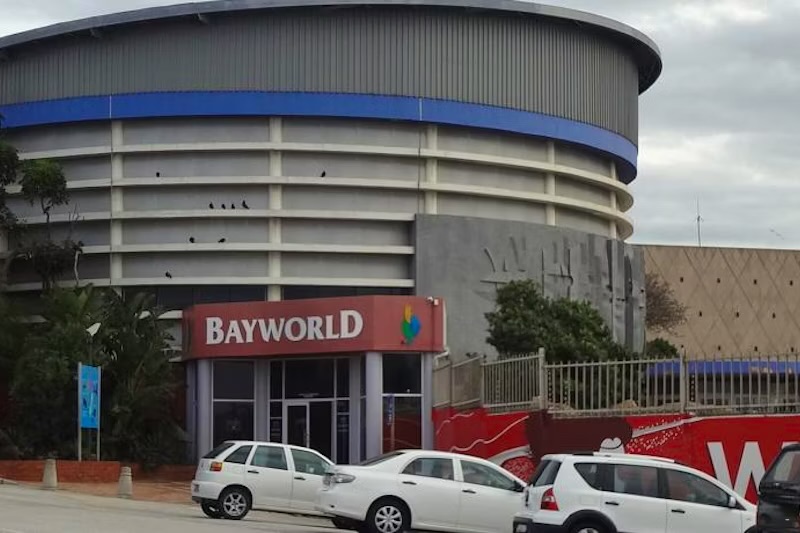
We took an Uber to the address listed online, only to realize upon arrival that we had unknowingly passed the site multiple times. It sits along the same stretch of road as South End, a location layered with its own histories of displacement. From the outside, the building appeared faded and aged. The façade — marked by peeling paint and muted colors — suggested a structure that had not kept pace with its surroundings. At first glance, it resembled an older public building adorned with sea-life imagery rather than an actively functioning museum.
Approaching the entrance intensified this impression. The parking lot was nearly empty, the doors closed despite clear weather, and the building’s exterior showed visible signs of deterioration. After paying the R30 entrance fee (cash only), we were handed a receipt that functioned loosely as a ticket and were verbally directed toward various entrances.
Moving into the central courtyard, confusion quickly replaced orientation. The gate labeled “Oceanarium” was secured with a chain, and multiple adjacent doors were locked. Signage appeared outdated or irrelevant, leaving us to navigate through trial and error. Fallen leaves collected in corners of the courtyard — notable given that autumn had only just begun — giving the space a sense of neglect rather than seasonal change. The absence of visible staff outside the reception area heightened the feeling of disconnection.
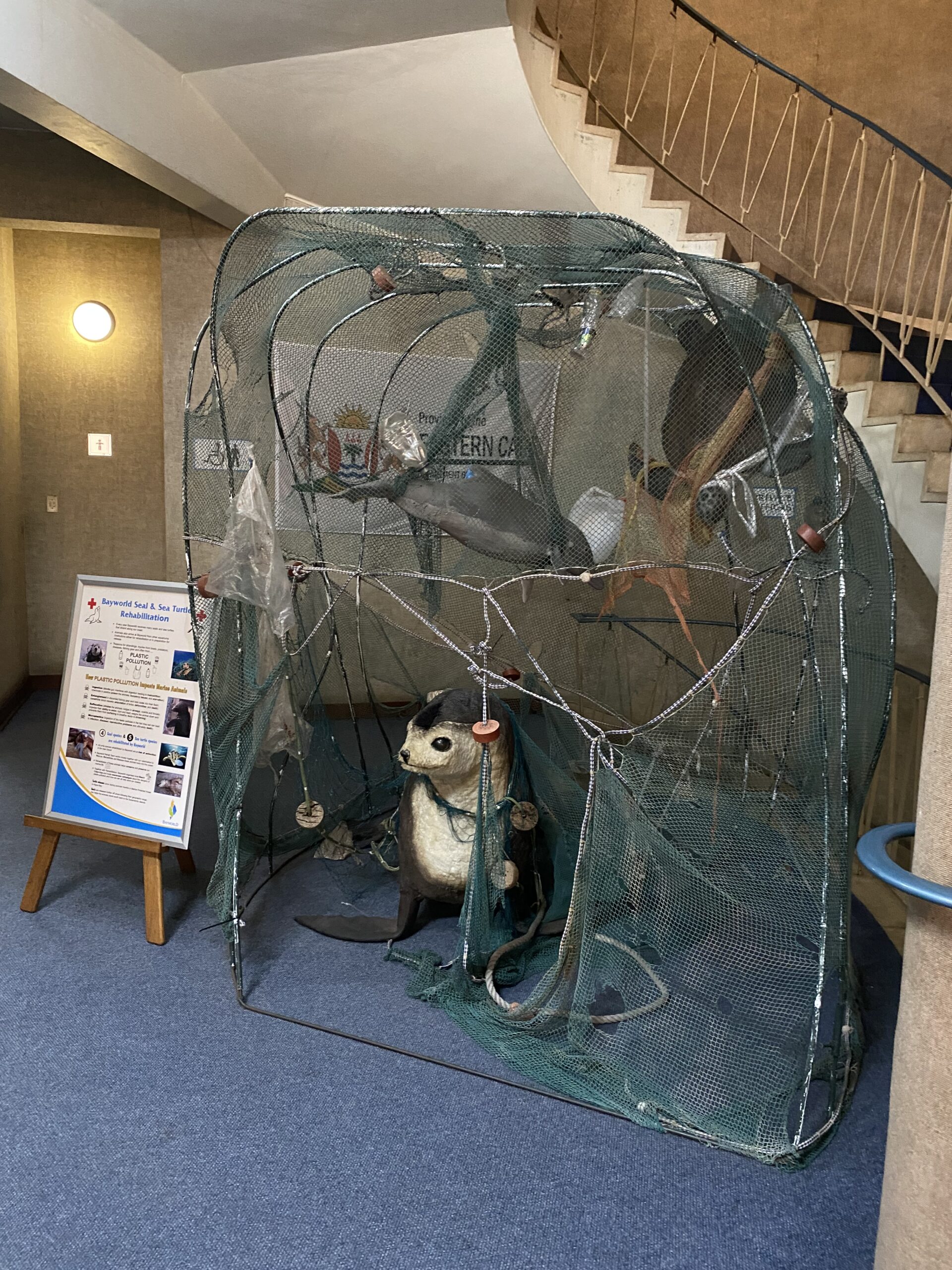
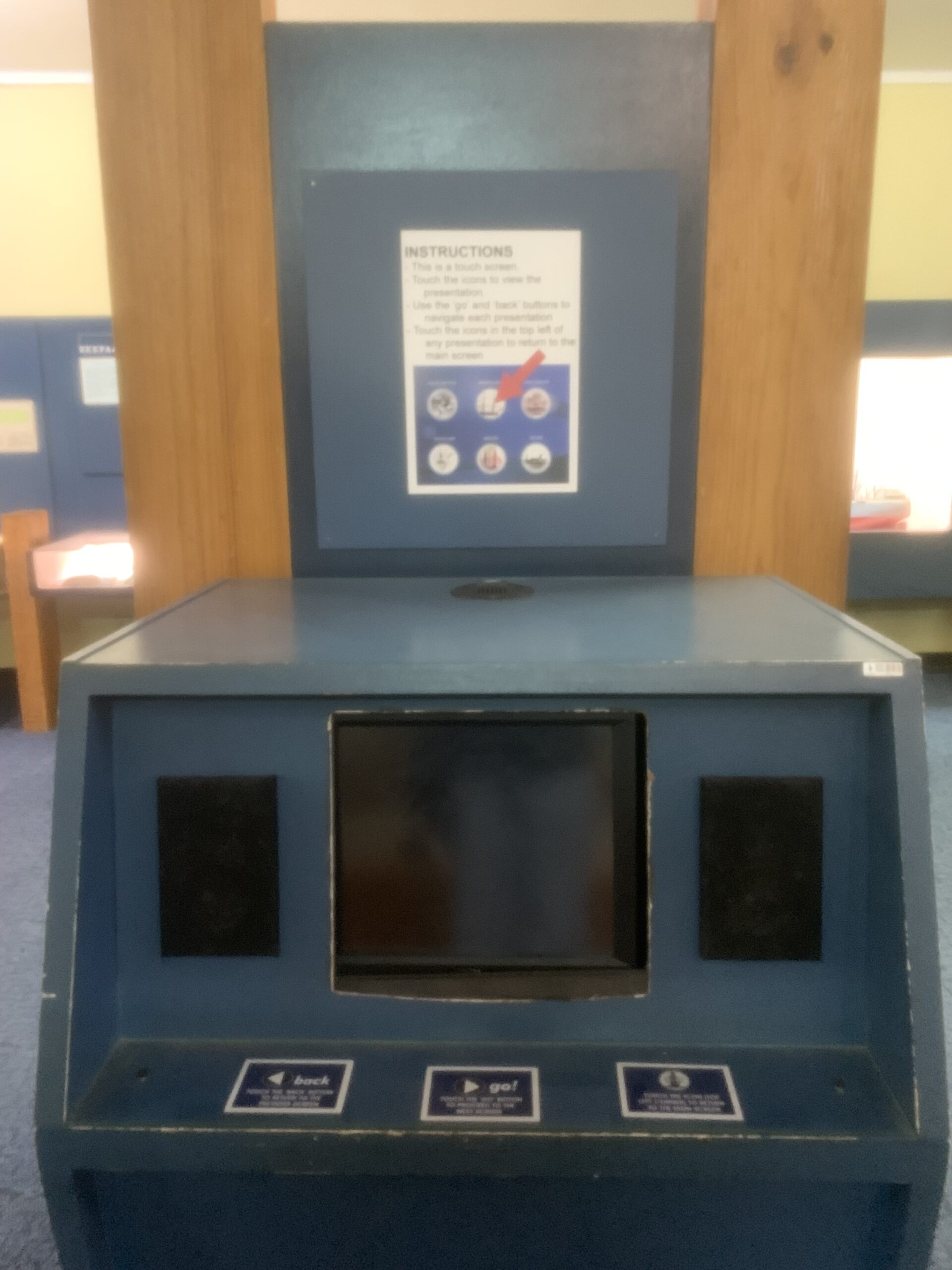
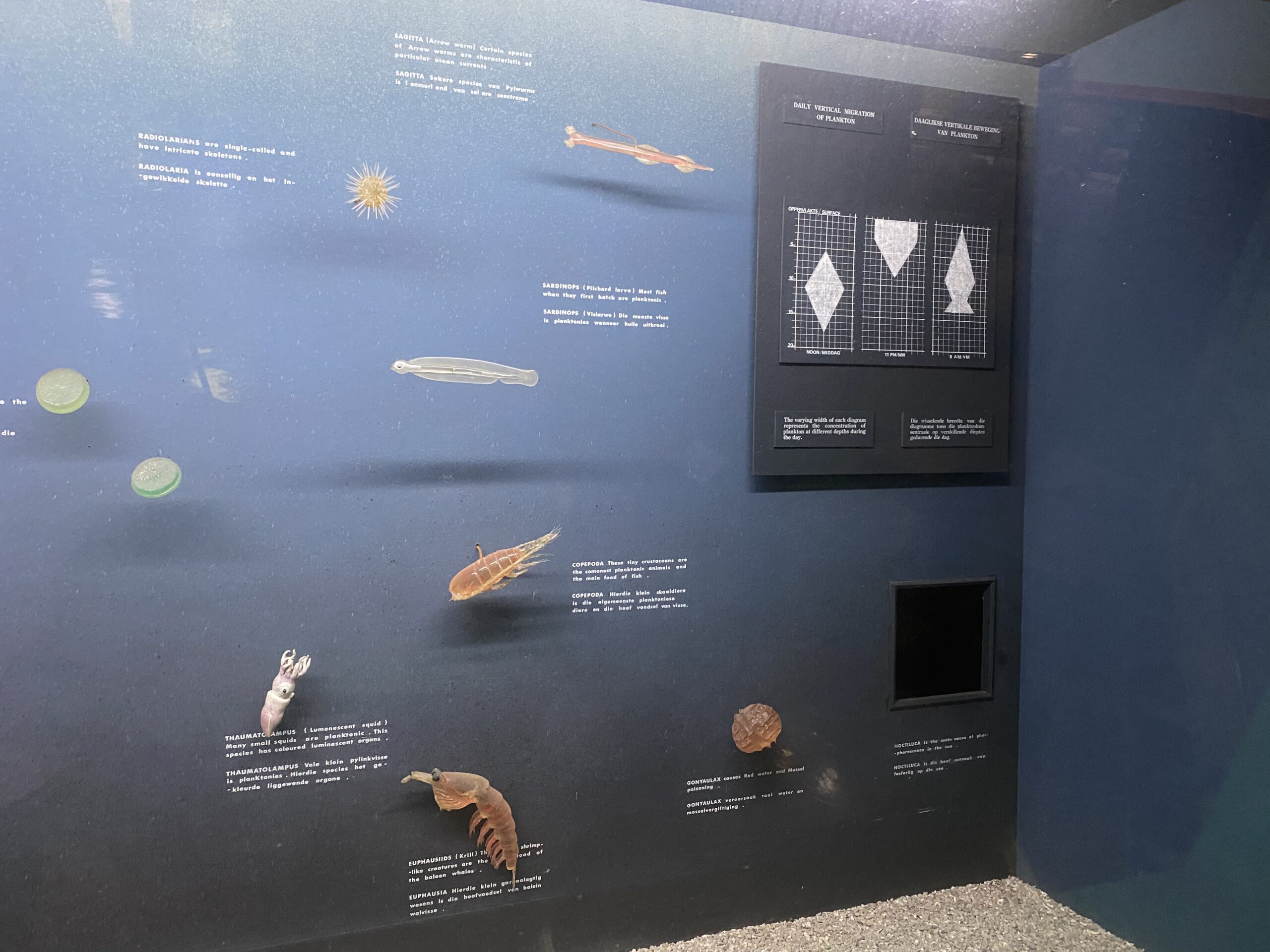
Eventually, one door opened into the only accessible exhibition space. Inside, a staff member provided minimal guidance and mentioned a snake demonstration scheduled for noon. From there, we began moving through the exhibits, starting with the dinosaur displays. The galleries felt dim and subdued; dust was visible on surfaces, and many displays showed signs of age. Interactive components — touchscreens and buttons — were present but nonfunctional, leaving only empty frames where engagement was once intended.
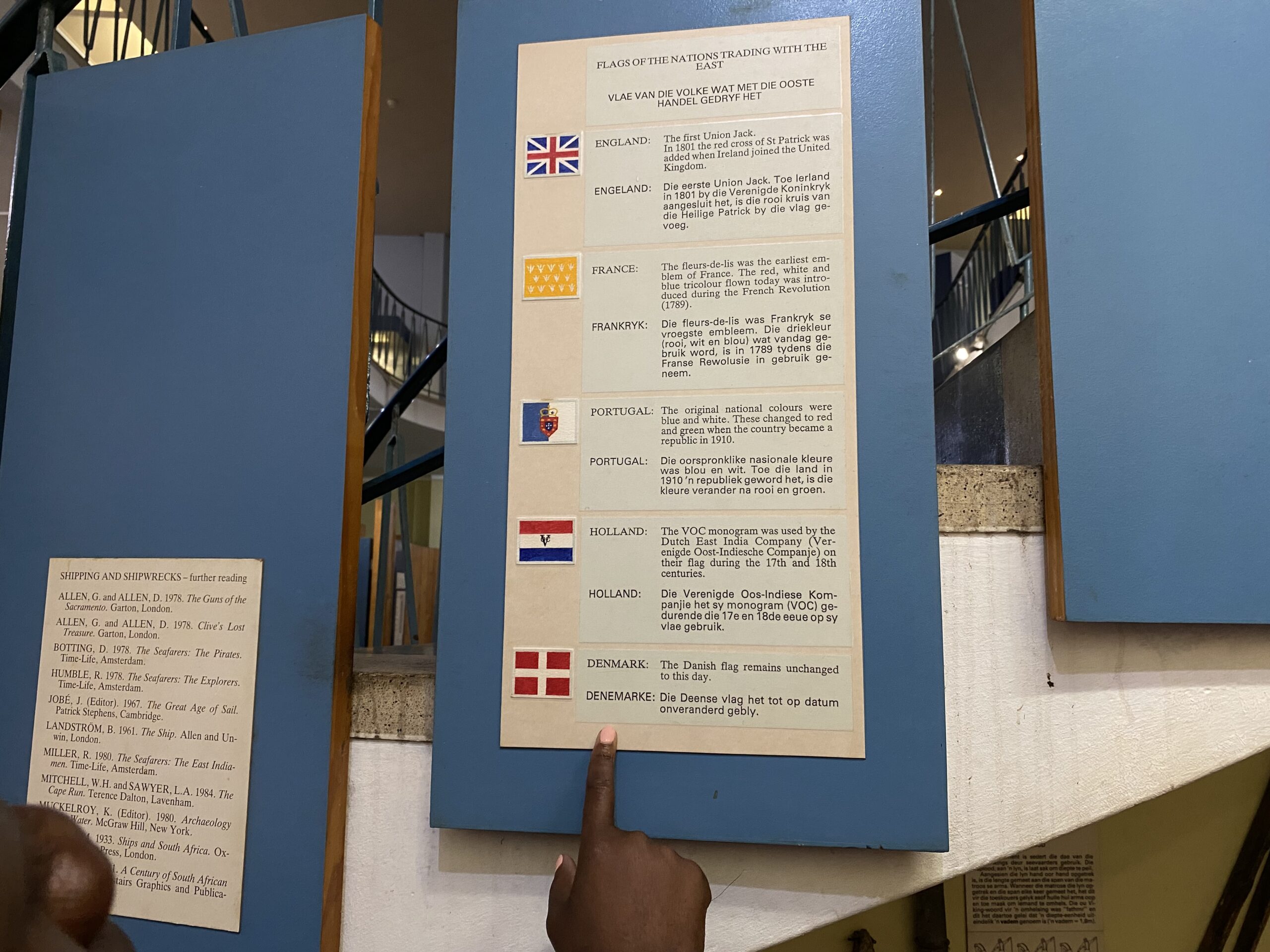
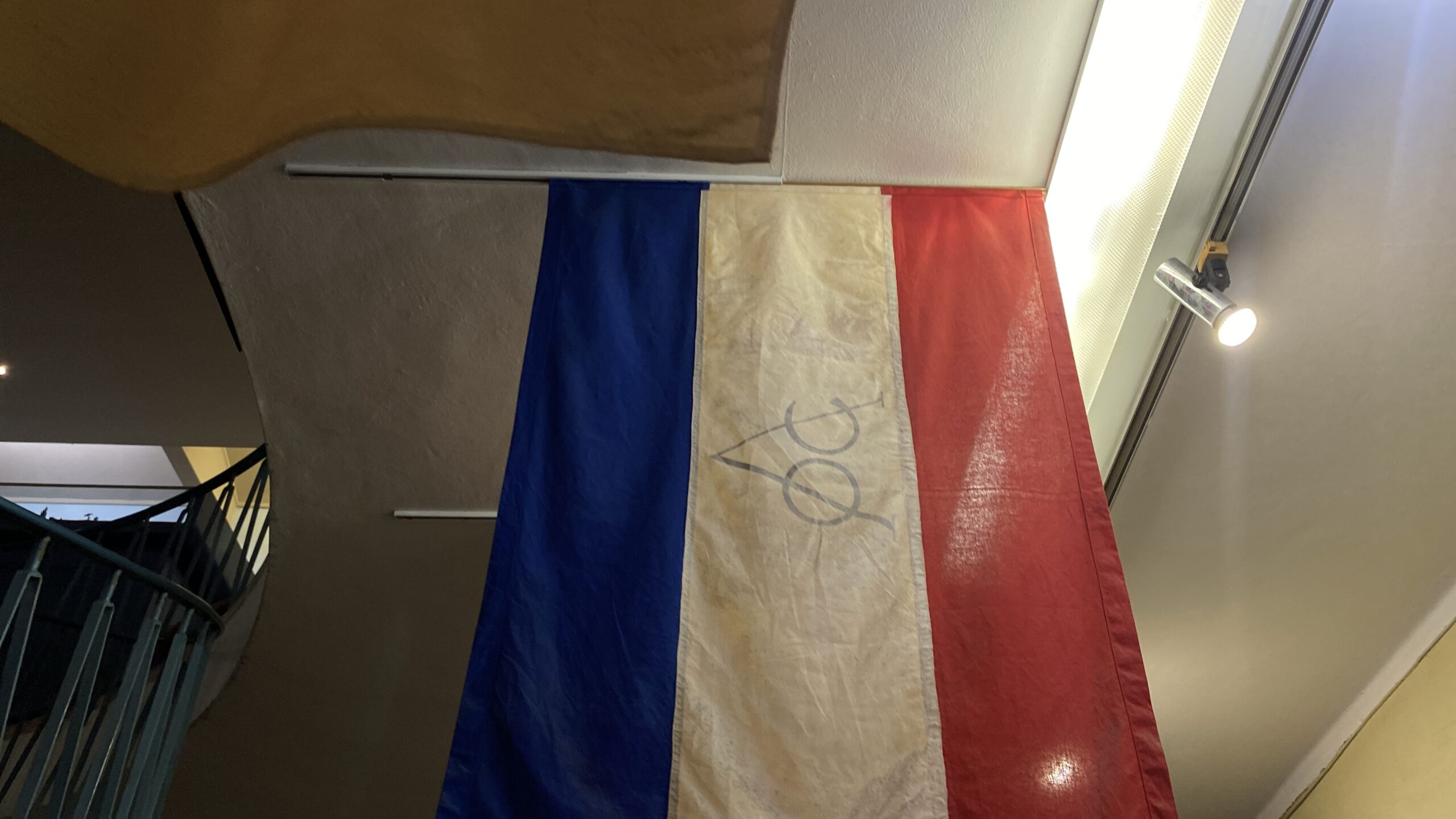
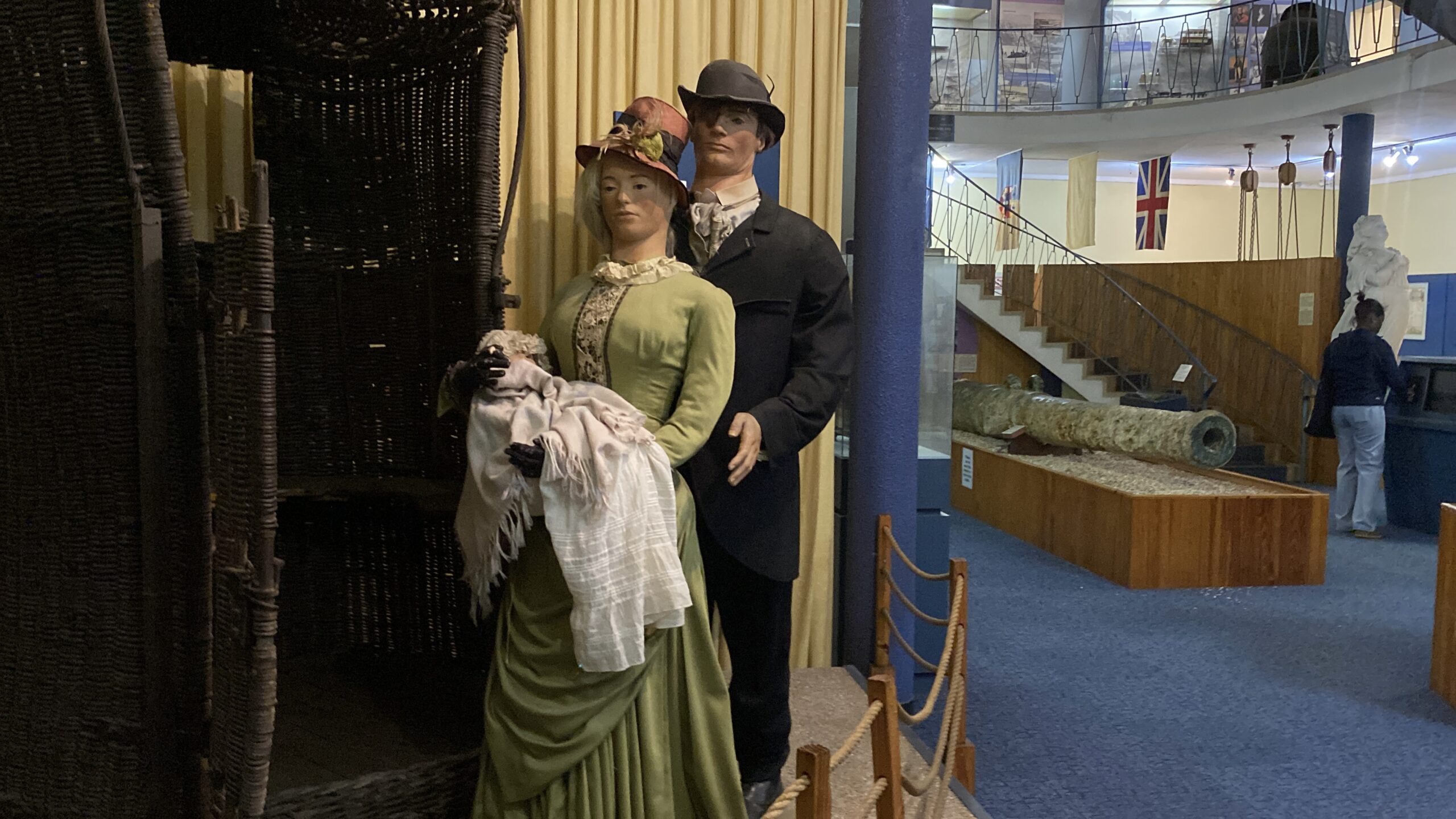
The exhibition sequence moved through marine ecosystems, plankton, and broader ocean life before transitioning into cultural and historical displays. Sections on Xhosa communities, colonial encounters, and British settlement were arranged in a brighter space, visually distinguishing them from the darker natural history areas. Colonial imagery — particularly flags and maritime narratives — was prominently displayed, while the histories of slavery and coerced labor were notably absent.
By this point, the emotional tone of the visit had shifted from curiosity to fatigue. The experience felt prolonged, and I became aware that, were this not connected to research, I might have left earlier despite spending roughly ninety minutes onsite.
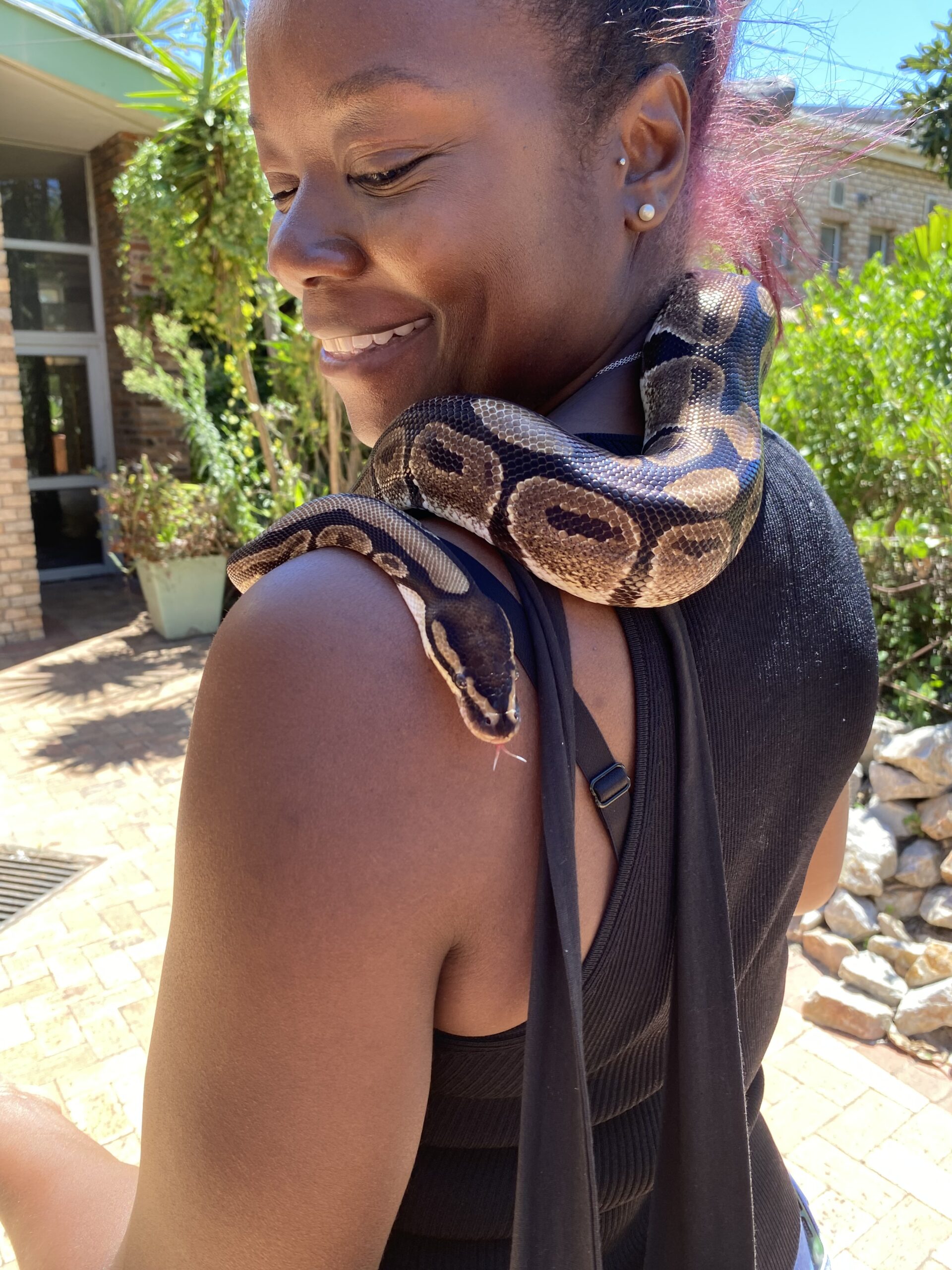
The final section led to the live animal exhibits. Enclosures housed turtles and snakes, though interpretive signage was sparse — often limited to species names. A handler eventually introduced a small snake and invited visitors to hold it. Around ten people gathered, marking the first moment of collective engagement during the visit. After briefly interacting and taking photographs, we exited.
The Oceanarium remained closed throughout, reportedly for renovations. However, its inaccessibility, combined with the broader condition of the site, suggested a deeper institutional pause rather than a simple temporary closure.
Preliminary Analysis
Several themes emerge from the visit.
1. Institutional Aging and Material Decline
The physical environment — deteriorating infrastructure, nonfunctional exhibits, and closed spaces — communicates a museum struggling to sustain operational vitality. The built environment itself becomes a form of narrative, signaling reduced investment and shifting institutional priorities.
2. Disorientation as Visitor Experience
Navigation through locked doors and unclear signage produced a fragmented visitor journey. Rather than guiding interpretation, the spatial layout required guesswork, positioning visitors as self-directed explorers in a largely unsupported environment.
3. Selective Historical Framing
The prominence of colonial symbols, particularly those linked to the Dutch East India Company, alongside the absence of slavery narratives, suggests a partial telling of history. This reflects older museological traditions that foreground exploration while minimizing structural violence.
4. Shifting Ethics of Animal Display
The closed Oceanarium can be read not only as a logistical issue but as an indicator of broader debates around marine captivity and the ethics of displaying animals. Its silence — empty tanks, locked gates — becomes interpretive in itself.
Synthesis & Interpretation
Bayworld operates as a museum suspended between temporalities. Founded in 1960, its infrastructure and narrative frameworks reflect heritage paradigms shaped during apartheid-era institutional thinking, where natural history, colonial exploration, and public education followed rigid, authoritative models.
Today, however, the site reveals the strain of reconciling those inherited frameworks with contemporary expectations around inclusivity, critical history, and environmental ethics. The aging exhibits and narrative omissions are not simply operational shortcomings; they are material expressions of a broader transition within heritage practice.
In this sense, the museum reads less as a failed institution and more as one at a crossroads. Its physical deterioration, narrative gaps, and partial closures collectively signal the need for reimagining — not only through renovation, but through deeper curatorial transformation that addresses whose histories are told, how knowledge is shared, and what role museums play in post-apartheid public life.
Ultimately, the visit left the impression of a space on “life support,” yet still holding potential. The infrastructure may be worn, but the site’s location, scope, and thematic breadth suggest that with renewed investment — both material and conceptual — it could evolve into a more dialogic and socially responsive heritage space.
Dance Card Entry 5: St. Croix Island
Heritage Site Snapshot
Name: Baywatch Marine Conservation Project
Date: February 18, 2026
Location: Algoa Bay, Gqerbeha, Eastern Cape, South Africa
Start Time: 8:00 AM
End Time: 1:30 PM
Type of Experience: Experiential Field Visit / Marine Conservation Ecotourism Observation
Thick Description
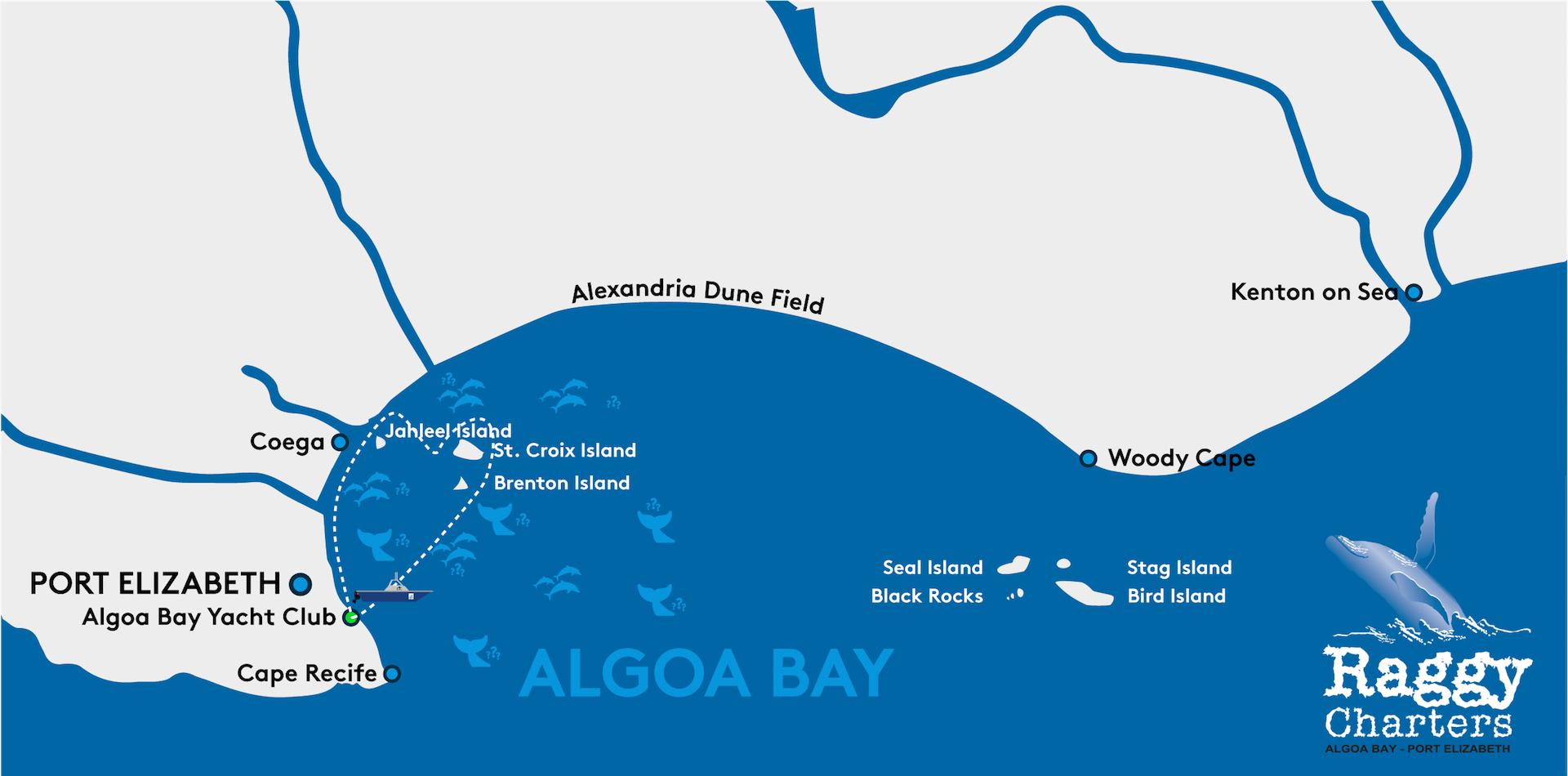
This field experience took place in Algoa Bay as part of the Baywatch Marine Conservation Project, a marine conservation initiative that has been operating for over 30 years and is regarded as the longest privately funded marine conservation project in Africa.
We arrived shortly after 08:00 and joined a group of eleven participants, along with five skippers — Kevin, Shawn, Ibu, Vanessa, and tourism intern Siya. Following a brief safety talk, Kevin led us down to the dock where the boats were secured, and Shawn welcomed us aboard. Shawn and Ibu provided an onboard safety orientation, explaining movement around the vessel, emergency considerations, and practical guidance for seasickness. The boat included several viewing areas — a standing space at the bow and an upper platform above the helm — as well as a small toilet, which made the extended trip more comfortable.
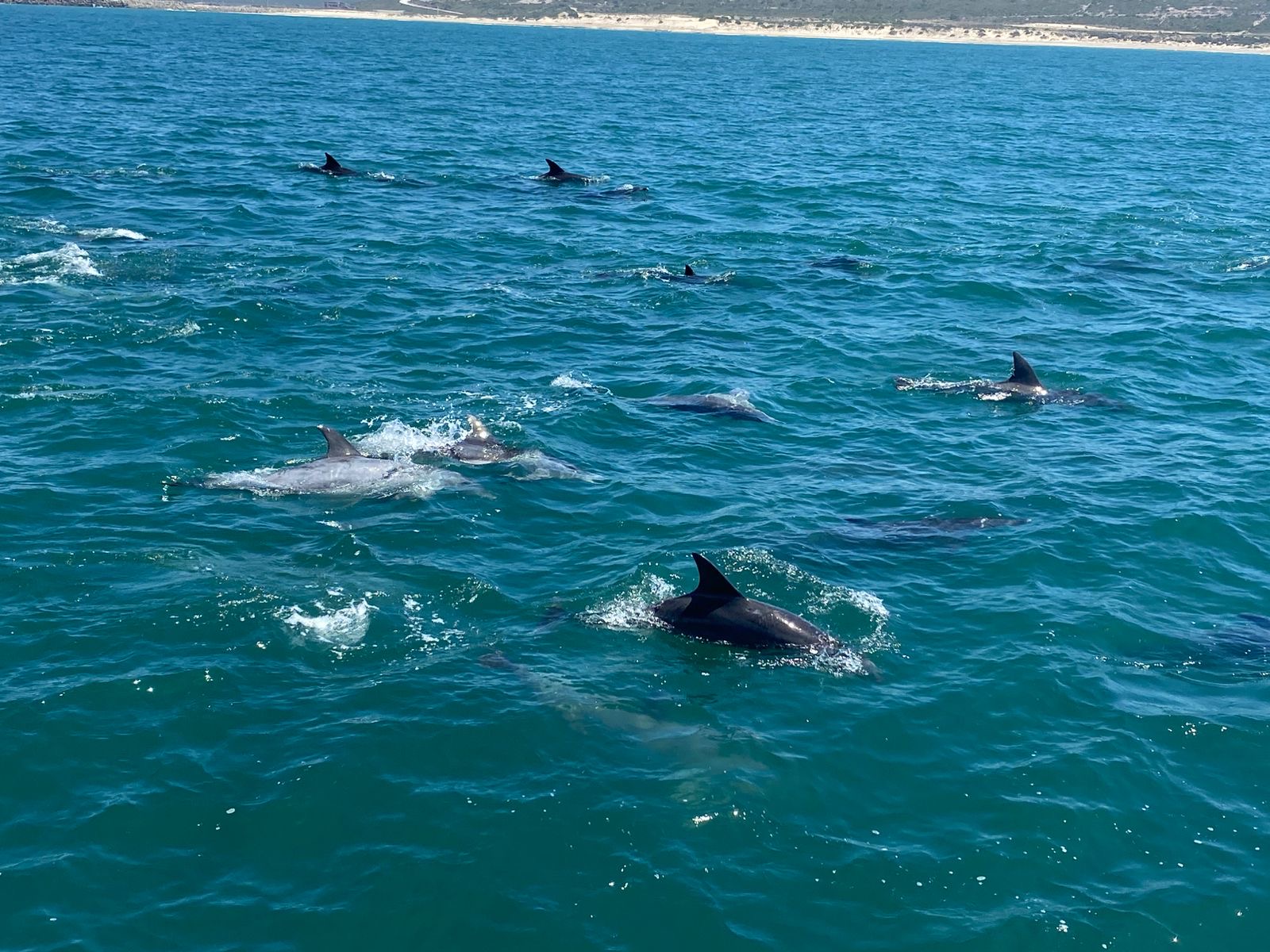
As we entered the bay, we quickly encountered a pod of approximately forty dolphins close to shore. The guides explained that the company intentionally runs only one trip per day to reduce disturbance to wildlife and minimize environmental impact, and that each tour plants a spekboom as a carbon offset.
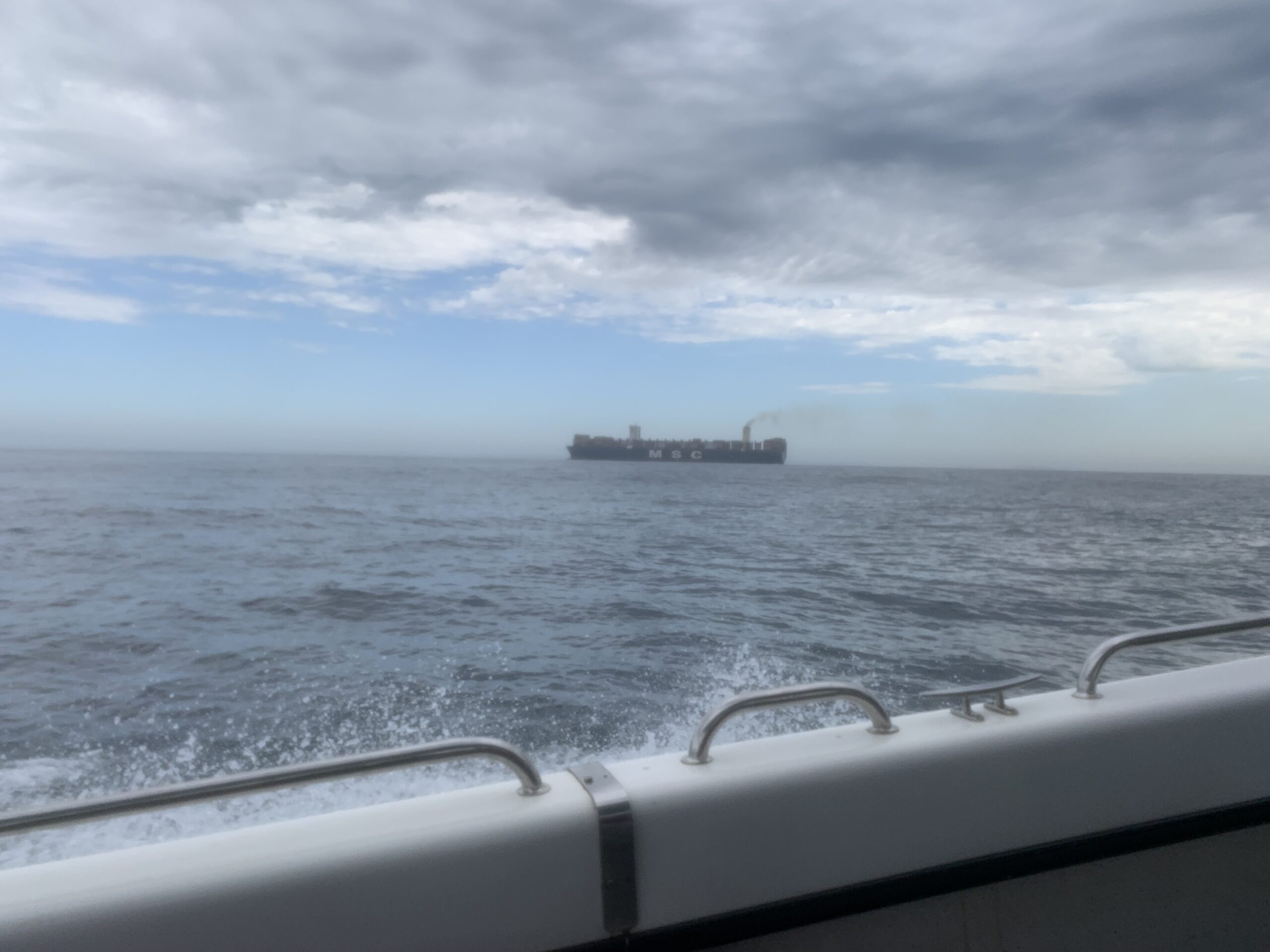
Soon after, we spotted what initially appeared to be a penguin but was a Cape fur seal moving through the water. The scenery carried a striking contrast: while surrounded by marine life, a large MSC container ship passed through the bay, releasing grey smoke and underscoring the coexistence of conservation and global shipping activity.
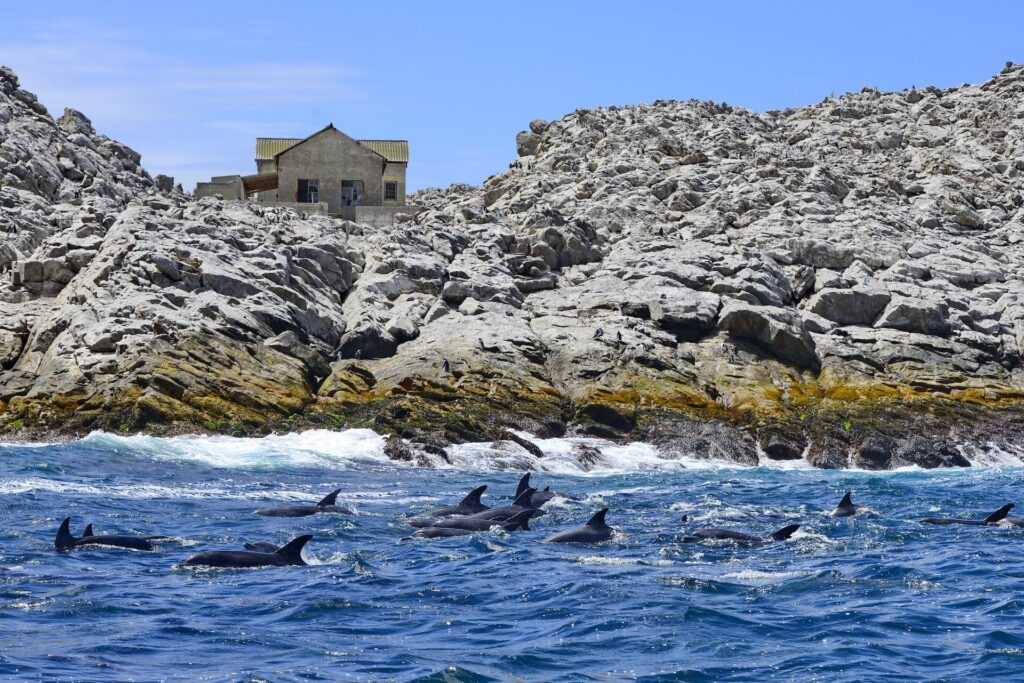
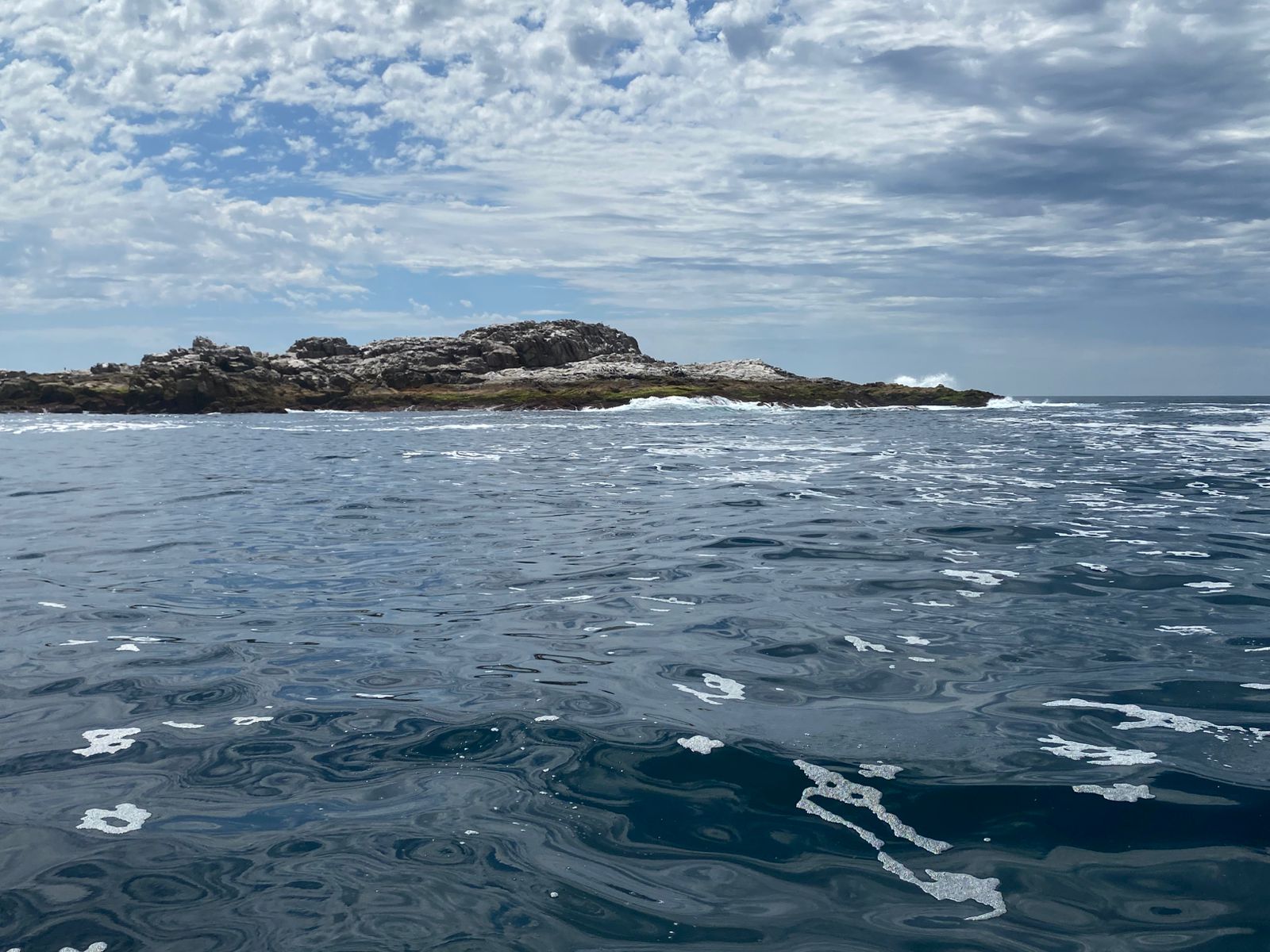
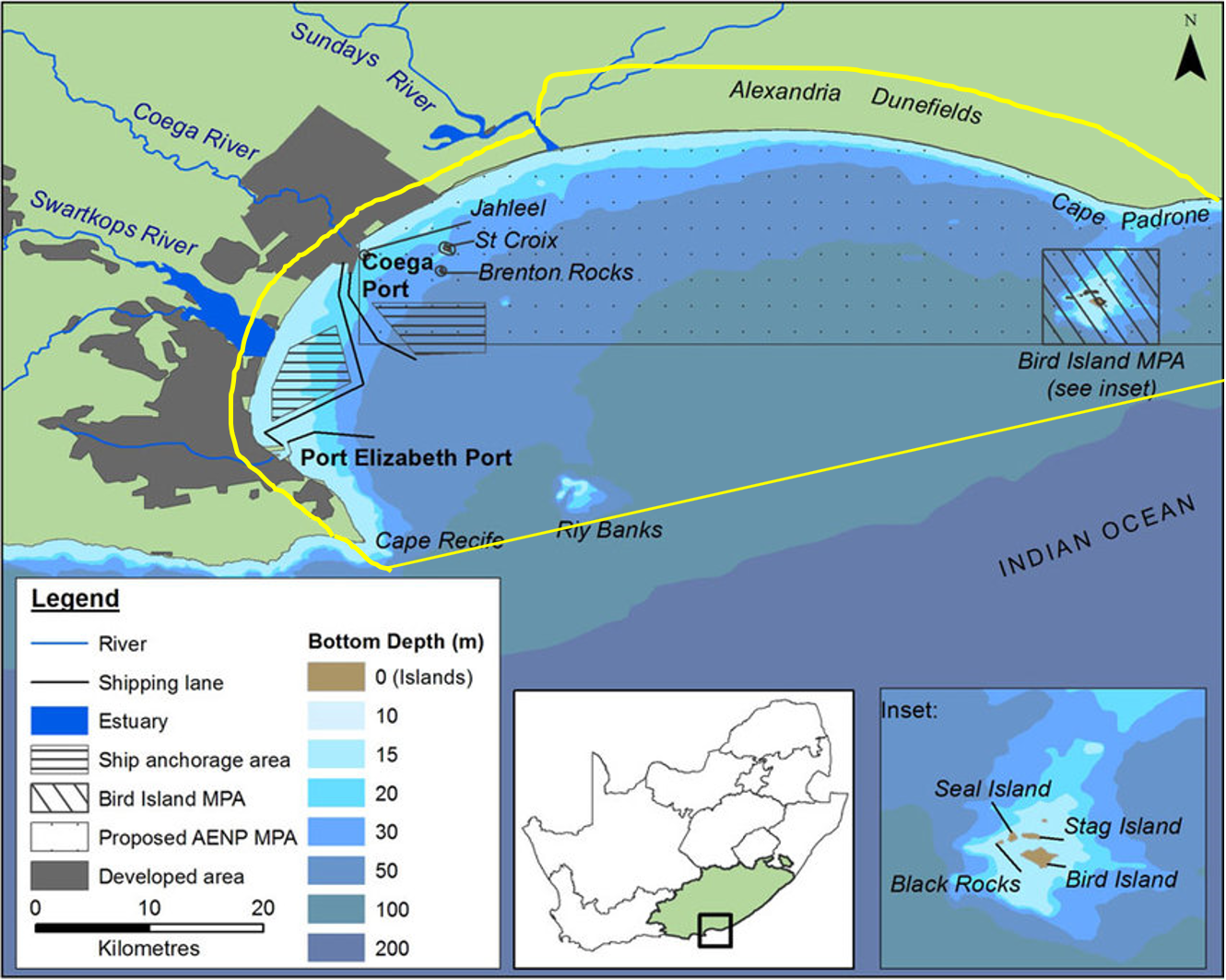
We later observed African penguins swimming together in a formation known as a raft before heading toward St. Croix Island and Brenton Island. At St Croix, we learned how Raggy Charters applied in 2024 to have the island designated as a marine protected area due to severe overfishing in surrounding waters. This overfishing has significantly increased mortality among African penguins by reducing their primary food source — sardines.
Guides explained that with sardine stocks depleted, penguins must travel farther to find food, expending more energy and often returning with less to feed their chicks. Oil spills have also contributed to declining numbers, compounding the pressures on an already endangered population of roughly 3,000 individuals remaining in the wild.
The most dramatic portion of the trip involved tracking a group of seven orcas around the islands. We spent nearly an hour observing their movements as they hunted fish. The pod included a large male and a smaller individual, and we learned that orcas live within matriarchal social structures. Their unpredictable surfacing patterns created a sense of anticipation, while seagulls gathered loudly overhead during feeding events, opportunistically following the kills.
After heading back toward shore, we paused briefly for a simple lunch of cheese and tomato sandwiches. While returning, we spotted splashing in the distance and encountered a much larger pod of dolphins — approximately 200–250 individuals — surrounding the boat and creating a powerful sense of immersion in the marine environment.
Throughout the excursion, both Ibu and Kevin shared detailed ecological knowledge, deepening our understanding of species behavior, conservation challenges, and the interconnectedness of the bay’s ecosystem.
Preliminary Analysis
Being out on the water in Algoa Bay made conservation feel tangible rather than conceptual. Observing wildlife relationships in real time — dolphins traveling in pods, penguins moving in rafts, and seabirds trailing feeding activity — highlighted just how interconnected the marine ecosystem is. The experience made it easier to understand ecological balance because it was unfolding in front of us rather than being explained through diagrams or text.
The protective measures around the islands also stood out. Learning that fishing is no longer permitted within a 20 km perimeter reinforced how human activity directly shapes species survival. The explanation of overfishing, oil spills, and shifting food availability illustrated how multiple pressures converge in one place. It became clear that conservation decisions are not abstract policies but interventions that attempt to stabilize fragile relationships between species, industry, and community livelihoods.
Synthesis and Interpretation
What stayed with me most was how visual the learning was. Watching behaviors — the rafting penguins, the coordinated dolphin pods, and the opportunistic seabirds — made ecological relationships easier to understand than any diagram could. Learning that the African penguin relies heavily on pilchards, a fish that is also a staple and affordable protein source in many township communities, underscored how conservation is never only about wildlife. It is also about food systems, livelihoods, and equity.
Seeing these dynamics firsthand made me reflect on how visual experiences can help bridge understanding for people on land who may not see these systems daily. I kept thinking about how illustrating these ecological signals more broadly could help communities connect the dots between environmental protection and human well-being. The experience reinforced the idea that connection drives care: when people can see and emotionally register what is at stake, conservation shifts from an abstract concept to a shared responsibility rooted in lived reality.



Dance Card Entry 6: SANCCOB
Heritage Site Snapshot
Name: SANCCOB (Gqerbeha)
Date: February 19, 2026
Location: Gqerbeha, Eastern Cape, South Africa
Start Time: 10:17 AM
End Time: 12:00 PM
Type of Experience:
Conservation & Rehabilitation Experience
Thick Description
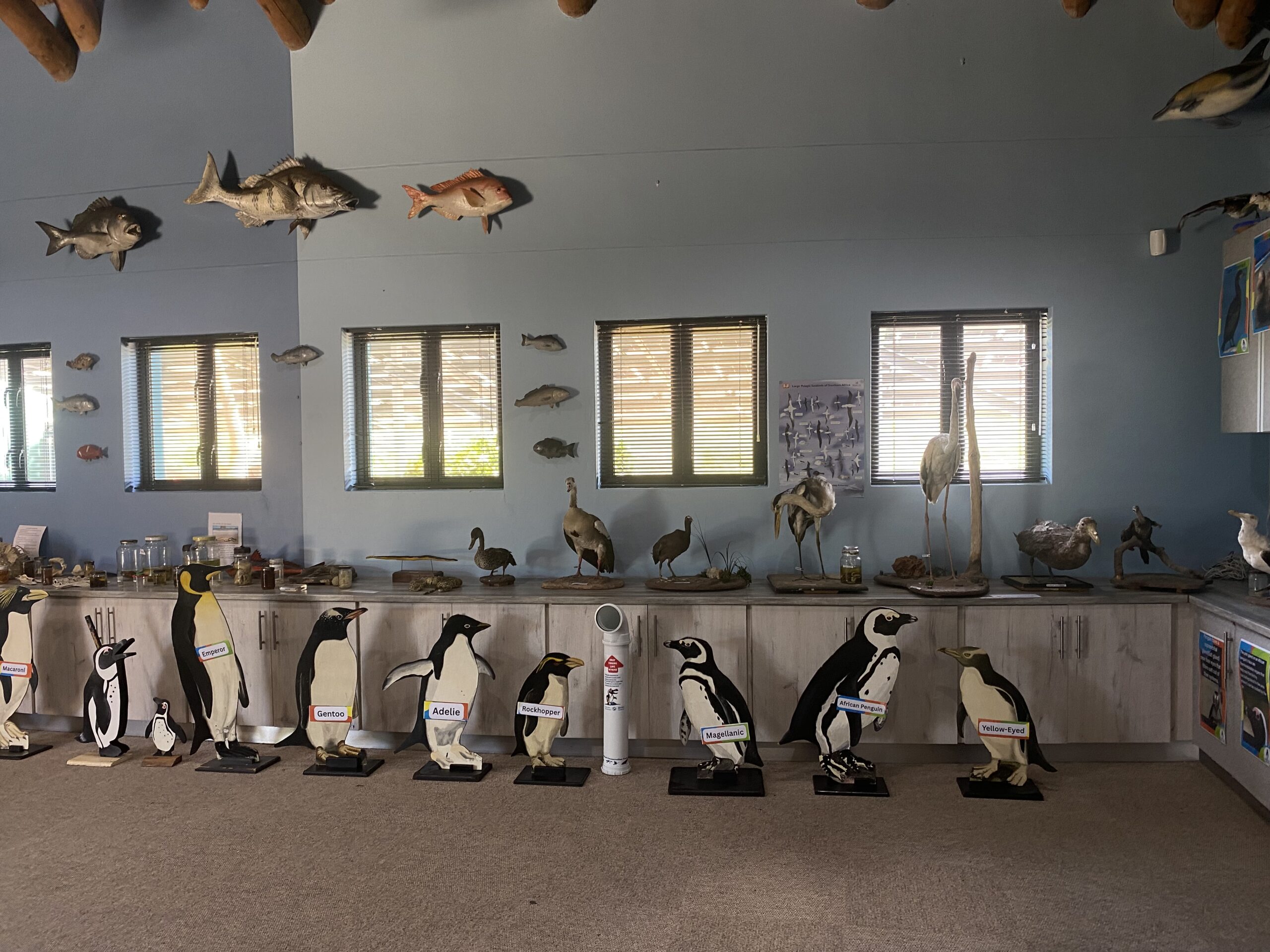
We arrived just before our scheduled tour, stepping into a space that immediately felt bright, open, and welcoming. Before anything else, we spent a few moments browsing the gift shop, which was notably well stocked — shelves lined with t-shirts, clothing, stuffed penguins, socks, beanies, caps, puzzles, books, and keychains. The abundance of merchandise and the overall polish of the space made it clear that this center is both well staffed and well supported, a contrast to many heritage sites where funding limitations are visible.
There was a warmth in the atmosphere — staff moved easily through the space, greeting visitors with familiarity and enthusiasm, clearly strong advocates for conservation and for the penguins themselves. During this time, I purchased a t-shirt and keychain and symbolically adopted a juvenile penguin, whom we named Chubs because he was preparing to moult and looked especially round. Even this simple act of adoption felt like an invitation into the work of the center, a way of connecting visitors to the ongoing care happening behind the scenes.
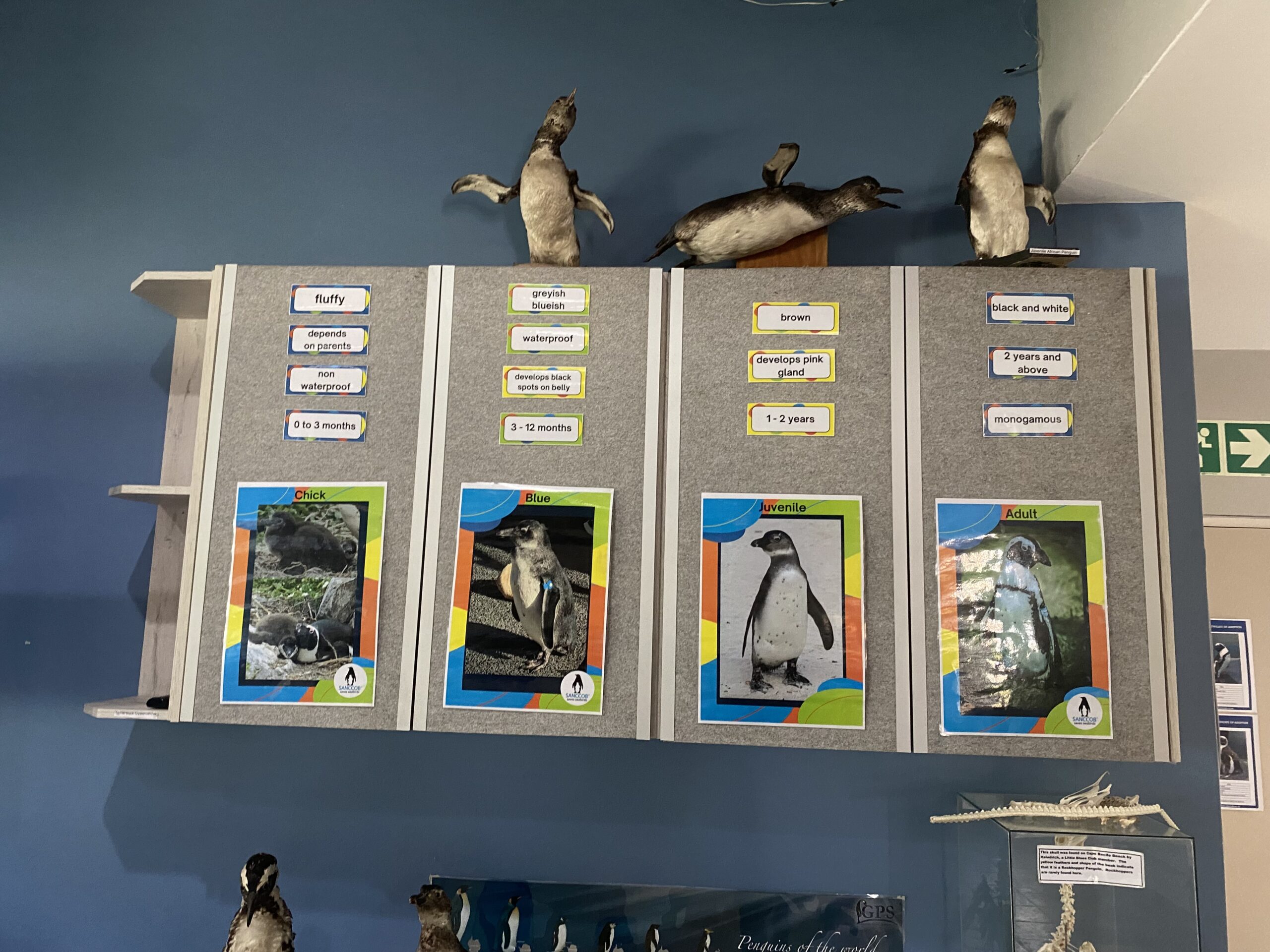
At 10:30 am, the tour began promptly, reflecting the structured rhythm of the center, where tours run every 30 minutes from morning through mid-afternoon. We were first guided into an educational room, a space clearly designed for learning — bright, accessible, and ideal for children or anyone wanting a foundational understanding of the species. Here we were introduced to the life cycle of the African penguin and to the origins of the rehabilitation center itself.
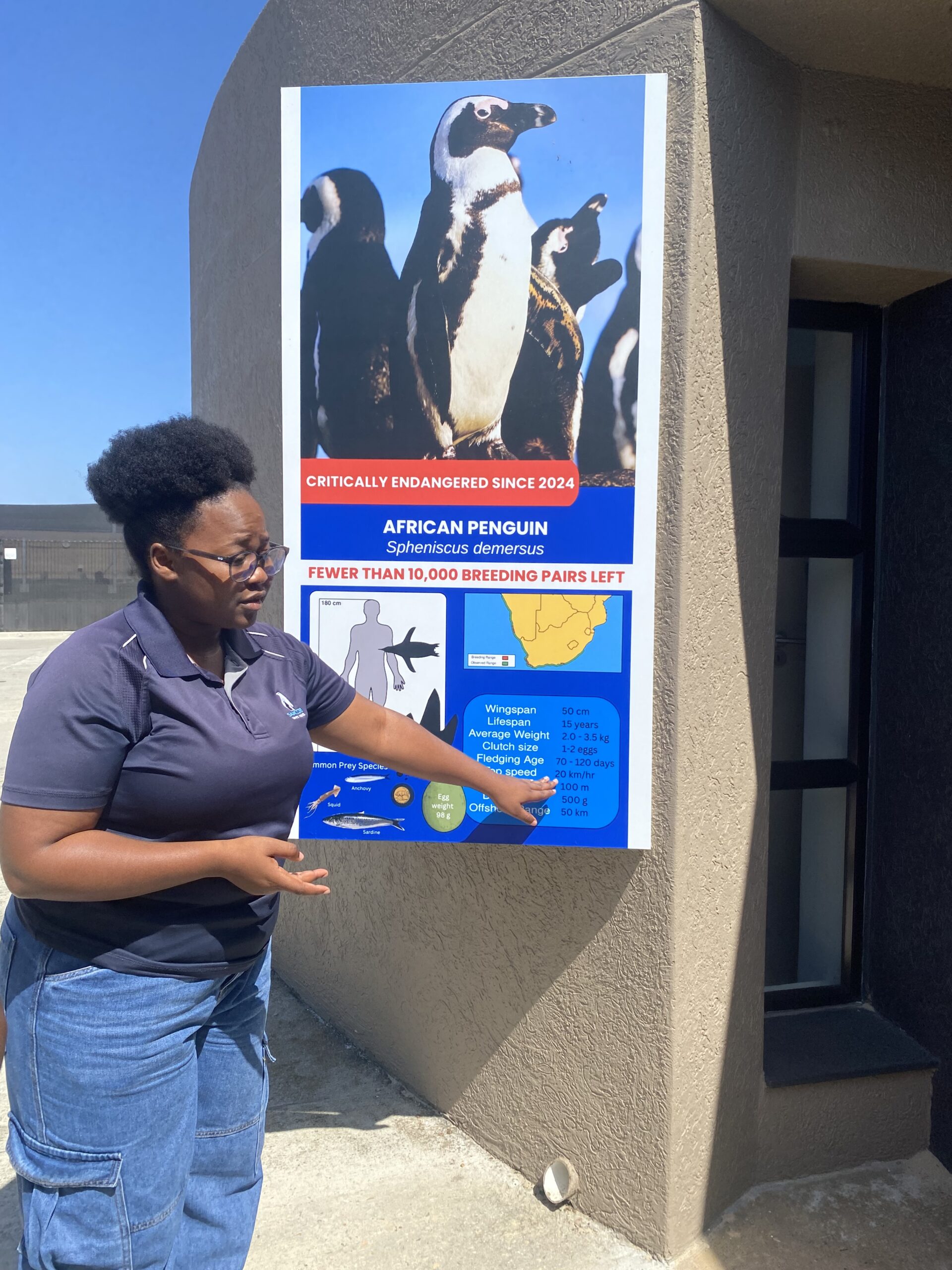
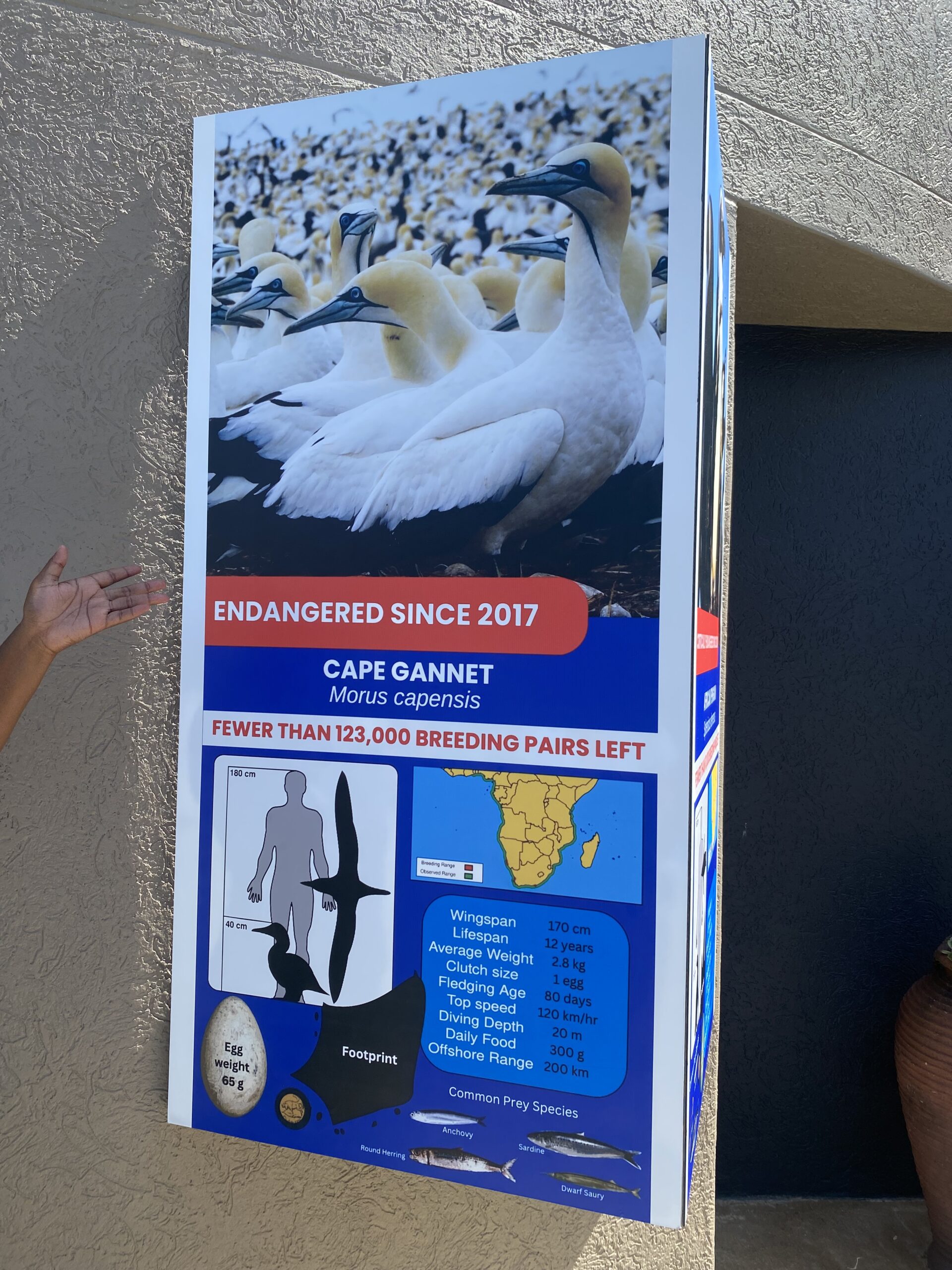
The information carried a sobering weight: African penguin populations are declining rapidly, with fewer than 10,000 remaining in the wild. In the Gqeberha region specifically, they inhabit St. Croix and Bird Island, where volunteers monitor colonies and transport injured birds to SANCCOB for care. Hearing that extinction could become a reality by 2035 if conservation efforts fail shifted the tone of the visit — the space felt not only educational but urgent, a site of intervention rather than simply observation.
After the orientation, we transitioned from the classroom setting into the rehabilitation and viewing areas, where the abstract became tangible. Before entering, we paused to sanitize and clean our shoes, a precaution to prevent the spread of avian influenza (AI). This small but deliberate act reframed visitors as participants in the ecosystem of care — responsible bodies moving through a vulnerable environment.
In the first enclosure, we observed three penguins, including a juvenile gliding and splashing through the water with playful energy. Watching him move created a moment of lightness — a reminder that recovery and vitality coexist with the heavier narratives of species decline. It was this bird that we later chose to adopt. Staff explained that his roundness was a sign of preparation for moulting, a biologically demanding period when penguins must build fat reserves because they cannot enter the water to feed. What looked initially like softness became evidence of resilience and adaptation.
We then moved to the breeding enclosures, where the atmosphere felt quieter and more intimate. Here, the rhythms of care and reproduction unfolded in small, deliberate gestures. One penguin repeatedly carried pieces of grass into a nesting shelter, packing it so densely that he could barely fit inside — an almost humorous yet deeply tender display of instinctual dedication. Nearby, other breeding pairs tended eggs nestled in provided boxes, while some penguins dug their own shallow dens into the sand.
These scenes revealed the layered nature of conservation work — it is not only about saving species at scale, but about supporting individual lives through vulnerable cycles of growth, nesting, and recovery. Standing among the enclosures, the experience felt both hopeful and fragile, a close encounter with the daily labor required to sustain a species on the edge.
After the tour concluded, we spent time in the café reflecting on the experience. Sitting with milkshakes and burgers accompanied by freshly cut, locally sourced French fries, the pace of the visit slowed. From the café’s viewing window, we could still see Chubs in his enclosure, moving between water and land. This quiet moment of observation created a gentle transition from structured learning back into everyday life — a space to process what we had seen while still remaining visually connected to the living subject of the conservation work.
By the time we departed at noon, the visit felt less like a tour and more like witnessing a living system of care — one where science, compassion, and public engagement intersect in tangible ways.
Preliminary Analysis
SANCCOB offers a strong example of a conservation space that balances education, rehabilitation, and visitor engagement effectively. The structured tour format, knowledgeable staff, and clear interpretive flow help visitors understand both the biology of the African penguin and the urgency of the conservation work.
What stands out most is the intentional design of participation — from adopting a penguin to cleaning shoes between enclosures — visitors are subtly positioned as contributors rather than passive observers. The facility is also notably well resourced compared to other heritage and conservation spaces I’ve visited, which allows for clearer storytelling, functional infrastructure, and a more immersive educational experience.
At the same time, the experience raises questions about scalability and equity: how can similarly engaging conservation education be resourced in less funded contexts, and how might SANCCOB’s model be translated into community-based learning environments beyond the site itself?
Synthesis & Interpretation
This visit reinforced how conservation spaces can function as both scientific and emotional learning environments. Seeing the penguins up close — especially the juvenile preparing to moult and the breeding pairs tending nests — created a relational understanding of conservation that statistics alone cannot convey.
As someone living in South Africa, where biodiversity loss and environmental pressures are deeply intertwined with social realities, SANCCOB illustrates how collaboration across organizations in Algoa Bay is building a networked approach to stewardship. The experience suggests that conservation becomes most meaningful when people can see themselves within the system of care — not just as witnesses, but as participants in sustaining life.
Ultimately, the visit highlighted that conservation is not only about preventing extinction; it is about cultivating connection, responsibility, and a shared sense of future between humans and the natural world.
Dance Card Entry 7: Kghodwana Cultural Village
Heritage Site Snapshot
Name: Kghodwana Cultural Village
Date: March 2, 2026
Location: kwaMhlanga, Mpumalanga, South Africa
Start Time: 1:42PM
End Time: 2:38 PM
Type of Experience:
Self-Guided, Community-Centered Cultural Heritage Experience
Thick Description
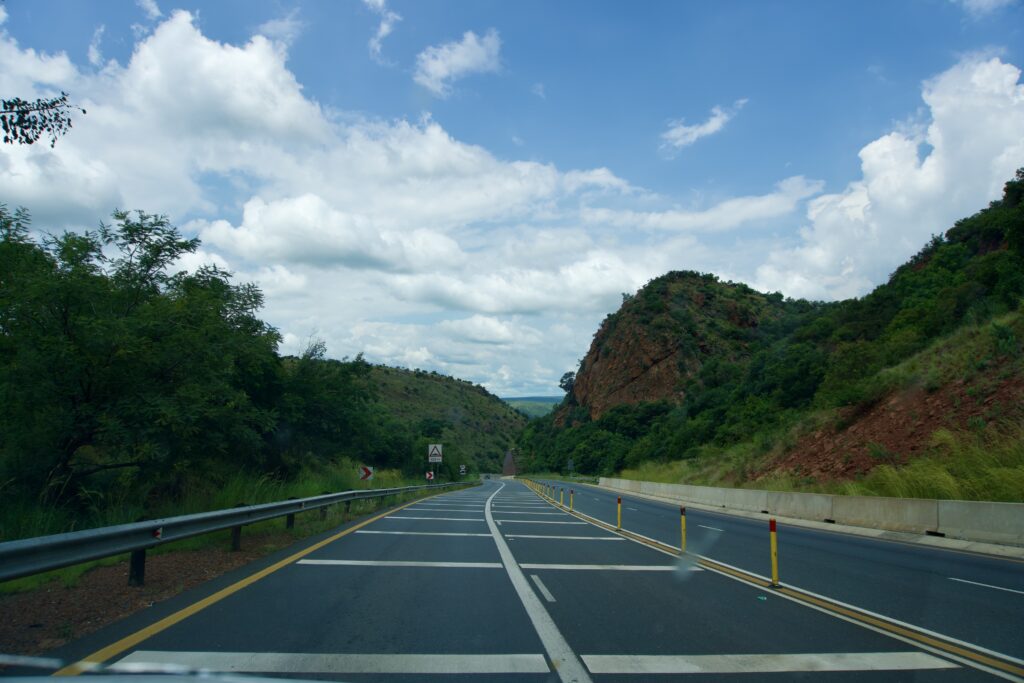
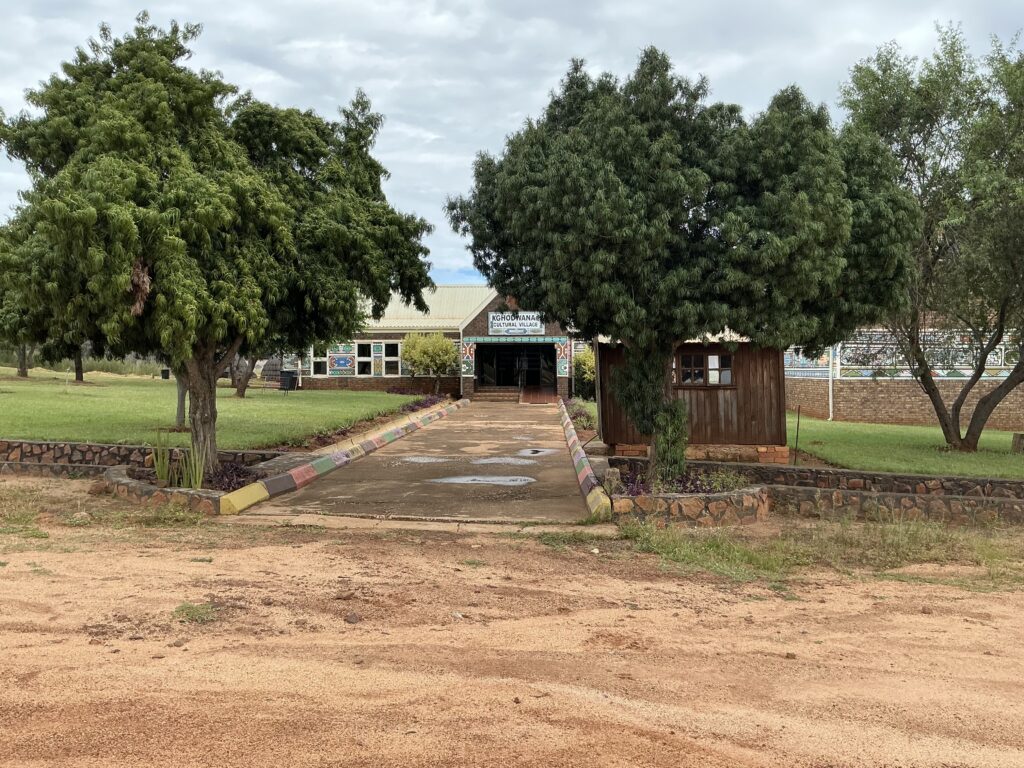
As we exited the N4 Highway, we immediately noticed that the road—previously marked by potholes on earlier visits—had recently been repaved, which was a pleasant surprise and made the approach smoother than expected. Signage for the cultural village itself was not particularly prominent and could easily be missed if one were not intentionally looking for it. In contrast, signage for the nearby mine along the same route was far more visible, subtly signaling which presence dominates the landscape.
Turning onto the dirt road leading toward the village, we found it to be relatively smooth and well-maintained, likely due to regular use and upkeep associated with the mine operations nearby. This transition—from a national highway, to a mine-serviced road, and finally to a quiet cultural site—set the tone for the visit, highlighting the layered relationships between industry, infrastructure, and heritage even before arriving at the entrance.
The visit then began at the dirt parking area, where we were greeted by a friendly security guard who asked us to sign in before proceeding. The atmosphere was quiet and still, immediately signaling that this would not be a bustling heritage space but rather one marked by long stretches of solitude between visitors. This impression would later be confirmed when we signed the guest book and noticed the sparse entries—only one visit recorded since mid-February, and another months prior—despite the site being open through the holiday season.
Inside the reception area, Bongi, the receptionist, welcomed us and collected the entrance fee. She explained that there was no attendant available to guide us through the site due to budget constraints, so she unlocked the room labeled “museum” and remained nearby while we explored independently. Her presence felt supportive yet unobtrusive, a quiet reminder of the human care sustaining the space even amid limited resources.
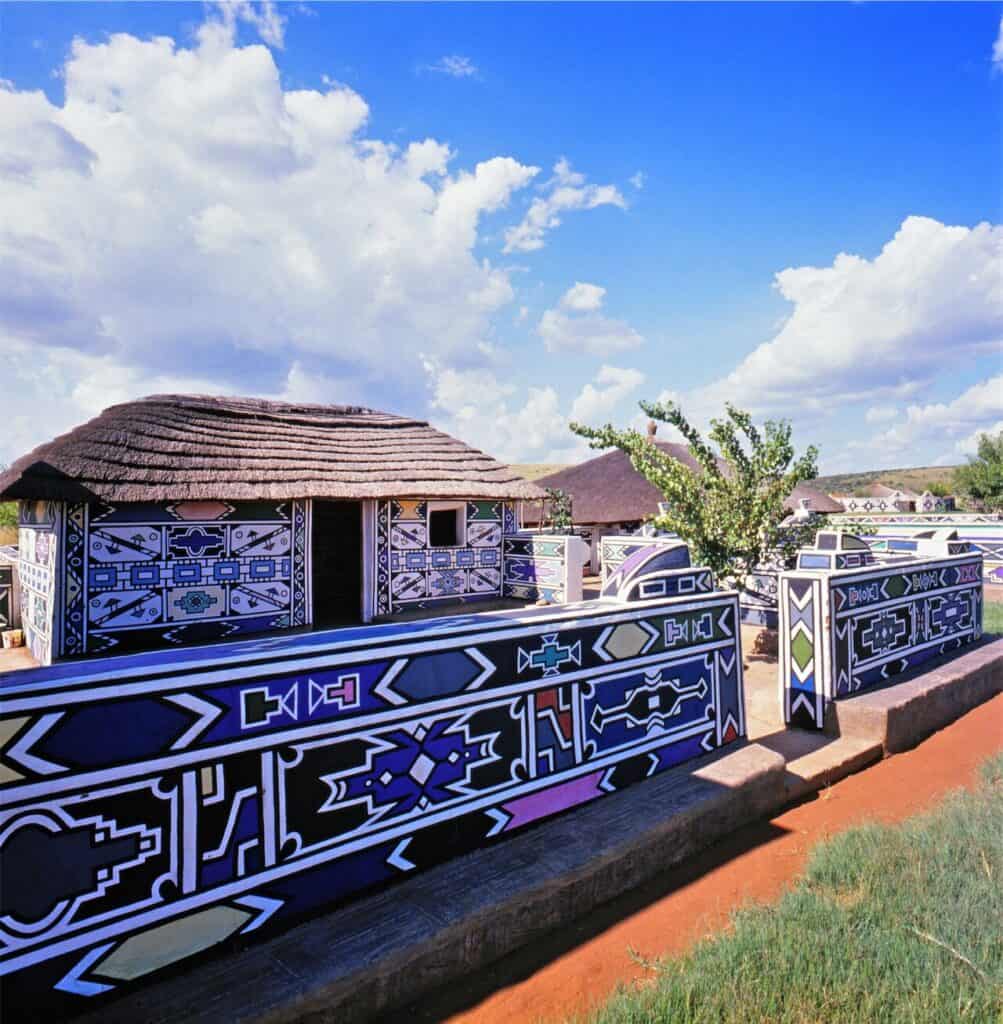
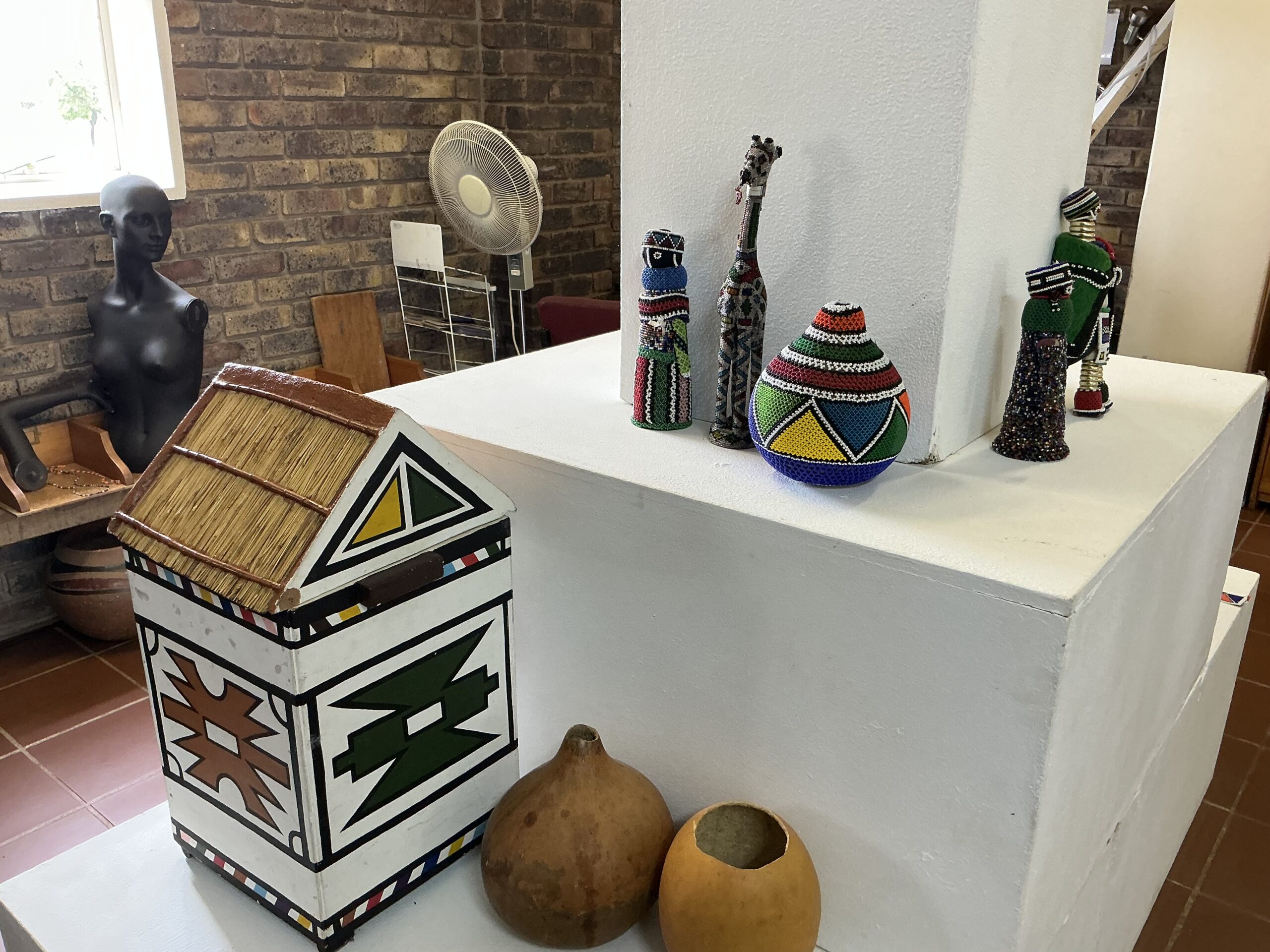
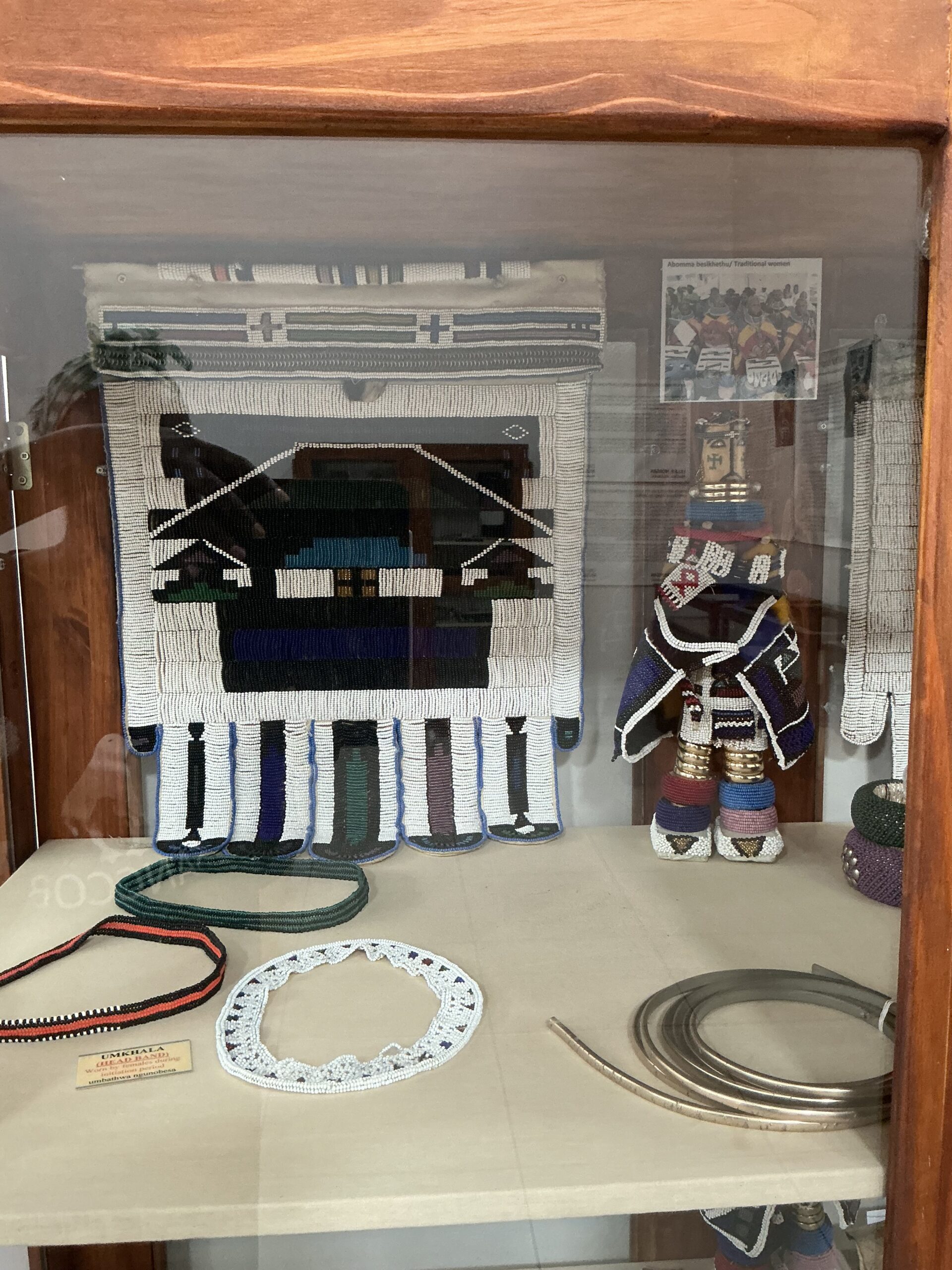
The museum room housed a collection of traditional Ndebele objects—cookware, clothing, spears, and intricate beadwork for which the culture is widely known. The objects were arranged simply, and the room carried a sense of preservation rather than active interpretation. I asked about the absence of posters that had previously hung high along the left wall. Bongi explained that they had been removed because the wall’s plaster was peeling and the space was awaiting repairs. This small detail revealed the material realities of maintaining cultural infrastructure—heritage here is not static but contingent on funding, maintenance, and ongoing care.
We then moved outside to the section that holds the roundavels and reconstructed homesteads, located behind the reception, museum, and gift shop. The grass had recently been cut in parts, but not throughout the grounds, which limited our ability to move freely and ultimately shortened the visit. The absence of a clear pathway created a sense of partial access—as if the landscape itself was in transition, awaiting attention.
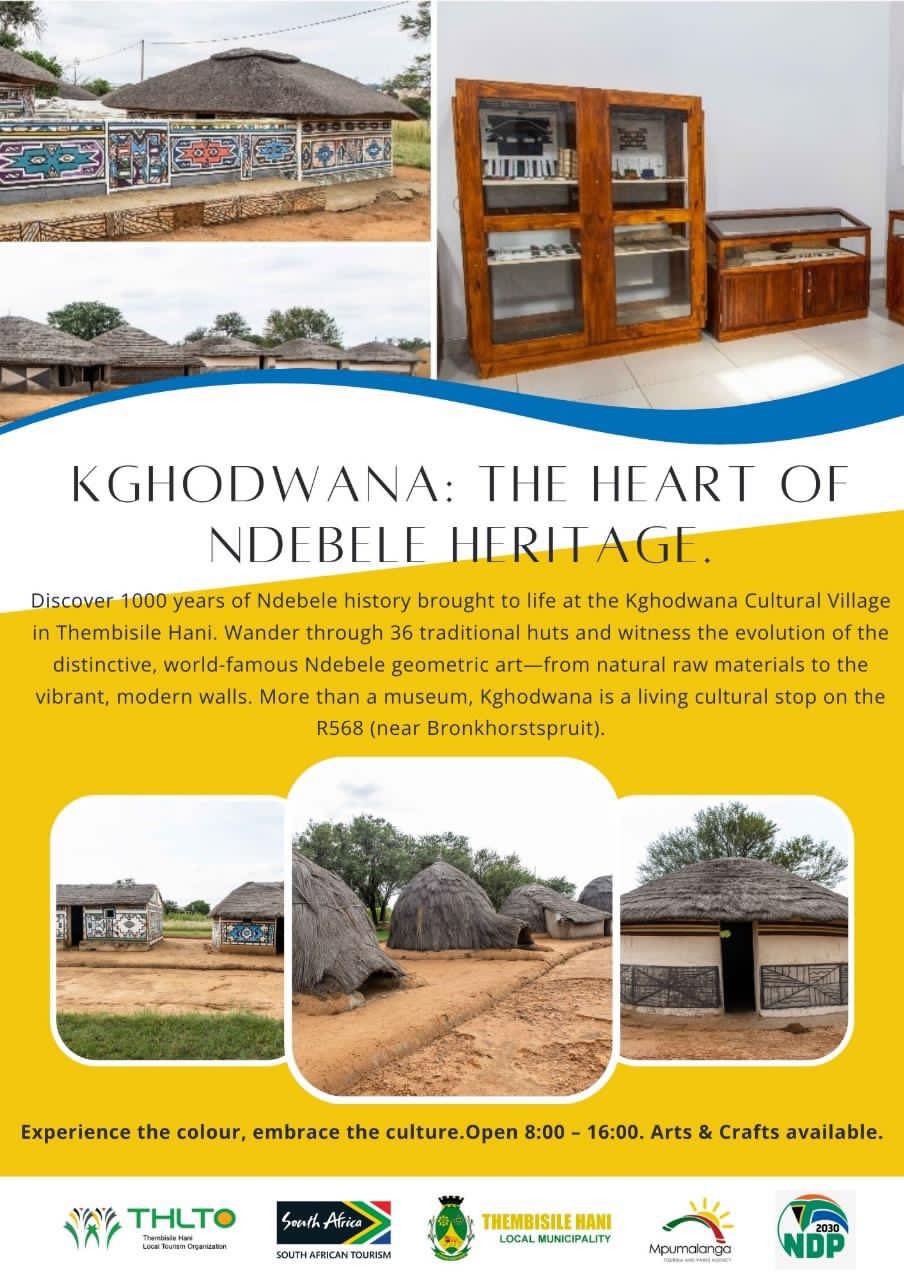
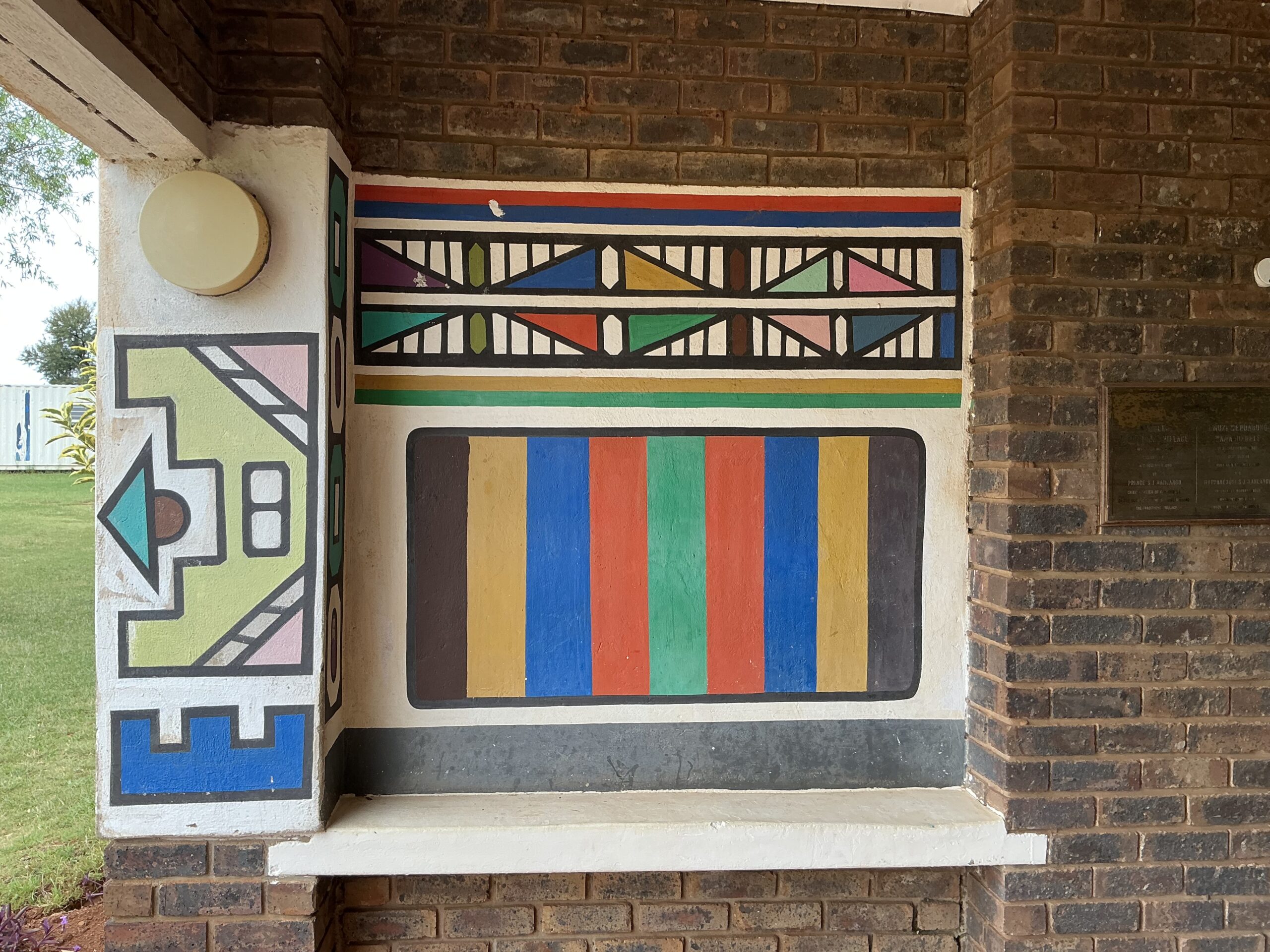
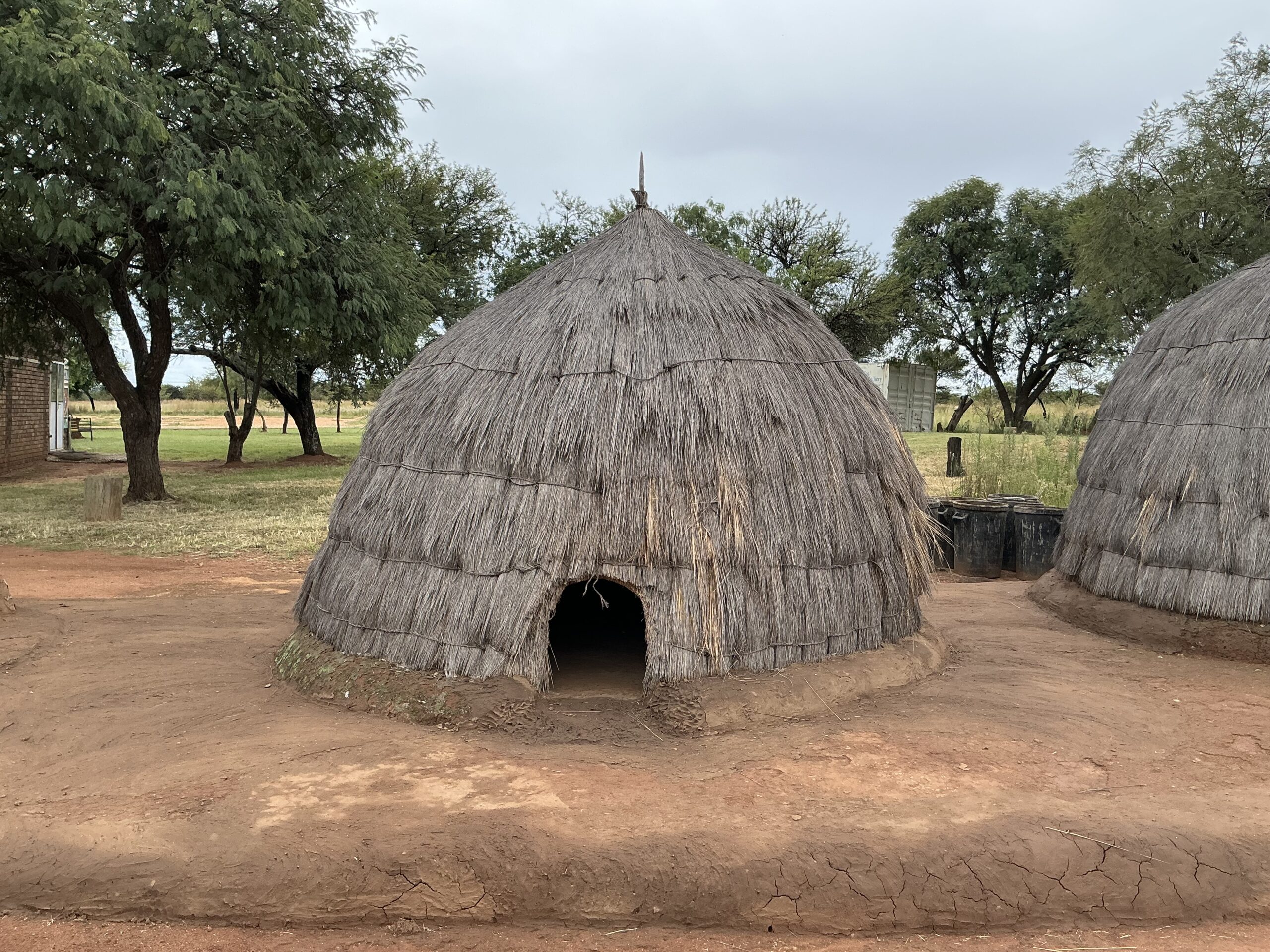
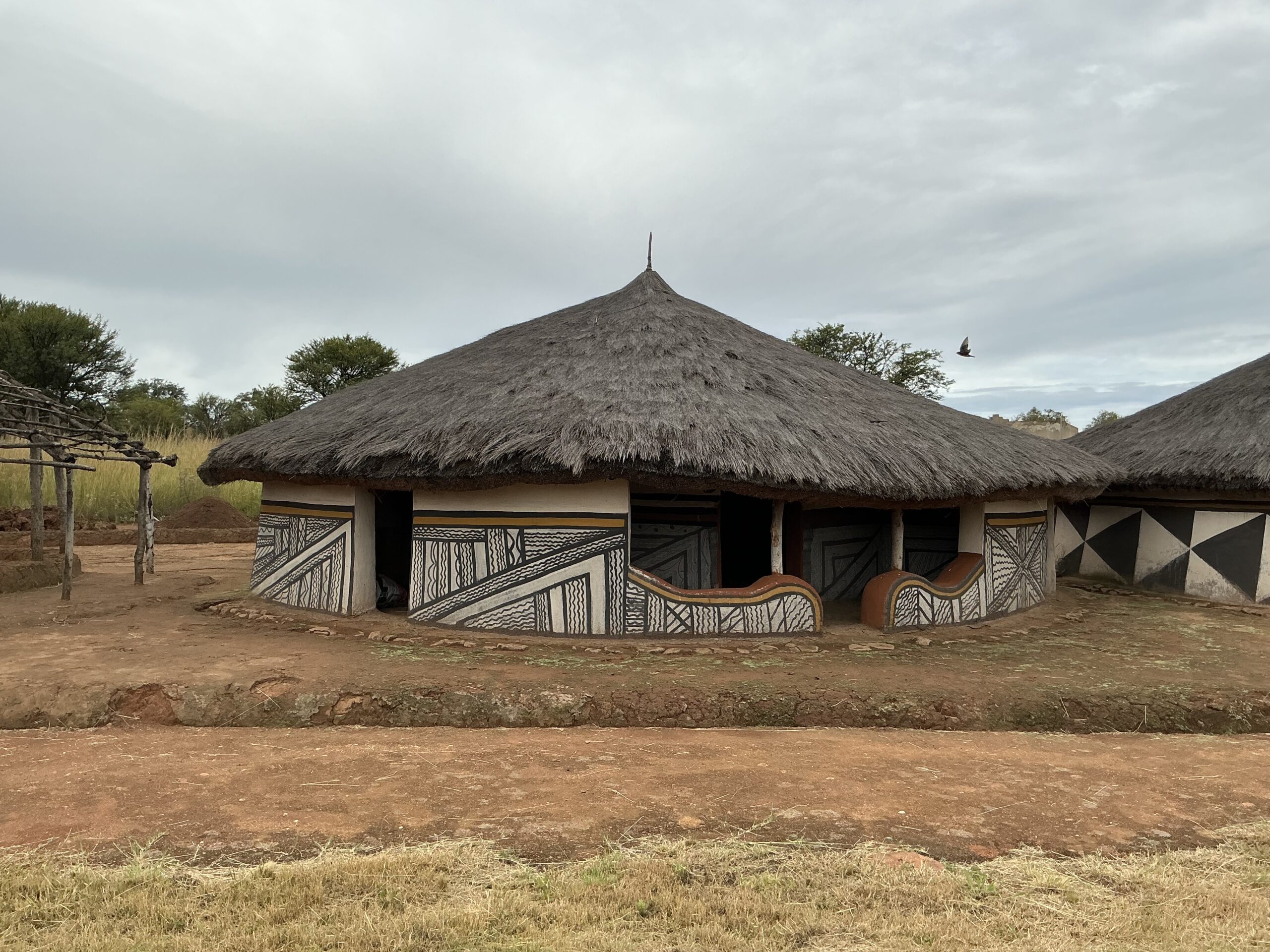
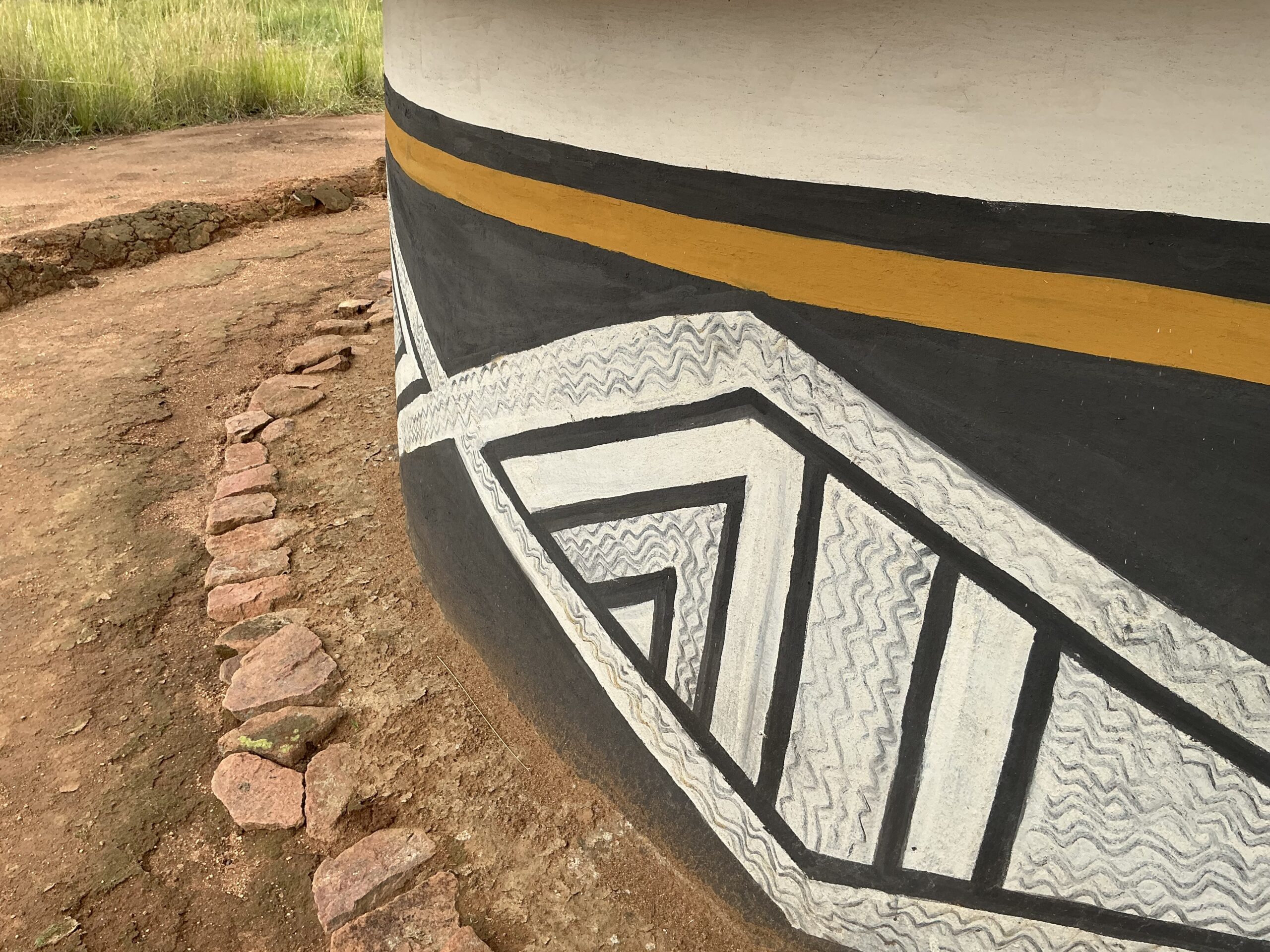
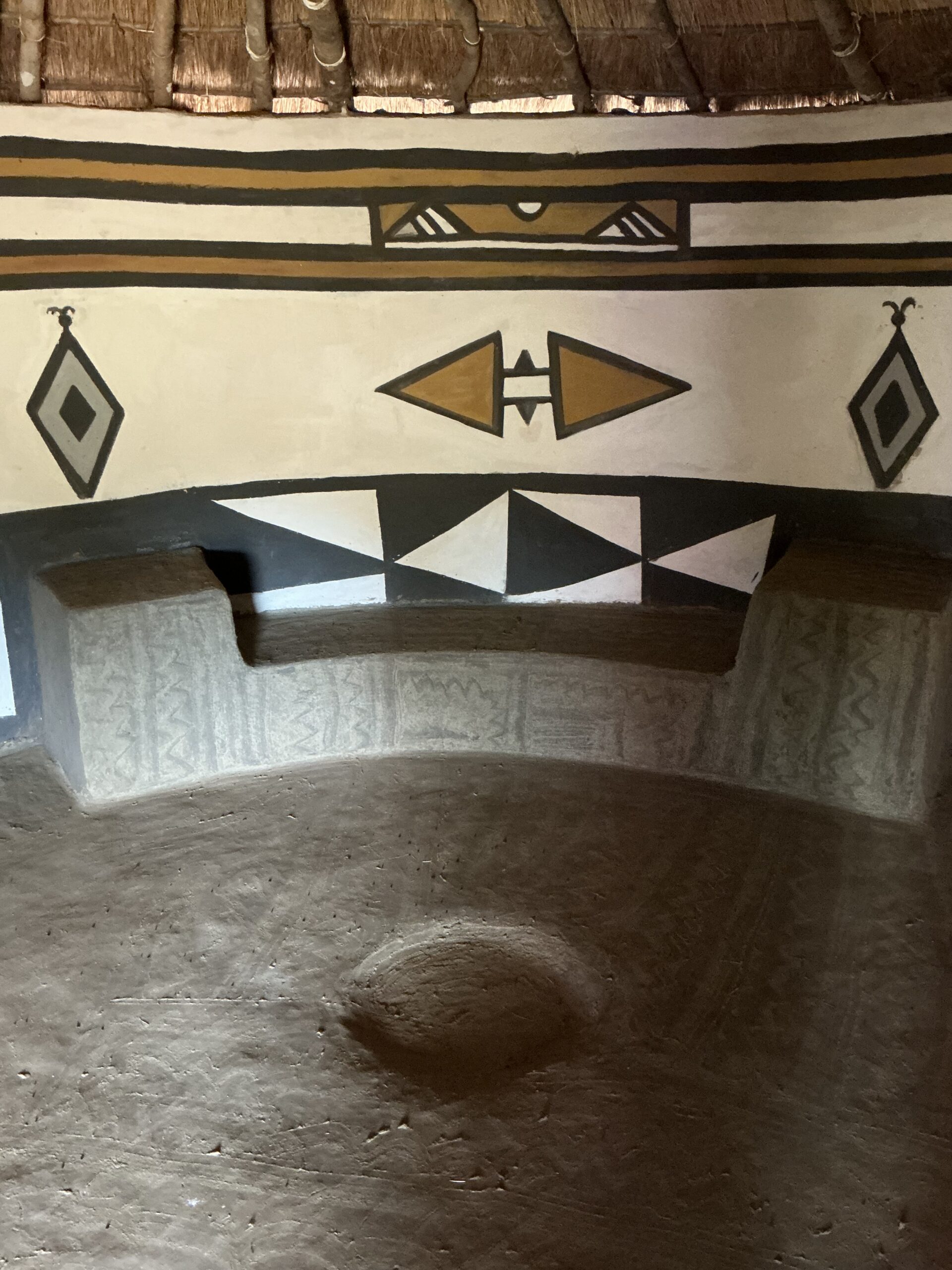
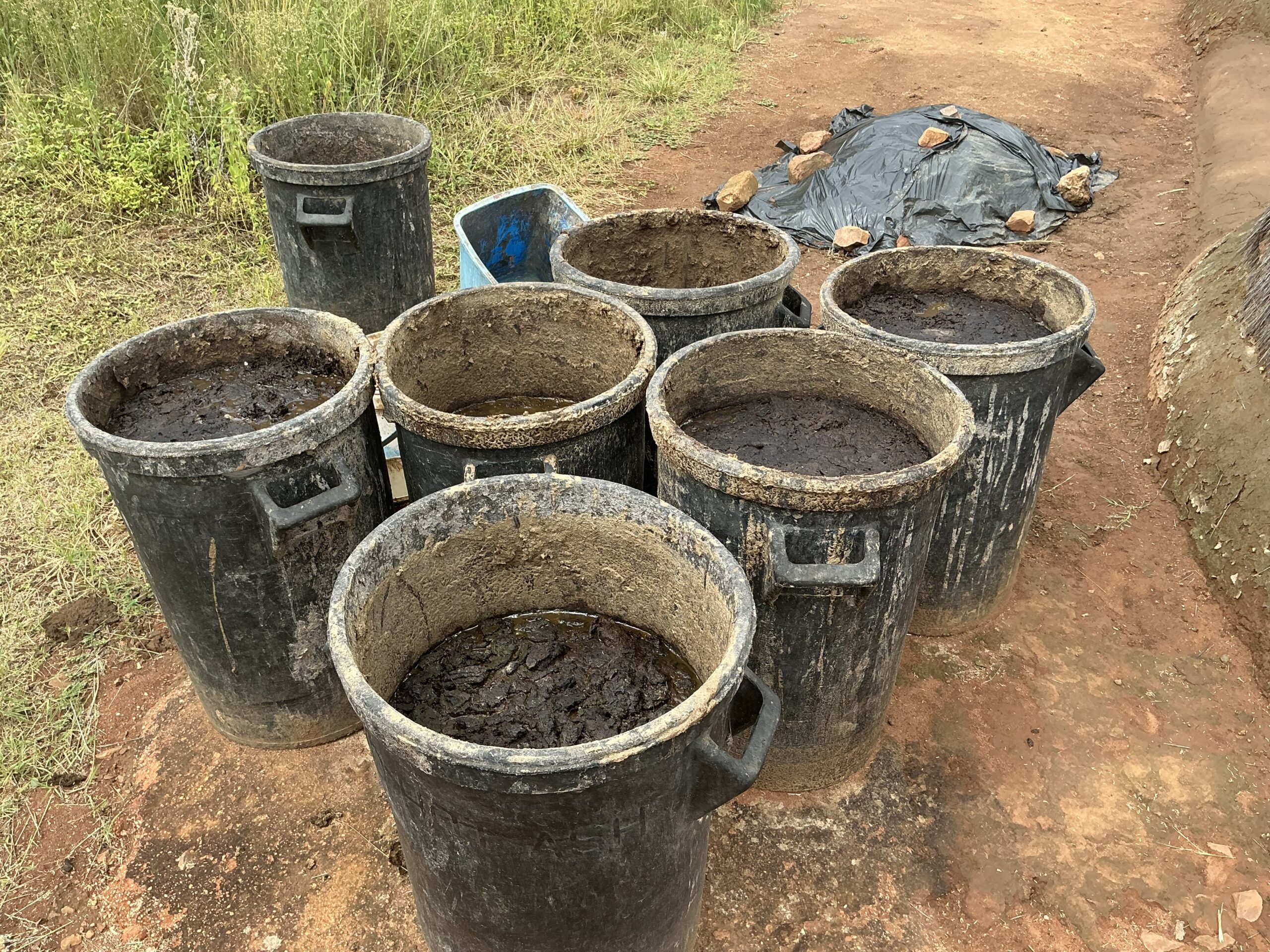
The huts sit slightly elevated on earthen foundations coated with dung, which had recently been reapplied in beautifully patterned finishes. The smell of earth and the tactile quality of the surfaces conveyed a strong sense of living tradition rather than distant past. The sequence of huts functions almost like a timeline, demonstrating the evolution of Ndebele architecture. The first structure illustrates foundational building techniques and floor preparation, while subsequent huts show shifts in layout, function, and design.
One of the most striking features is the scale of the doorways—approximately one meter high or less—requiring visitors to stoop or crawl to enter. Having previously experienced this physically, I am always struck by how architecture shapes bodily awareness and social practice. Inside, the central fire pit echoes communal spatial organization seen in many cultures, emphasizing gathering, warmth, and shared activity. Later iterations of the structures show the relocation of the fire toward the rear for cooking, the addition of seating, storage spaces, and subtle defensive or privacy features.
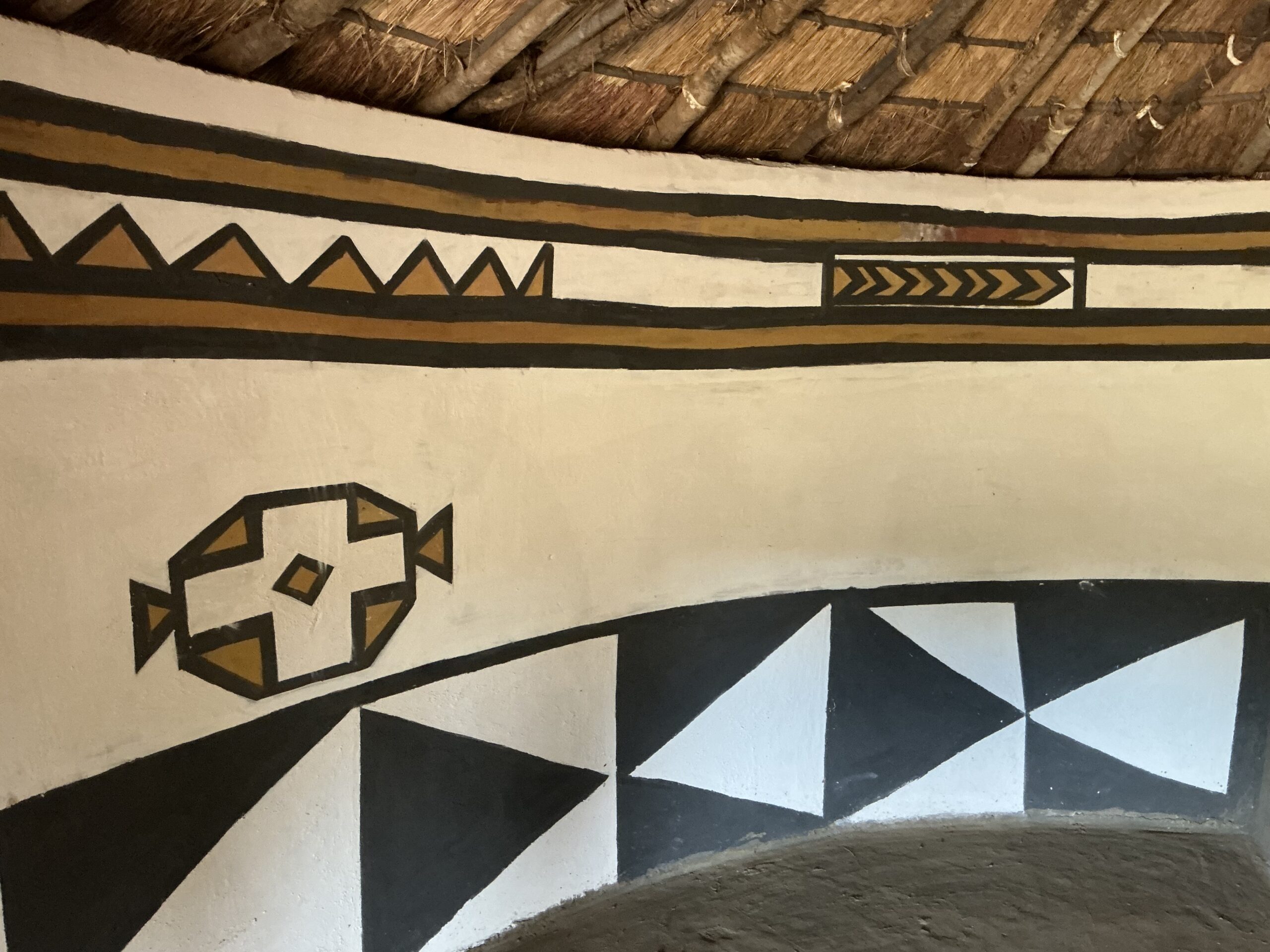
As the timeline progresses, the architectural forms reflect encounters with European building traditions. Circular structures gradually give way to straighter lines and triangular roof bases, illustrating how cultural exchange and colonial influence reshape material culture. Yet despite these shifts, the ornate painted designs—painstakingly maintained—remain a constant thread of identity. Bongi noted that artists continue to create new patterns, meaning the visual language of the buildings is both historical and contemporary, reflecting the hands and voices of each generation.
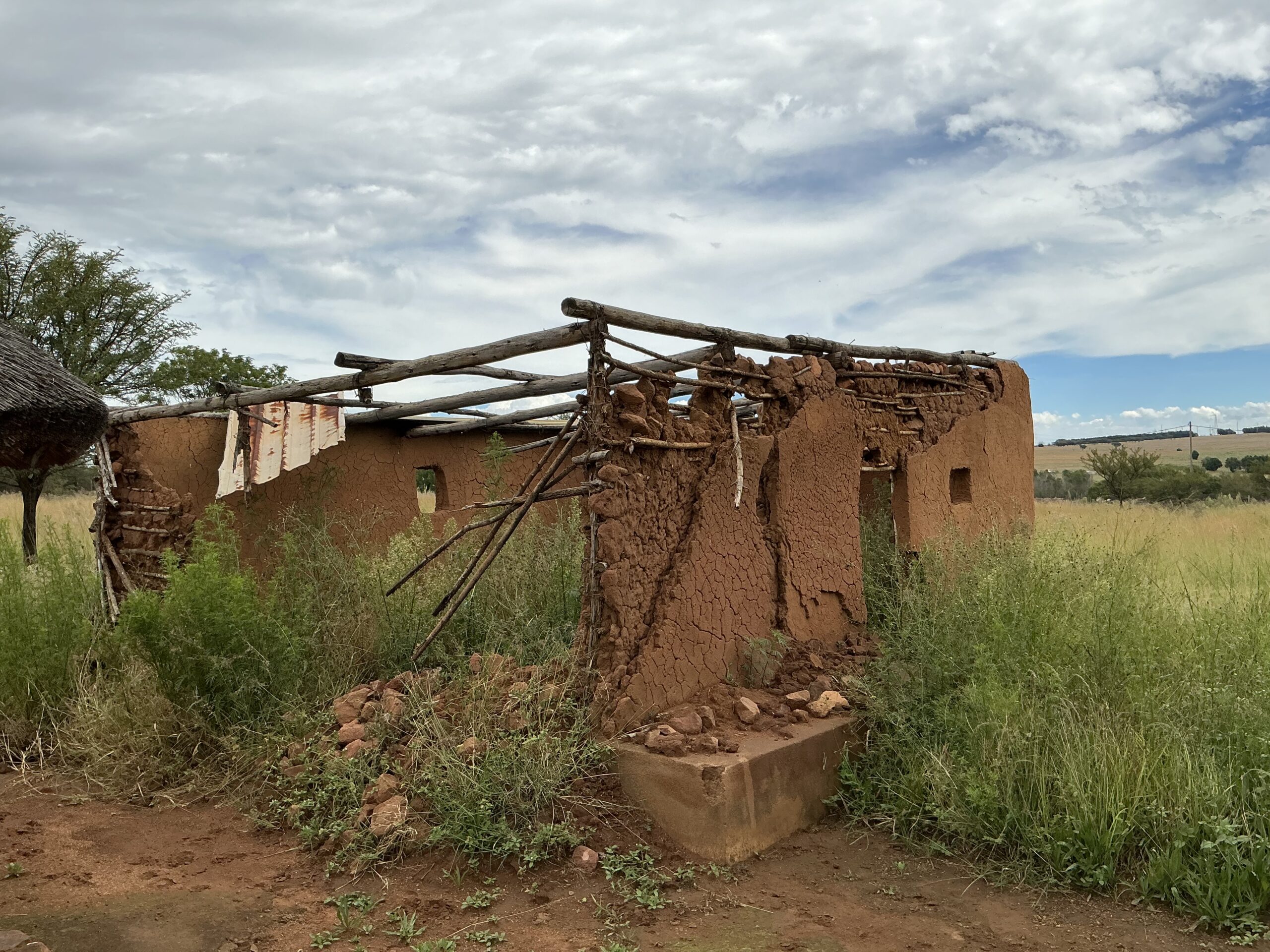
The final structure in the sequence illustrates the practical challenges of maintaining certain building styles, pointing to why many communities transitioned toward more durable forms while still retaining the roundavel as a familiar and enduring vernacular type across South Africa.
Throughout the visit, the site felt deeply personal and reflective rather than performative. It has never been bustling during my visits; I have consistently been the only guest, which creates an experience that feels intimate but also raises questions about sustainability, visibility, and the future of such spaces. The quietness underscores both the vulnerability and resilience of community-centered heritage sites.
As we concluded, Bongi invited us to sign the guest book. Seeing the long gaps between entries reinforced the reality that cultural spaces like this exist in a delicate balance—held together by a small number of caretakers, modest public funding, and the hope that visitors will continue to come, learn, and carry these stories forward.
Preliminary Analysis
This visit to Kgodwana Cultural Village reveals the layered relationship between visibility, infrastructure, and cultural sustainability. The contrast between the highly visible signage for the nearby mine and the subtle signage for the village signals which presence dominates the landscape. Even the smoothness of the access road—likely maintained because of industrial activity—suggests that economic priorities shape infrastructure more strongly than heritage investment.
Although the site is funded by the Department of Sports, Arts and Culture, limited staffing and low visitor turnout raise questions about sustainability beyond financial support. Preservation alone does not guarantee engagement. Without a guide, the interpretive responsibility shifts to the visitor, and while the architectural sequence of the huts clearly narrates adaptation and cultural change, the absence of contextual storytelling risks flattening deeper historical meanings.
The embodied experience—stooping to enter low doorways, navigating partially cut grass, observing freshly renewed dung floors—reinforces that heritage is physical and relational. The space reflects resilience through its maintained decorative traditions, yet the sparse visitor log highlights a disconnect between cultural richness and public participation.
This tension prompts a practical question: how might heritage leaders create intentional pathways that connect schools and communities to sites like this? My hope to develop an educational map that strings visitors into this landscape emerges from this concern, positioning the village not as an isolated stop but as part of a broader network of cultural and environmental learning.
Synthesis & Interpretation
My visit to Kgodwana Cultural Village illustrates how heritage exists within layered systems of power, visibility, and care. The approach to the site—where industrial signage is more prominent than cultural markers—reflects a broader reality in which economic landscapes often overshadow cultural ones. Yet once inside the village, a different narrative emerges: one of continuity, adaptation, and embodied knowledge.
The architectural progression of the huts reveals more than stylistic evolution; it documents cultural encounter, resilience, and negotiation. Circular forms shifting toward linear structures speak to historical contact and adaptation, while the continued maintenance of ornate decorative traditions affirms ongoing cultural authorship. The freshly renewed dung floors and painted designs demonstrate that this is not a static display of the past, but a living expression of identity.
At the same time, the quietness of the site—its sparse visitor log and limited staffing—highlights the fragility of community-centered heritage spaces. Sustainability here is not simply about maintaining buildings; it is about sustaining relationships between people and place. Without intentional engagement, cultural landscapes risk becoming preserved yet peripheral.
This visit reinforces my growing understanding that stewardship involves more than environmental care—it includes cultural visibility, narrative authority, and access. Heritage leaders must consider how infrastructure, interpretation, and educational outreach shape who encounters these spaces and how they are understood. In this sense, the future of sites like Kgodwana may depend not only on funding, but on the creation of meaningful pathways—literal and pedagogical—that reconnect communities, particularly young learners, to the cultural knowledge embedded in these landscapes.
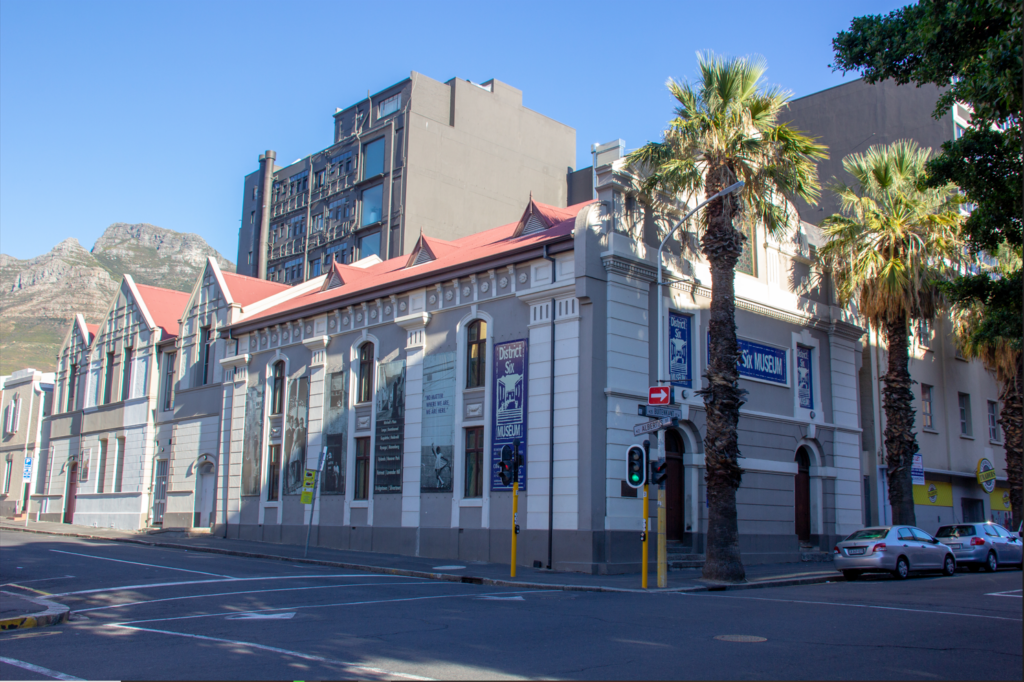
Dance Card Entry 8: District Six Museum
Heritage Site Snapshot
Name: District Six Museum
Date: March 17, 2026
Location: Cape Town, Western Cape, South Africa
Start Time: 1:27 PM
End Time: 2:50 PM
Type of Experience:
Guided, Interpretive Memorial Museum Experience
Thick Description
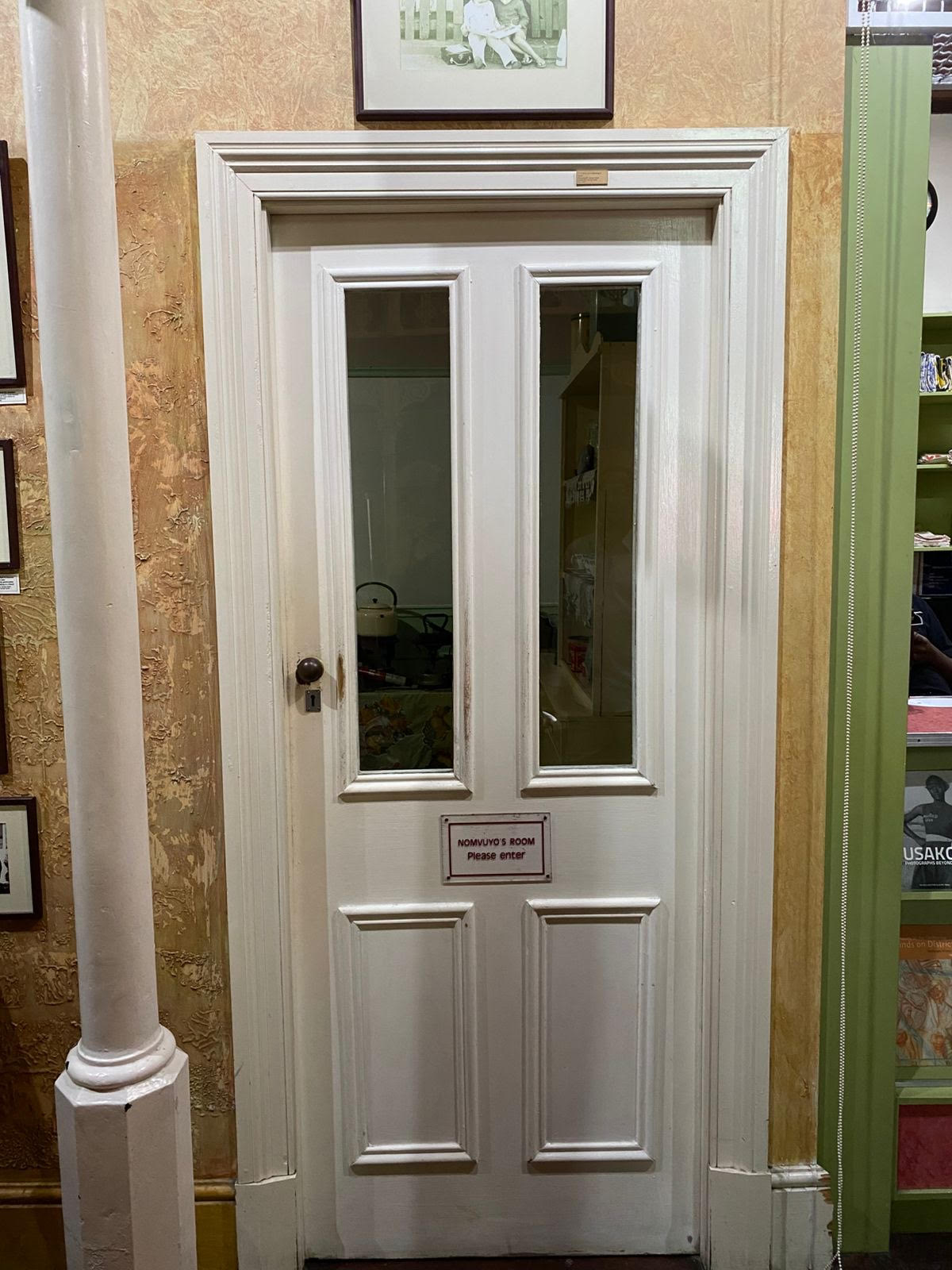
We initially arrived at the wrong location for the museum visits, which were conveniently located a street over—an early reminder of how access can shape a visitor’s experience before it even begins. Upon reaching reception, we asked for a guided tour, as we had grown tired of self-guided experiences and were seeking a more engaging form of active learning, where we could interact with the content rather than passively consume it. We were told the tour had already started, and after some back and forth—and confusion about whether it was full—we were eventually allowed to join.
This moment immediately highlighted issues of accessibility, not just in the physical sense, but in how museum experiences are structured and made available to different audiences. The ability to join late shifted what could have been an exclusionary moment into one of inclusion.
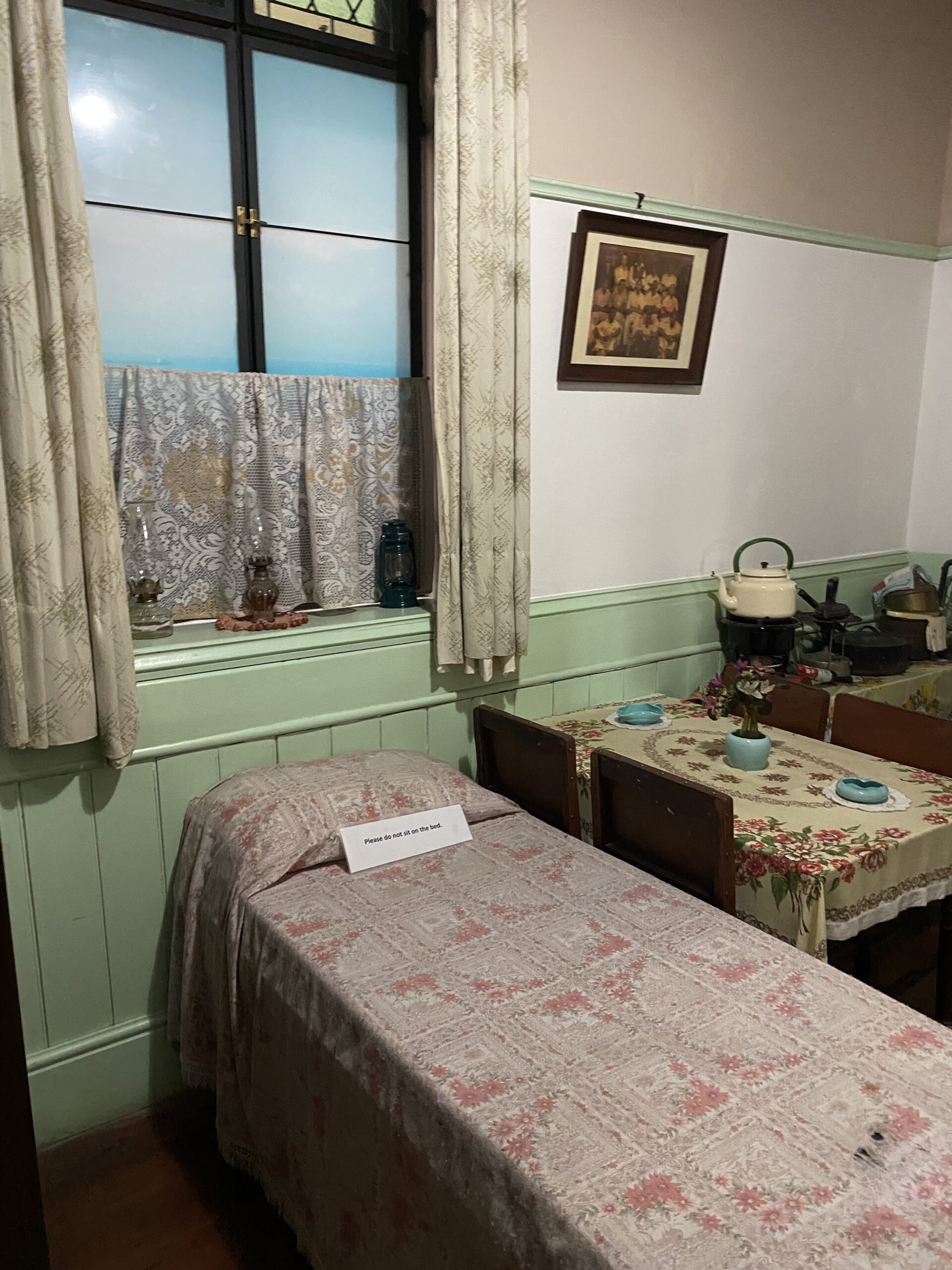
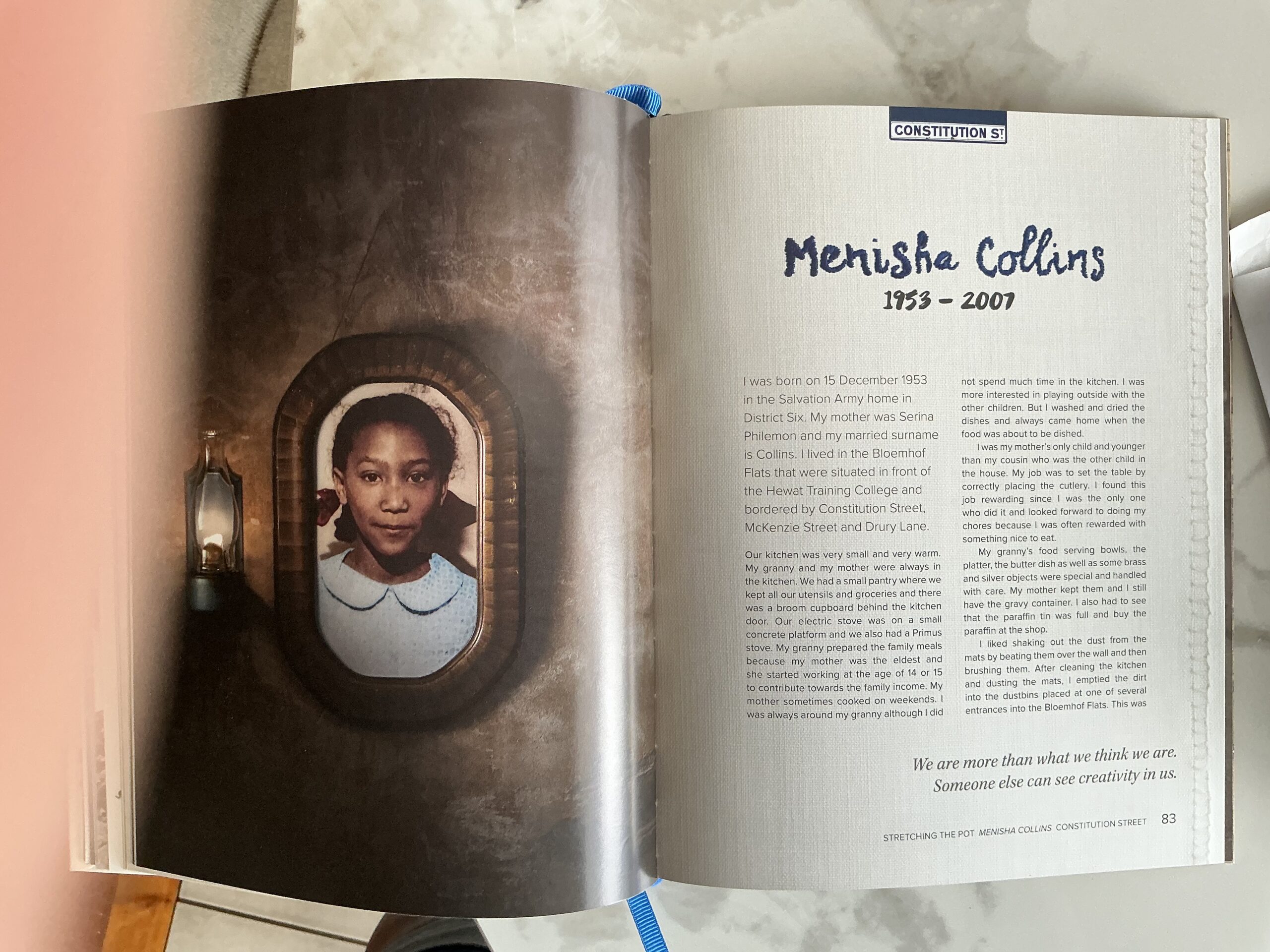
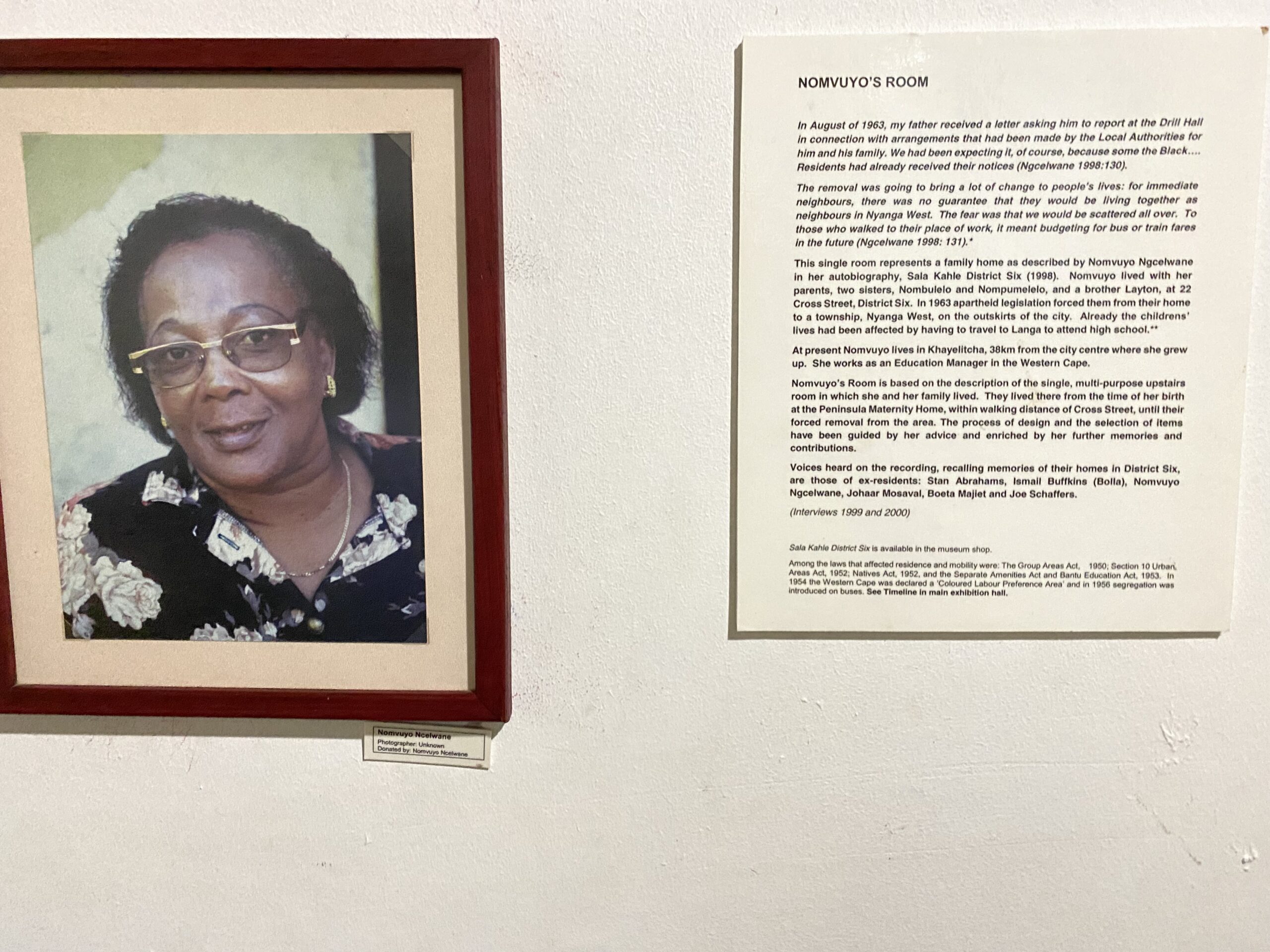
Our guide, Alvin, led the tour in a way that centered the audience as participants in meaning-making. Rather than presenting broad historical facts alone, he grounded the experience in the story of a specific family: a sister who was a teacher, her employed brother, their parents, and her three children, all living in a single room.
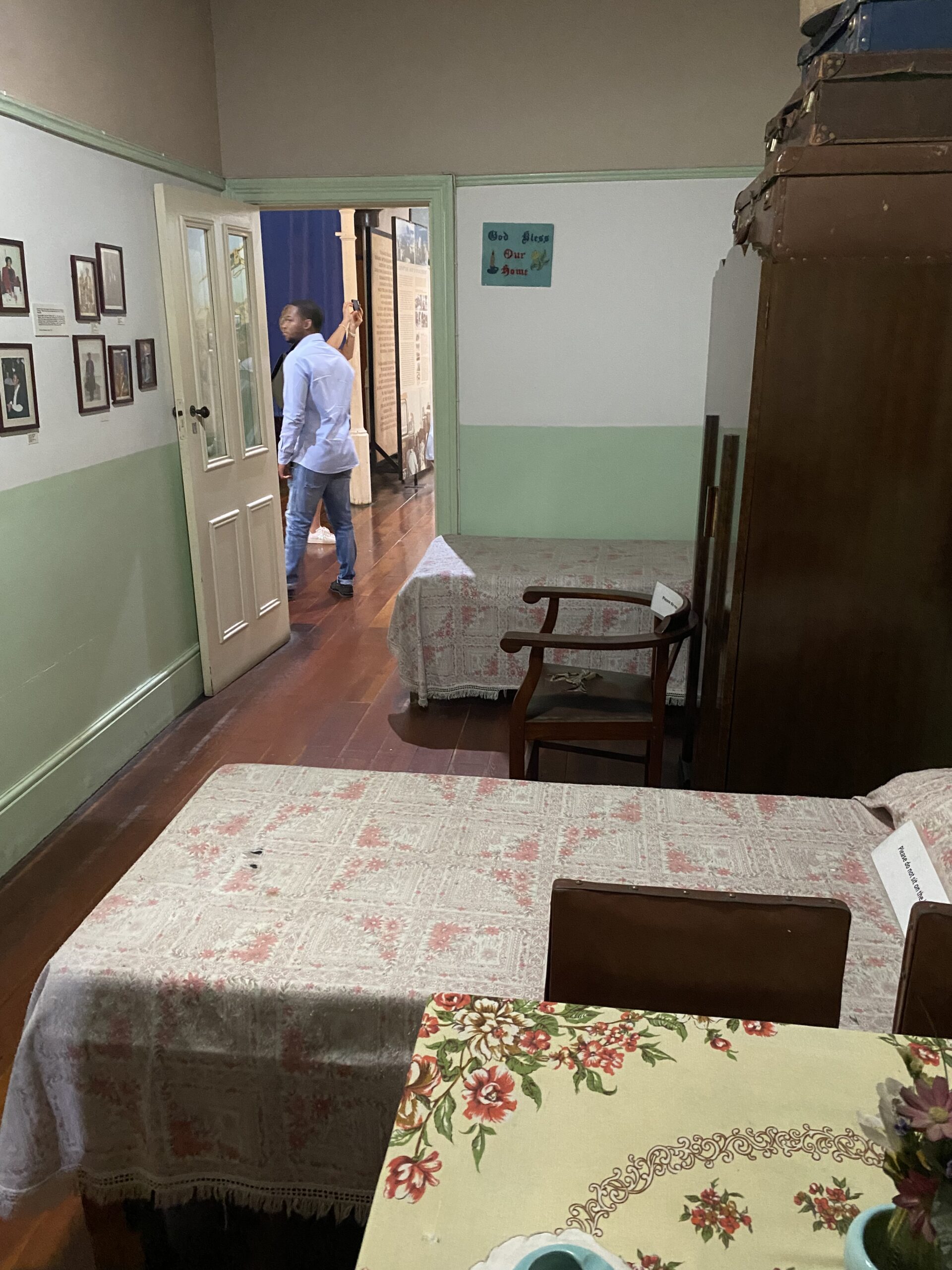
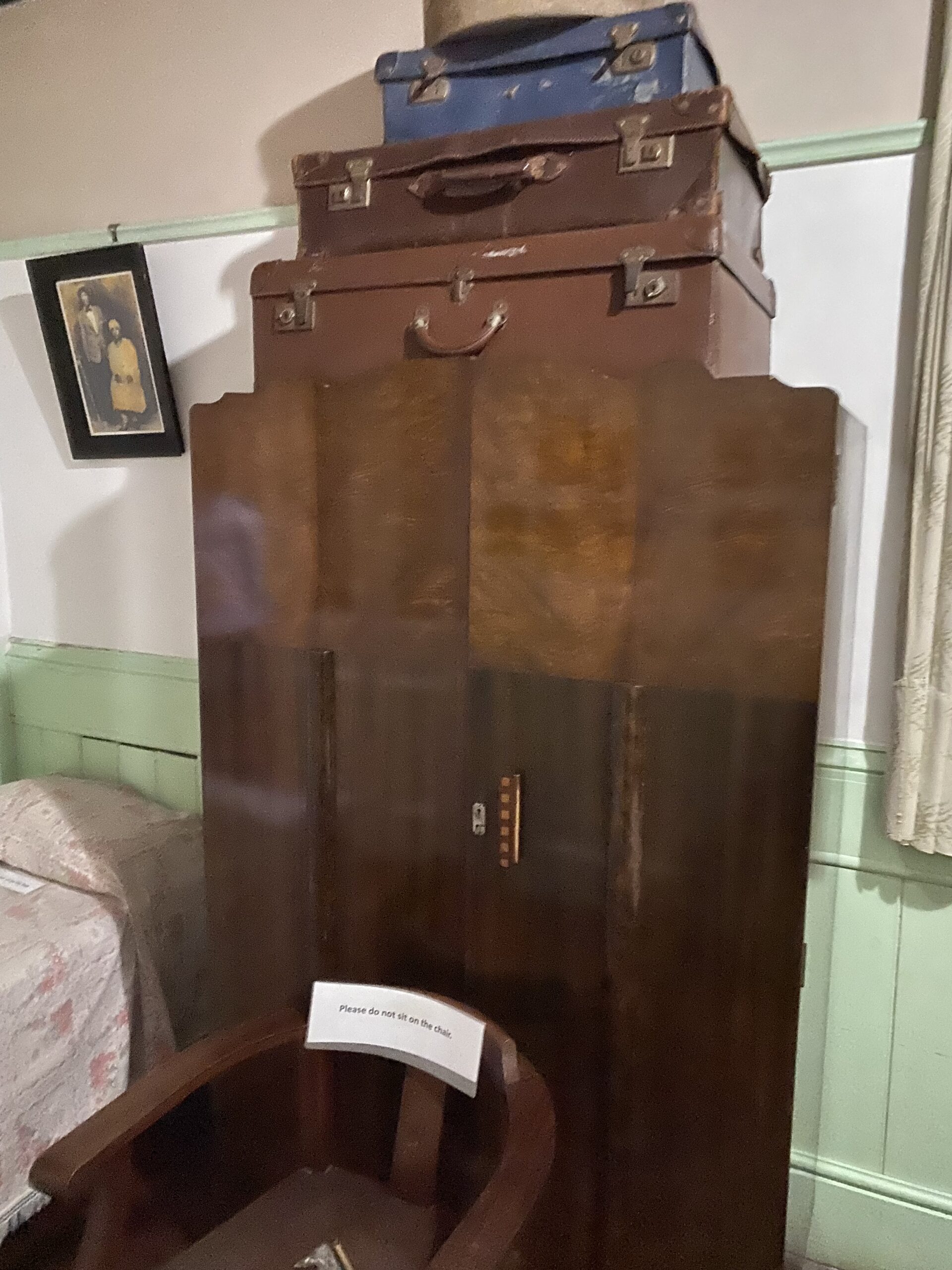
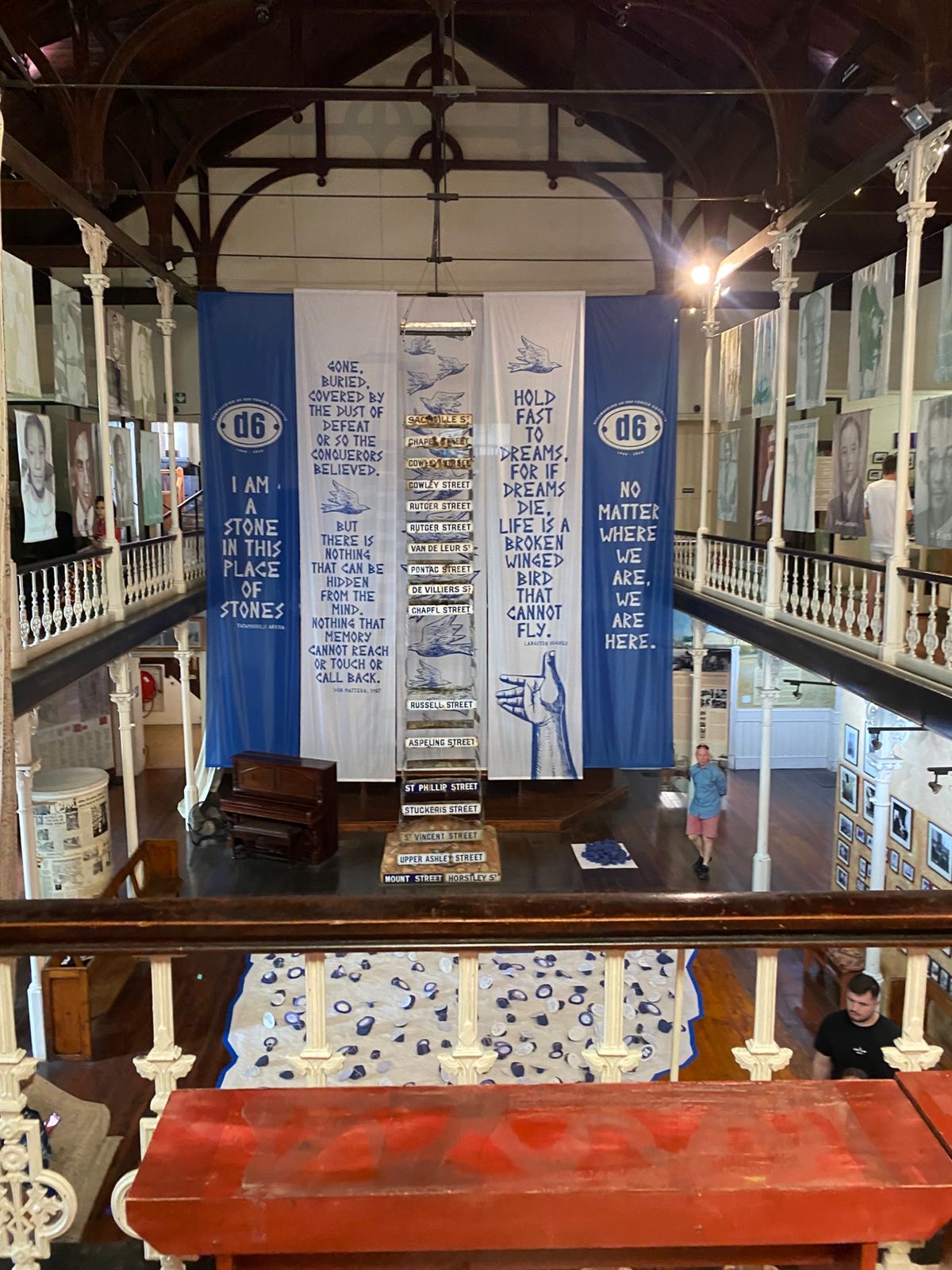
What transformed this story into something far more powerful was the realization that the museum itself is housed within the very church where this family once lived. While he spoke about them, we stood in that same space—their “home.” This created a profound experiential learning moment. The boundaries between past and present collapsed entirely; the space was no longer representational, but authentic. The floor, the walls, the structure itself held the memory of what was being described.
Alvin explained how the family was relocated nearly 30 kilometers away to a space half the size and were not allowed to take any of their possessions. Everything remained behind in this very place. Standing there, it became impossible to separate the narrative from the environment—the loss was not abstract, it was spatially and materially present.
He shared that the sister no longer returns to this part of Cape Town due to the trauma she experienced and does not speak about it in her current life. Yet her resilience continues through her work in her community. This introduced a powerful tension between presence and absence—between what the space holds and what individuals choose not to revisit.
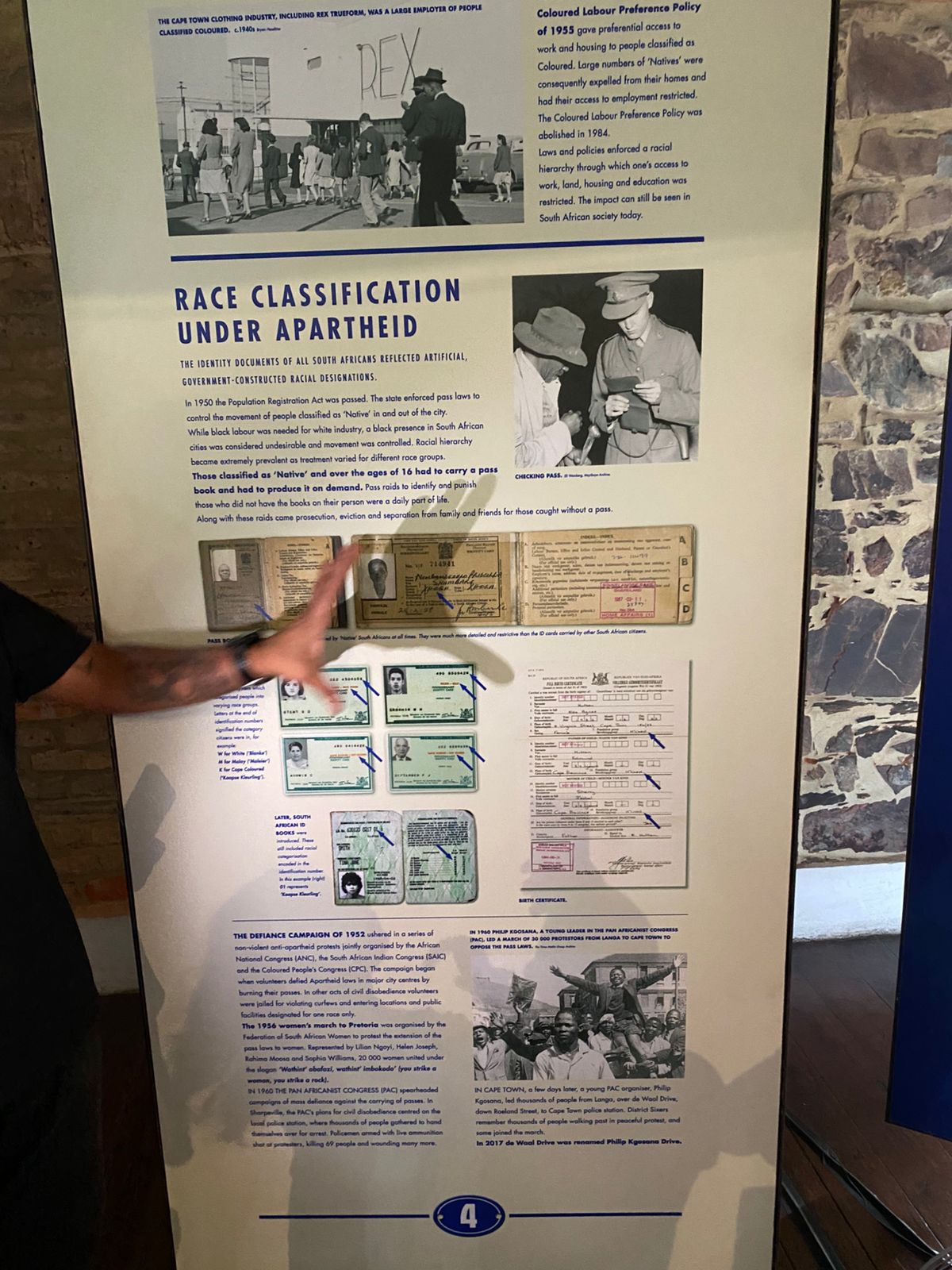
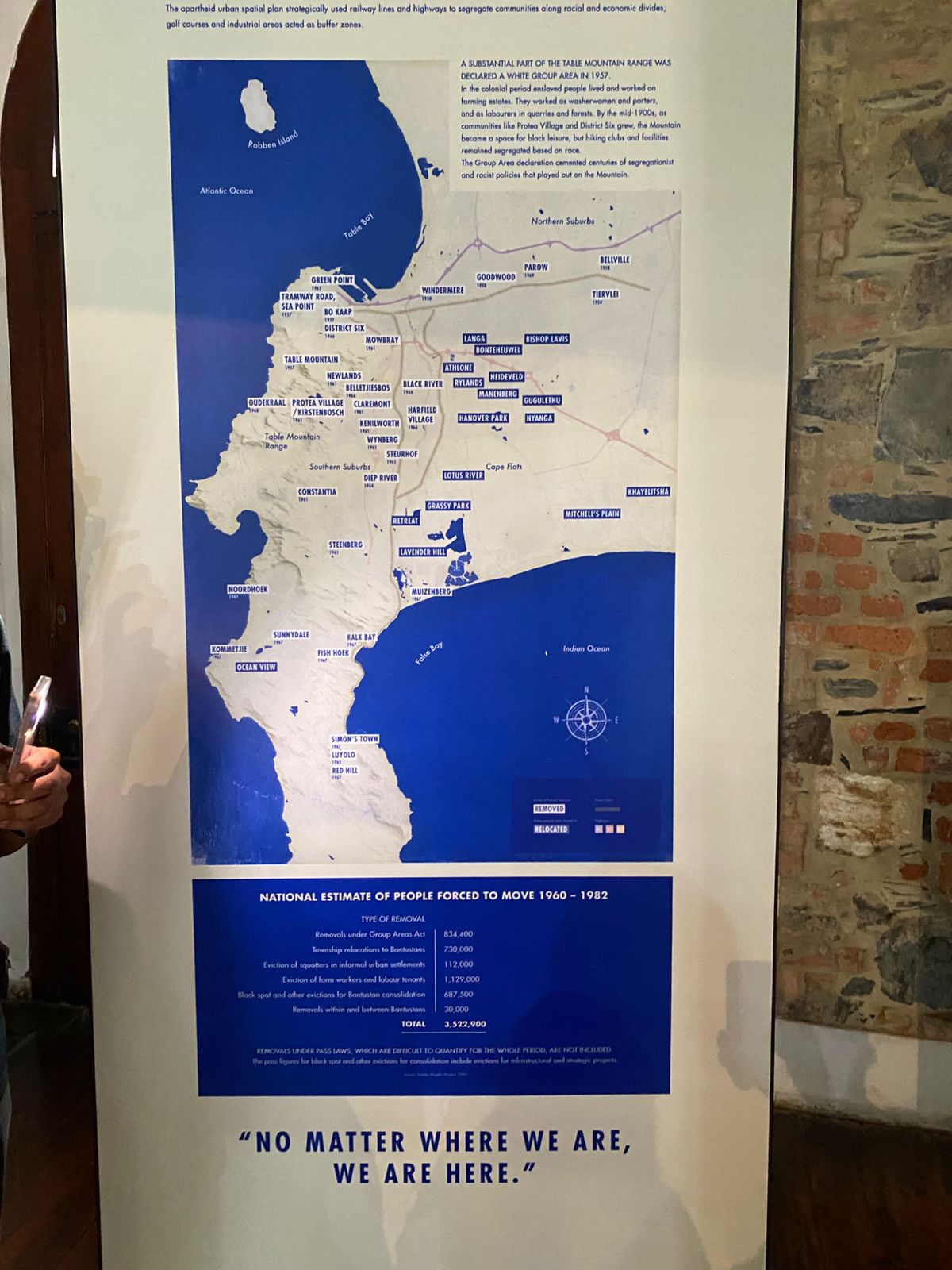
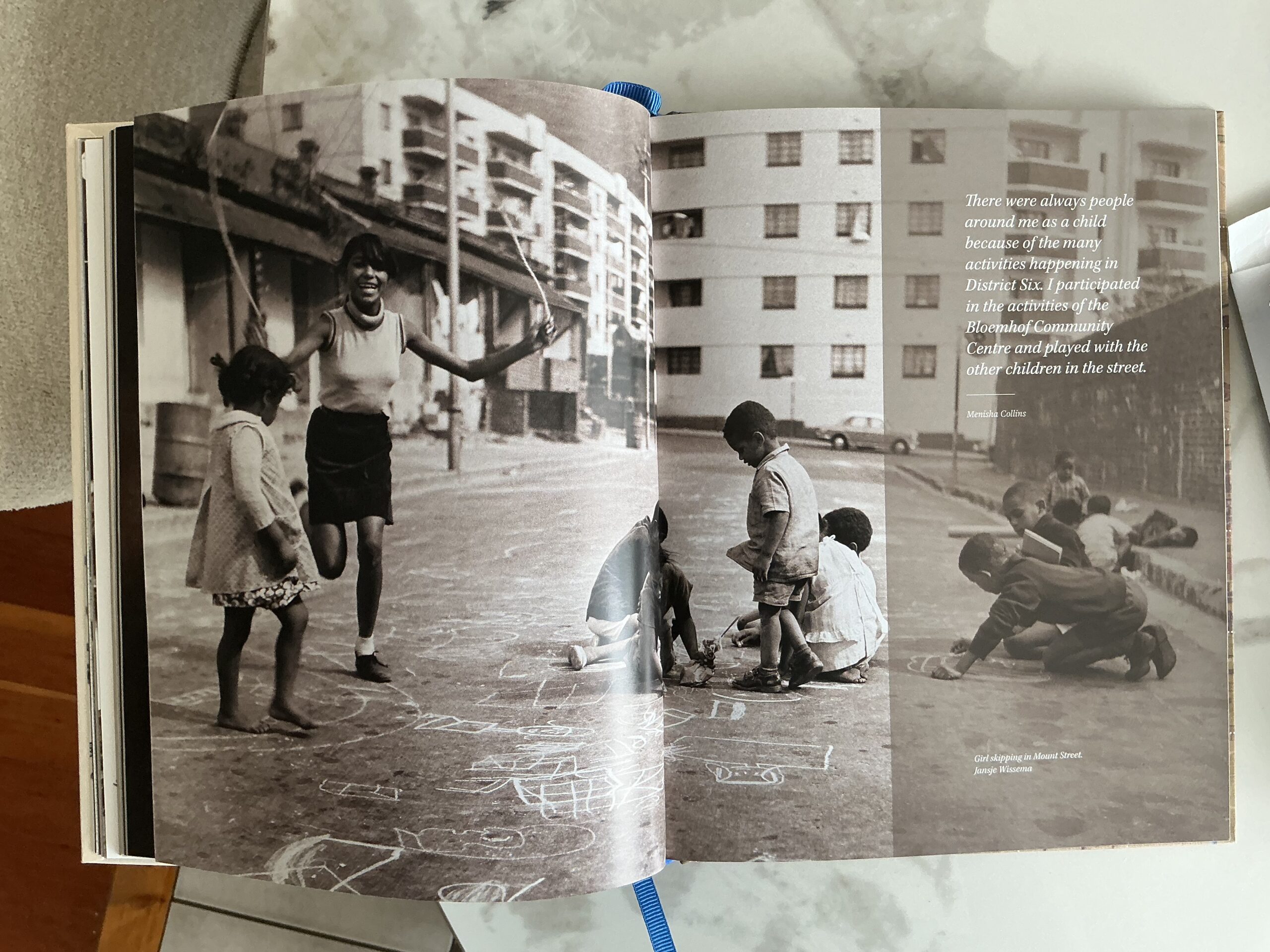
As the tour progressed, Alvin expanded the narrative to include broader historical context, explaining how British colonial systems laid the groundwork for segregation, later intensified under the Afrikaner-led apartheid government. Nearly 60,000 residents were displaced from District Six, and approximately 3.5 million people were forcibly relocated across more than 40 areas in Cape Town—pushed to the periphery while the city center was reserved for white populations.
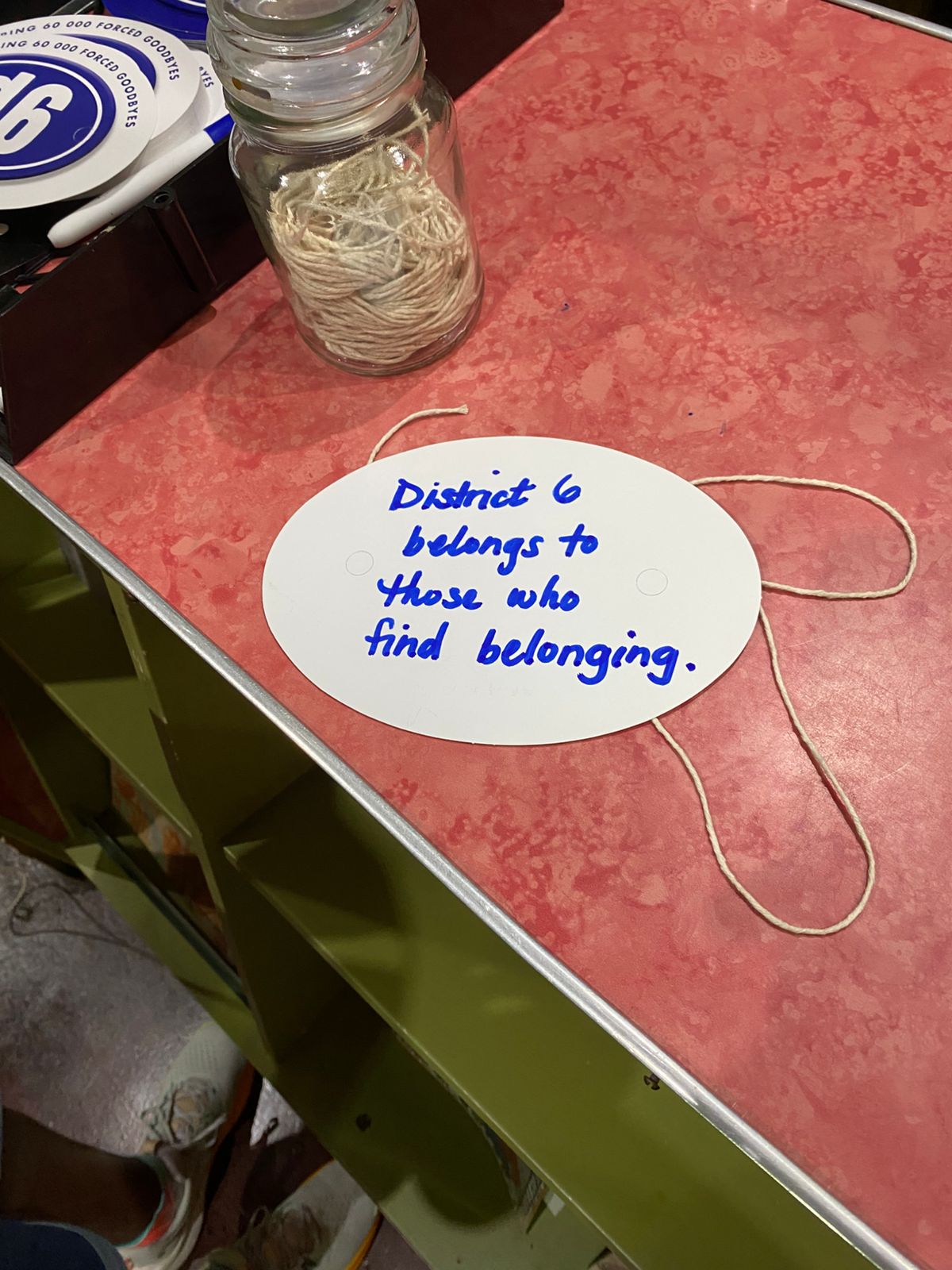
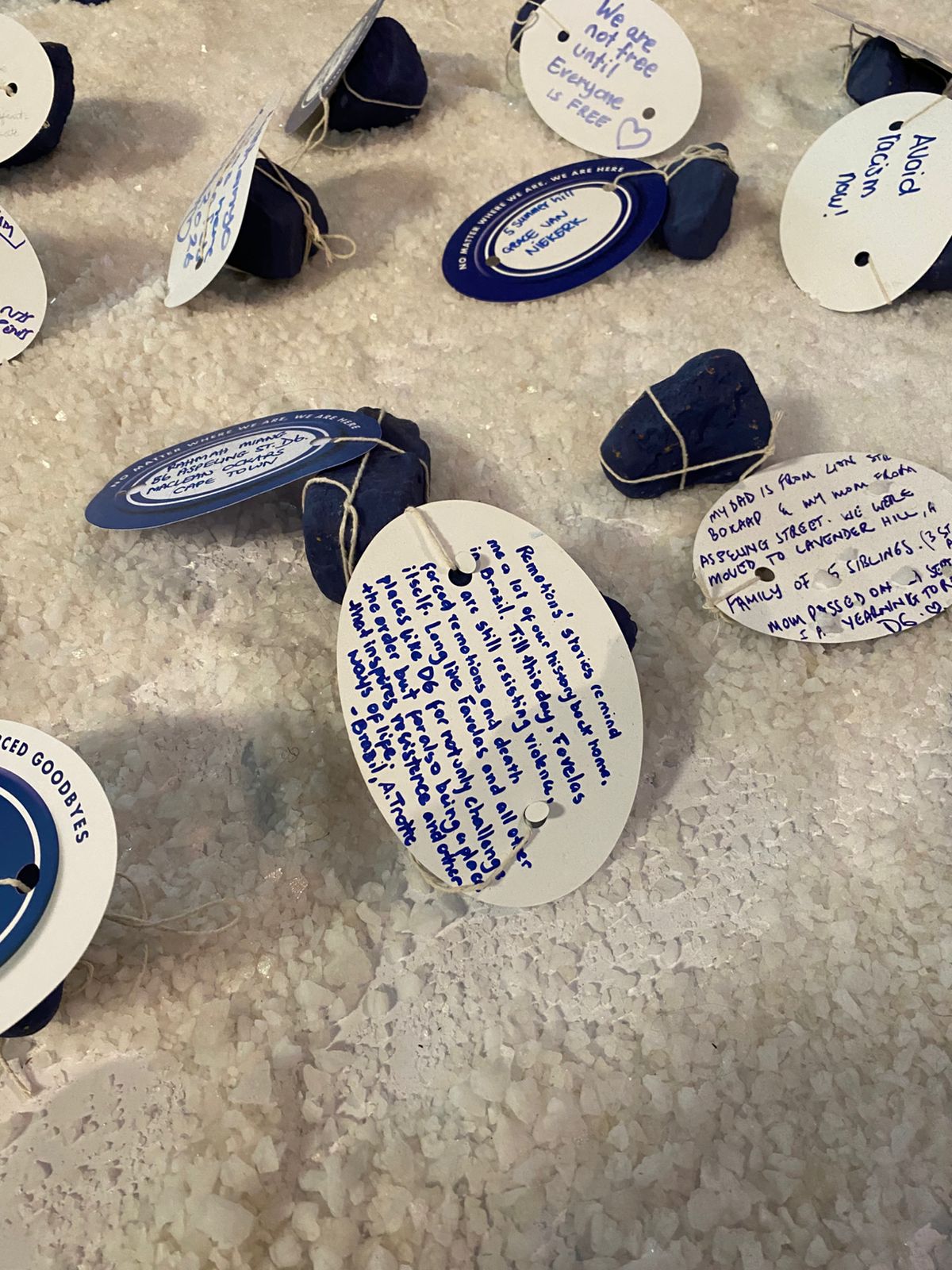
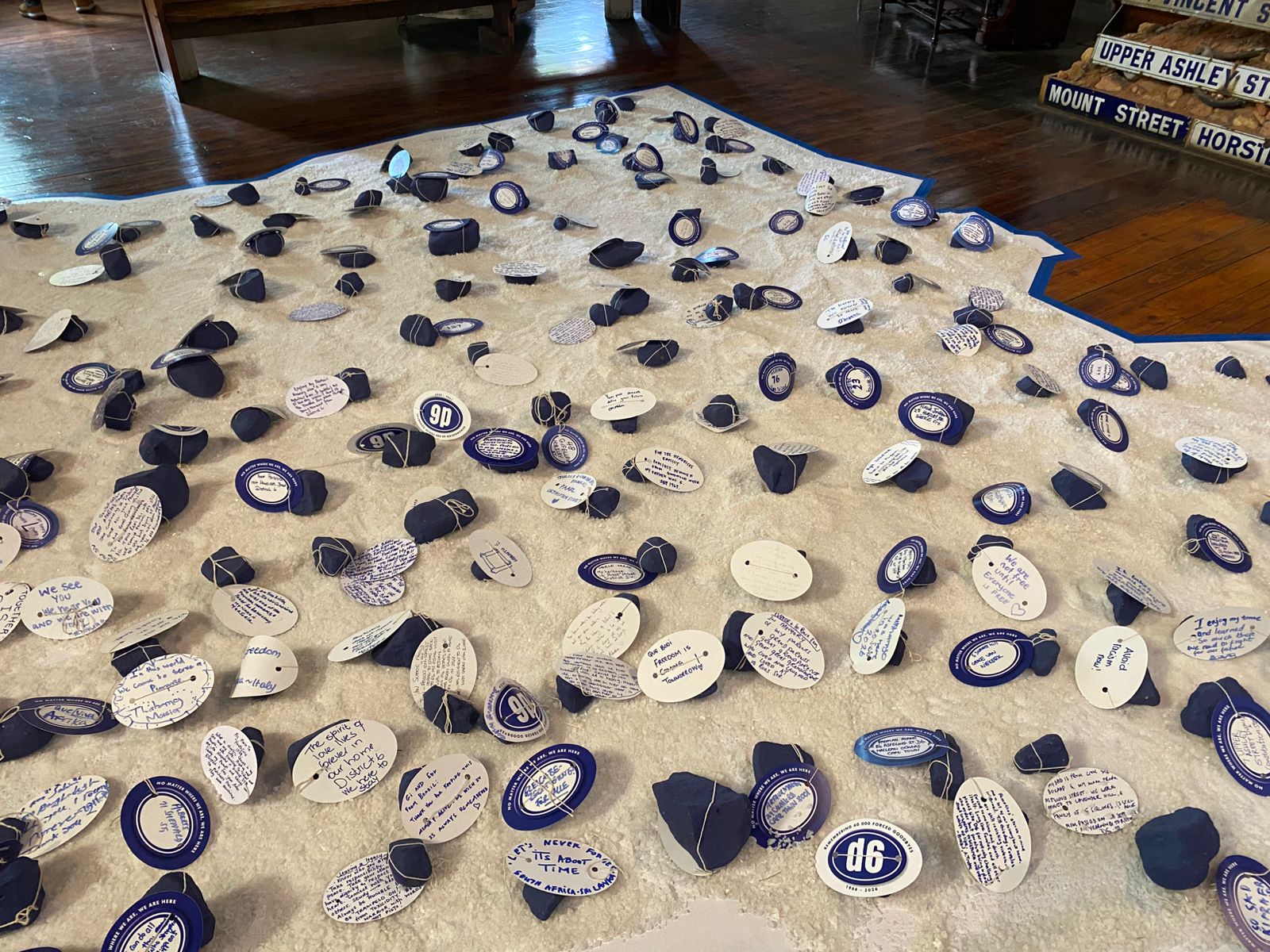
At the end of the visit, we were encouraged to write a message to commemorate the 60-year anniversary of the removals of District Six. The prompt asked: Who does District Six belong to? For those who are past residents, it extends further—where they lived, and what they want to say.
This final moment shifted the experience once again—from observation to participation. It functioned as a form of reflection rather than formal assessment, asking visitors to position themselves in relation to the history they had just encountered. At the same time, it raised a deeper tension: who has the authority to answer that question? For visitors, the act of writing can feel like engagement—but for former residents, it is a continuation of lived reality.
The museum is not simply a place where history is displayed—it is a place where history remains embedded and contested. Through its use of space, narrative, and participation, it creates an interpretive environment where visitors do not just learn about forced removals, but are asked to confront their place within its ongoing meaning.
Preliminary Analysis
The experience at the District Six Museum highlights how space itself functions as interpretation, not just as a container for it. Being physically situated in the same church where families once lived collapses the distance between observer and subject, creating a powerful form of experiential learning that cannot be replicated through text alone.
•At the same time, this raises an important ethical tension:
•Does immersion deepen understanding, or does it risk reproducing emotional strain—particularly when the histories being interpreted are still lived realities for displaced communities?
•The experience echoes earlier reflections from Botshabelo and readings like How the Word Is Passed, where the burden of explaining and reliving trauma often falls on those most affected.
•The guided tour model demonstrates strengths in audience-centered engagement, particularly through storytelling and narrative specificity. However, it also relies heavily on the emotional weight carried by the story itself rather than explicitly framing how visitors should navigate that weight.
•The final participatory element—writing a message about who District Six belongs to—introduces a critical interpretive question:
•Who has the authority to respond?
•For visitors, this may feel reflective and meaningful; for former residents, the question is not theoretical but ongoing and unresolved.
•There is also a noticeable gap in how systems of dispossession are connected to broader ecological and cultural loss. While the focus is on forced removals, less attention is given to how displacement disrupted relationships to land, livelihoods, and practices of care.
Synthesis & Interpretation
- Across this experience and previous engagements, my understanding of contested heritage has shifted from sites of past injustice to ongoing systems of disruption and negotiation—where memory, identity, and belonging are continuously shaped and reshaped.
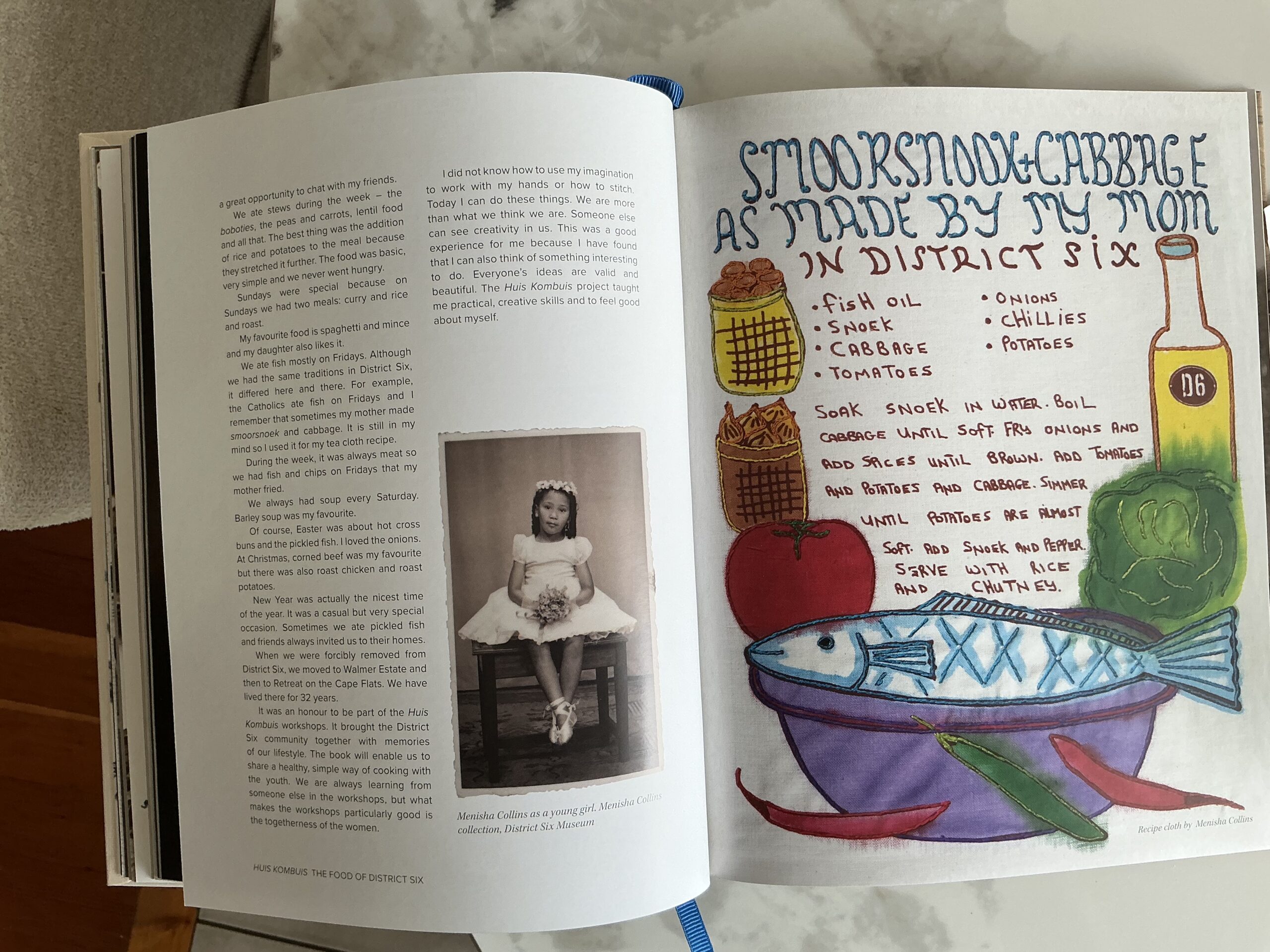
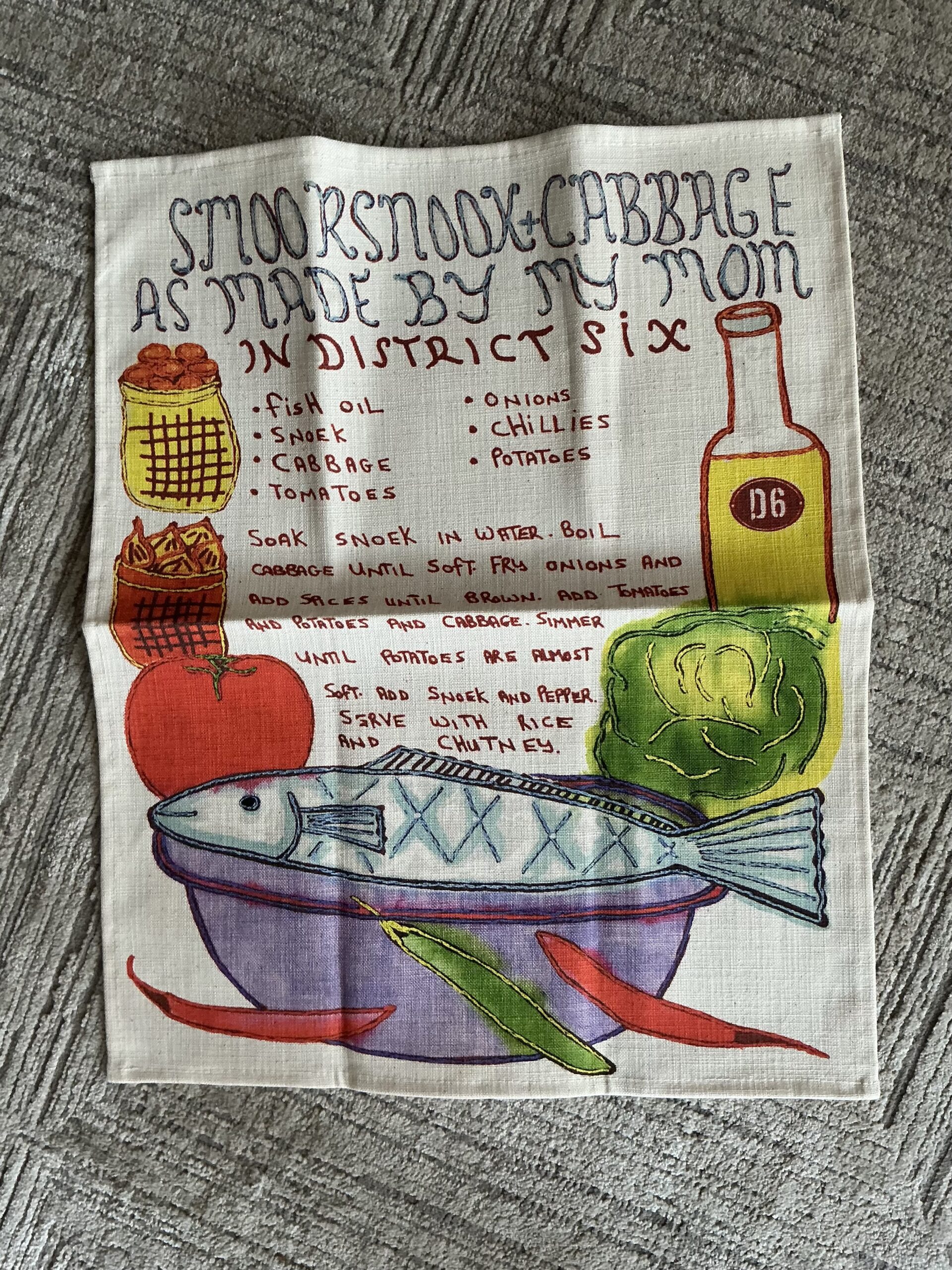
- What becomes clear is that heritage interpretation cannot be separated from stewardship. The removal of people from District Six was not only a social and political act—it was also an environmental one, severing relationships between communities and the spaces that sustained cultural practices, including food systems, social networks, and intergenerational knowledge.
- This aligns strongly with insights from Braiding Sweetgrass, where relationships to land are understood as reciprocal rather than extractive. When those relationships are broken through dispossession, the impact is both cultural and ecological.
- Similarly, How the Word Is Passed reinforces that interpretation is not neutral—it is shaped by who tells the story, who is asked to remember, and who is expected to carry the emotional weight of that remembering.
- These insights are beginning to directly inform my proposed dissertation:
“The Perils of Apartheid: How Forced Removals and Land Dispossession Shape Environmental Responsibility in South Africa.”
- The experience at District Six makes visible how displacement alters not only where people live, but how they relate to land, water, and community.
- It raises questions about how environmental responsibility is understood when access to land—and the ability to practice stewardship—has been systematically removed.
- This also has direct implications for program and experience design, particularly in sites like South End, District Six, and Atlantis:
- Interpretation must move beyond documenting trauma to supporting reconnection—to place, to practice, and to identity.
- Programs (including games and educational tools) should incorporate Traditional Ecological Knowledge (TEK) and lived experience, ensuring that communities are not positioned only as subjects of history, but as knowledge holders and co-creators.
- In the context of climate change, this reframes a dominant narrative:
- Climate discourse often focuses on future risk without fully addressing the historical processes—like dispossession—that produced current vulnerabilities.
- As thinkers like Greta Thunberg emphasize urgency, voices like Robin Wall Kimmerer and Clint Smith help ground that urgency in history, responsibility, and relational accountability.
- Ultimately, this experience reinforces that heritage work is not just about preservation—it is about repair.
- Repairing narratives
- Repairing relationships to land
- And rethinking how learning environments can hold truth without reproducing harm
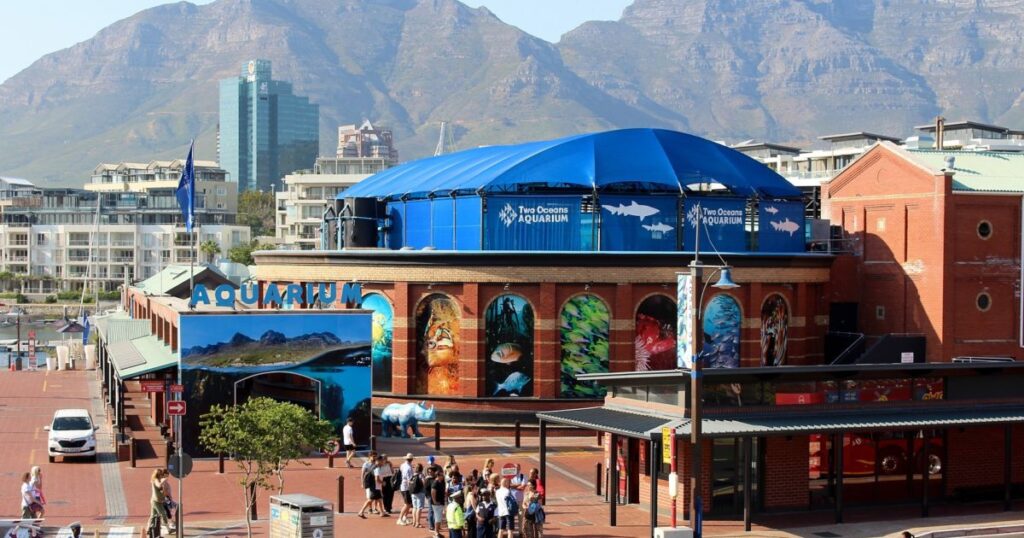
Dance Card Entry 9: Two Oceans Aquarium
Heritage Site Snapshot
Name: Two Oceans Aquarium
Date: March 17, 2026
Location: Cape Town, Western Cape, South Africa
Start Time: 11:28 AM
End Time: 1:17 PM
Type of Experience:
Aquarium
Thick Description
The first thing we noticed upon making our way to reception at the Two Oceans Aquarium was the high level of engagement among visitors. There was already a queue forming, signaling the popularity of the space before we had even entered. Once at the front, we paid R265 per adult (there were two of us), and after passing through gates similar to those at train stations in New York City, we were stamped with a UV mark that would allow re-entry if desired.
Immediately after entry, we were prompted to take a photograph—similar to the kind taken at theme parks like Disneyland—before being funneled into the gift shop. The shop was filled with merchandise related to marine life and Cape Town, from sea-themed items to branded clothing. One thing I noted was the absence of books, which stood out given the otherwise strong educational framing of the space.
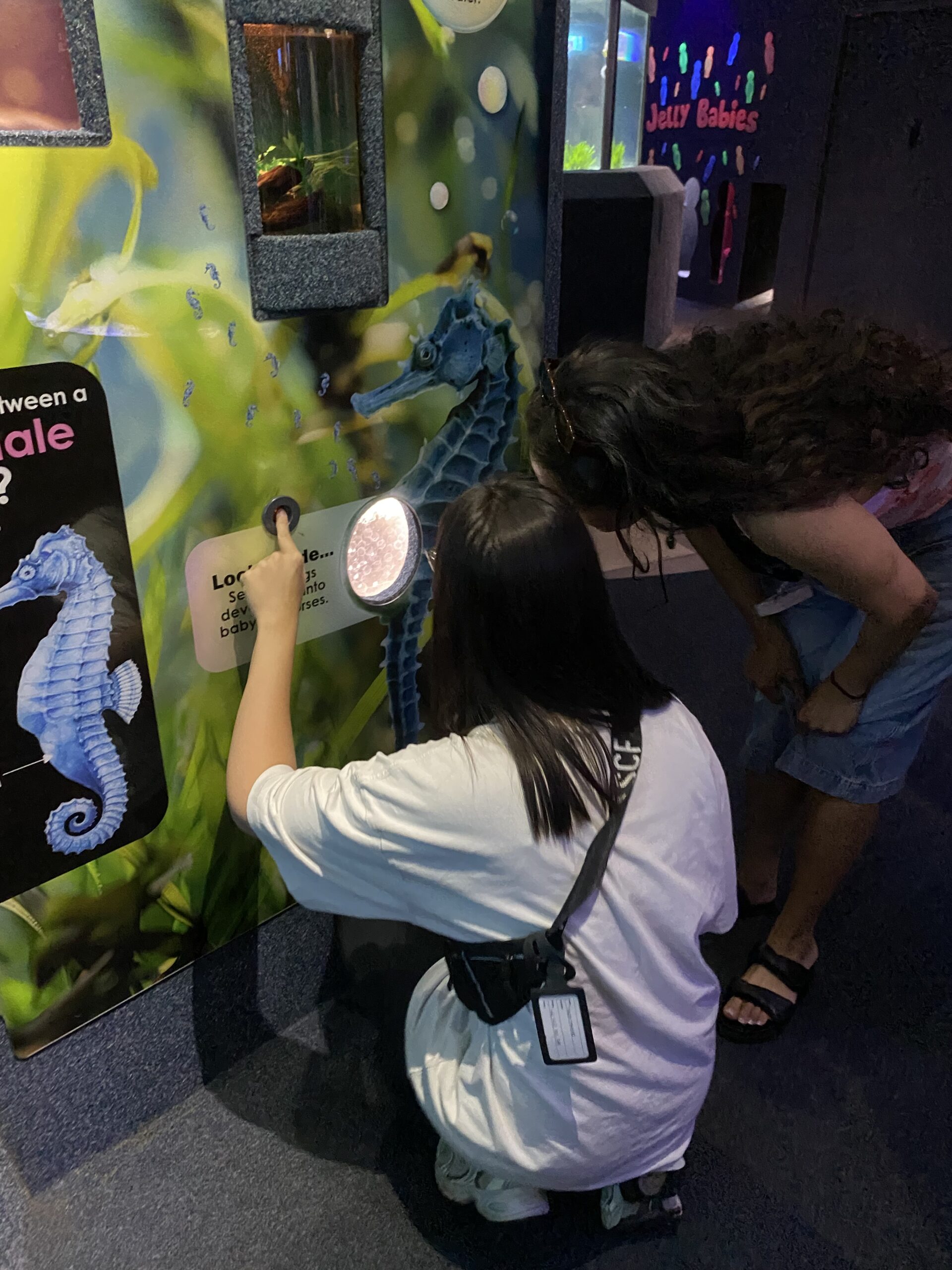
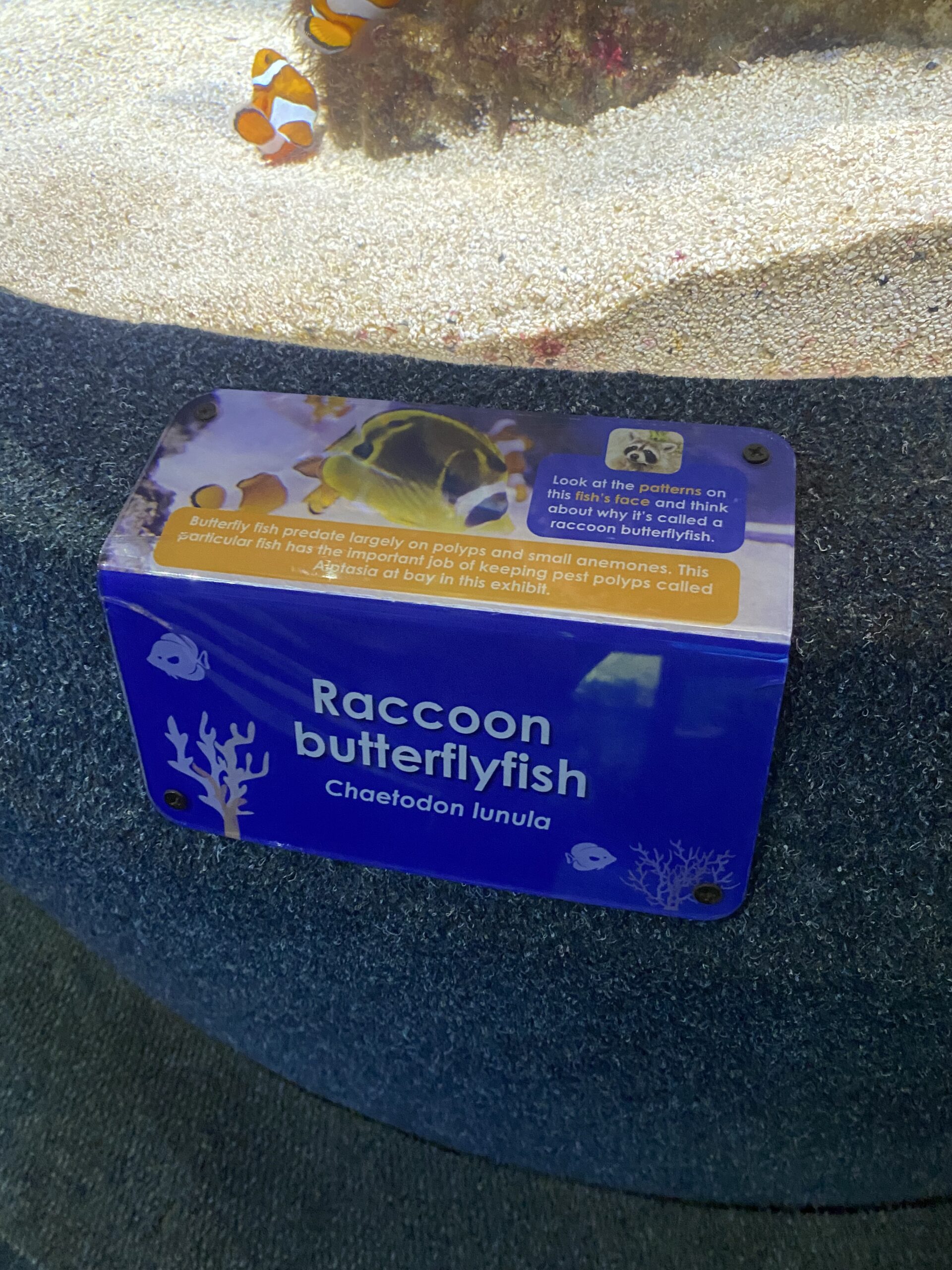
As we moved into the exhibits, what became immediately clear was the intentional design of engagement. Labels describing the fish and specimens were highly accessible—clear, readable, and seemingly designed for a wide audience, including younger visitors (approximately Grade 2–3 level in the South African context). This accessibility extended beyond text; the exhibits themselves were built to be interacted with.
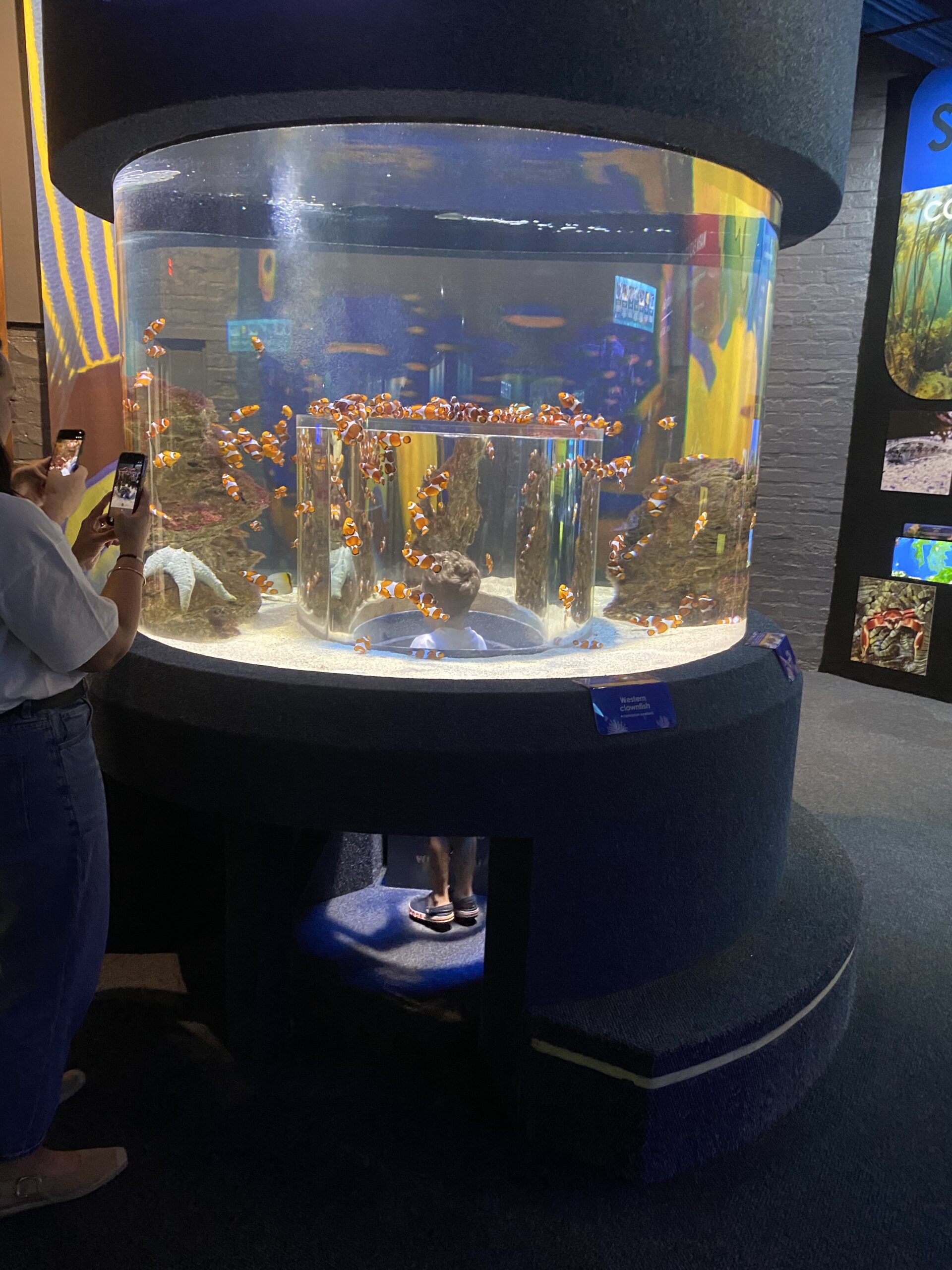
For example, one exhibit featuring clownfish allowed a child to physically insert their head into a viewing dome, bringing them eye-to-eye with the fish. Steps were placed near tanks so that children could elevate themselves and engage directly at the level of the marine life. These design choices made it clear that engagement was not incidental—it was structured.
Certain rooms shifted the type of engagement across age groups. The jellyfish exhibit, for example, was not quiet or subdued as one might expect. Instead, it was filled with excitement and curiosity. Visitors experimented with the ultraviolet lighting, trying to see what else might glow on their bodies. One woman was particularly fascinated by her glow-in-the-dark nails, repeatedly moving her hands under the light. In another part of the exhibit, a woman in a wheelchair moved comfortably through the space, stopping to photograph jellyfish in a tubular tank. This moment highlighted both the accessibility of the space and the playful, exploratory nature of engagement.
In contrast, another exhibit invited visitors to crawl through tunnels—something adults participated in with visible joy and laughter, contributing to the overall high energy and noise level throughout the aquarium.
We then entered an exploratory space where hands-on interaction was encouraged. Visitors could engage directly with seaweed while speaking to a volunteer who was deeply enthusiastic—almost “geeked out”—about sharing knowledge. Another volunteer demonstrated differences in teeth structures between manta rays and sharks and guided us through a microscopic view of anemones, explaining how their arms function to capture food. These moments created direct connections between observation and understanding.
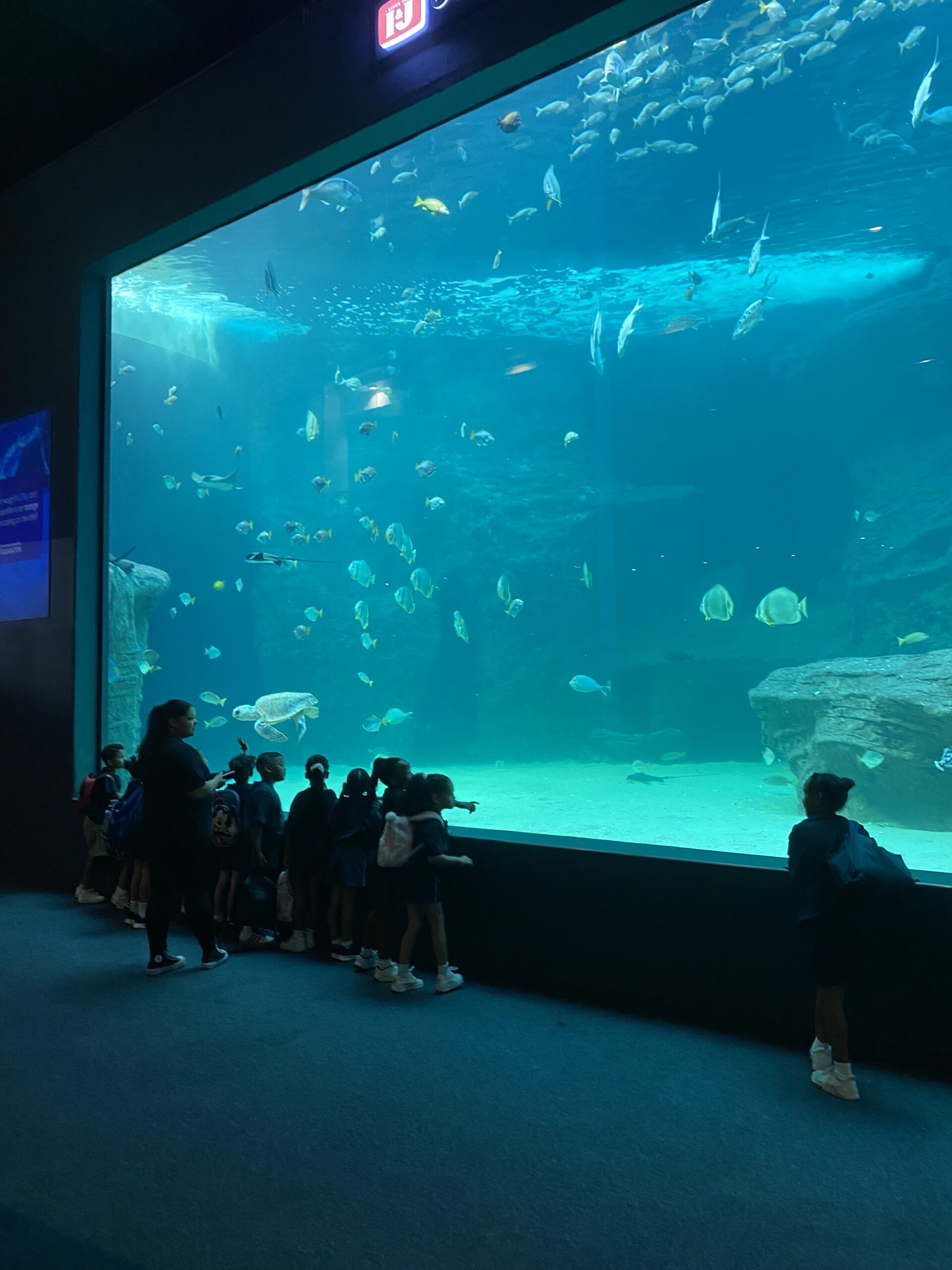
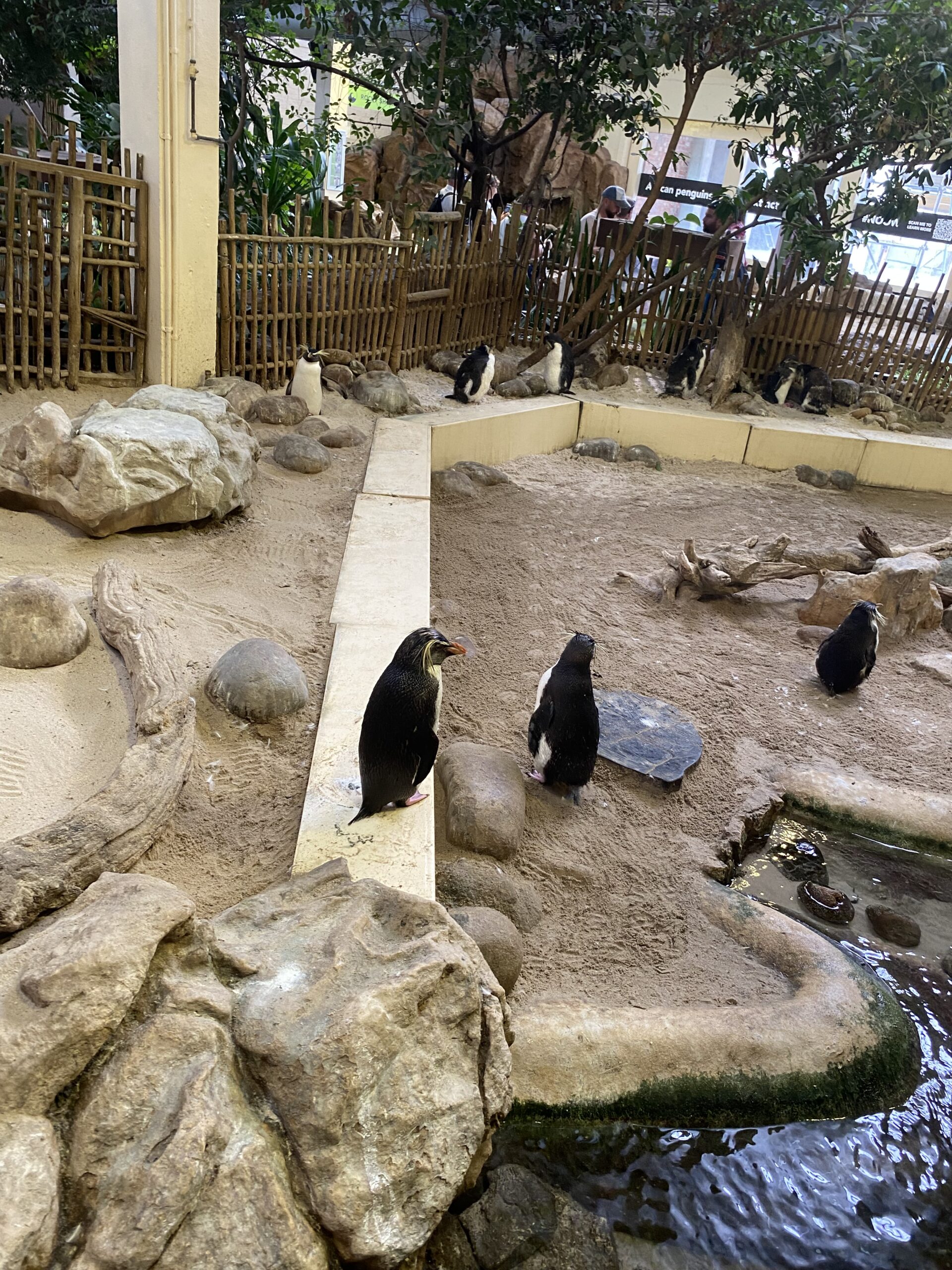
Further along, we entered the penguin exhibit. The room was noticeably more enclosed and carried a strong smell, but it created an intimate viewing experience. The proximity to the animals shifted the tone again—less playful, more observational.
Directional arrows throughout the aquarium guided movement, creating a clear pathway through the space. This ensured that visitors experienced the exhibits in a particular sequence, building understanding progressively.
One of the most engaging moments occurred in the seaweed forest exhibit. A volunteer gathered a group of visitors and explained the different fish species within the tank, as well as the process of photosynthesis occurring in the seaweed. He noted that this exhibit was intentionally uncovered to allow natural sunlight to support the ecosystem. Visitors sat and listened attentively, indicating a shift from movement to focused learning.
In a later exhibit, we observed sharks swimming alongside two visiting endangered sea turtles, reinforcing the aquarium’s emphasis on conservation. A diver was also present in the tank, and we learned that the aquarium offers certification through PADI, allowing visitors to engage with the space in a more immersive and extended way.
At the end of the visit, we were offered the opportunity to purchase the photograph taken at the entrance for R350. The experience concluded with access to a restaurant overlooking the harbor, where we chose to sit and watch seals. We found ourselves referring to them as “sea dogs,” noting their behavior and movement. This moment extended the experience beyond the aquarium itself, connecting the visit to the surrounding environment and ongoing conservation efforts.
As we exited, we were prompted to upgrade our tickets to an annual pass for R365—an indication of how the space encourages continued engagement rather than a one-time visit.
Preliminary Analysis
The Two Oceans Aquarium presents a highly effective model of active and experiential learning, where engagement is driven not by static representation but through direct interaction with living systems. From the moment of entry, the design of the space makes it clear that engagement is intentional. Accessibility is embedded throughout—from clearly written labels that can be understood by younger audiences, to physical design elements such as steps, viewing domes, and pathways that allow visitors of different heights and abilities to engage directly with the exhibits. This was further reinforced by observing a visitor in a wheelchair move comfortably through the space and actively participate in photographing the jellyfish exhibit, highlighting that accessibility is not an afterthought but a core design feature.
The aquarium also integrates multi-sensory engagement in a way that sustains attention and curiosity. Visual stimulation through moving marine life and ultraviolet lighting, physical interaction through crawling spaces and hands-on exhibits, and social interaction among visitors all contribute to a dynamic environment. The energy of the space—loud, playful, and exploratory—contrasts with more traditional museum environments where silence and observation are often expected. Even in spaces that might typically be designed as calm or reflective, such as the jellyfish exhibit, visitors actively experimented with light and movement, turning the experience into one of discovery rather than passive viewing.
The role of facilitators within the space is also significant. Volunteers do not simply provide information; they actively engage visitors, translating complex ecological concepts into accessible language and encouraging curiosity. Their enthusiasm becomes part of the interpretive experience, making learning feel conversational and responsive. At the same time, conservation is seamlessly embedded within the exhibits. The presence of endangered sea turtles within the shark tank and the opportunity for deeper engagement through programs such as PADI certification demonstrate how the aquarium connects observation to action and responsibility.
However, while the aquarium excels in creating engaging and accessible experiences, there is a noticeable absence of cultural and historical context. The relationship between marine ecosystems and the communities who have historically depended on them is not as visible. This creates a gap between ecological knowledge and cultural understanding—one that becomes particularly important when considering how environmental responsibility is shaped by history, access, and identity.
Synthesis & Interpretation
This experience reinforces a central insight emerging across my portfolio: engagement is not only shaped by what is presented, but by how it is experienced. At the Two Oceans Aquarium, engagement is immediate, sensory, participatory, and often joyful. Visitors are not required to imagine or interpret from a distance—they are placed in direct relationship with living systems, allowing curiosity to emerge naturally.
This stands in contrast to heritage spaces such as the District Six Museum, where engagement is often reflective, narrative-driven, and emotionally heavy. In those spaces, understanding is frequently tied to confronting histories of trauma, displacement, and injustice. Together, these experiences reveal an important tension within interpretation: living systems invite connection without burden, while historical systems often require engagement with difficult truths.
This tension raises a critical question for my work: how can we design experiences that maintain depth and truth without reproducing harm or emotional fatigue? The aquarium offers one possible approach, demonstrating how low-barrier entry points, interaction, and play can sustain engagement while building meaningful connections. At the same time, heritage sites provide essential context, grounding these experiences in the realities of dispossession and inequality.
Bringing these approaches together is central to my emerging research direction, particularly in relation to my proposed dissertation, “The Perils of Apartheid: How Forced Removals and Land Dispossession Shape Environmental Responsibility in South Africa.” The aquarium highlights how connection to living systems can foster care and curiosity, while sites like District Six reveal how historical processes have disrupted relationships between communities and land, water, and resources. This suggests that environmental responsibility cannot be fully understood without acknowledging the histories that shape access and belonging.
This synthesis also challenges dominant narratives around climate change, which often focus on future risk without addressing the historical processes that produced current inequalities. Drawing on thinkers such as Robin Wall Kimmerer, Clint Smith, and bell hooks, this work points toward a more integrated understanding of stewardship—one that is rooted in relationship, memory, and place. In this way, the aquarium does not stand apart from heritage work, but rather offers a complementary model. It shows what is possible when learning is engaging, accessible, and alive, while also highlighting the need to connect that engagement to deeper questions of history, identity, and justice.
Ultimately, this experience challenges me to think about how educational programs and interpretive design—particularly in sites like South End, District Six, and future work in Atlantis—can bridge these approaches. The goal is not simply to inform, but to create experiences that reconnect people to living systems while honoring the histories that have shaped their relationship to them.
Dance Card Entry 10: Iziko Museum
Heritage Site Snapshot
Name: South African Museum and Planetarium
Date: March 17, 2026
Location: Cape Town, Western Cape, South Africa
Start Time: 9:48 AM
End Time: 11:15 AM
Type of Experience: Natural History Museum Exhibit
Thick Description
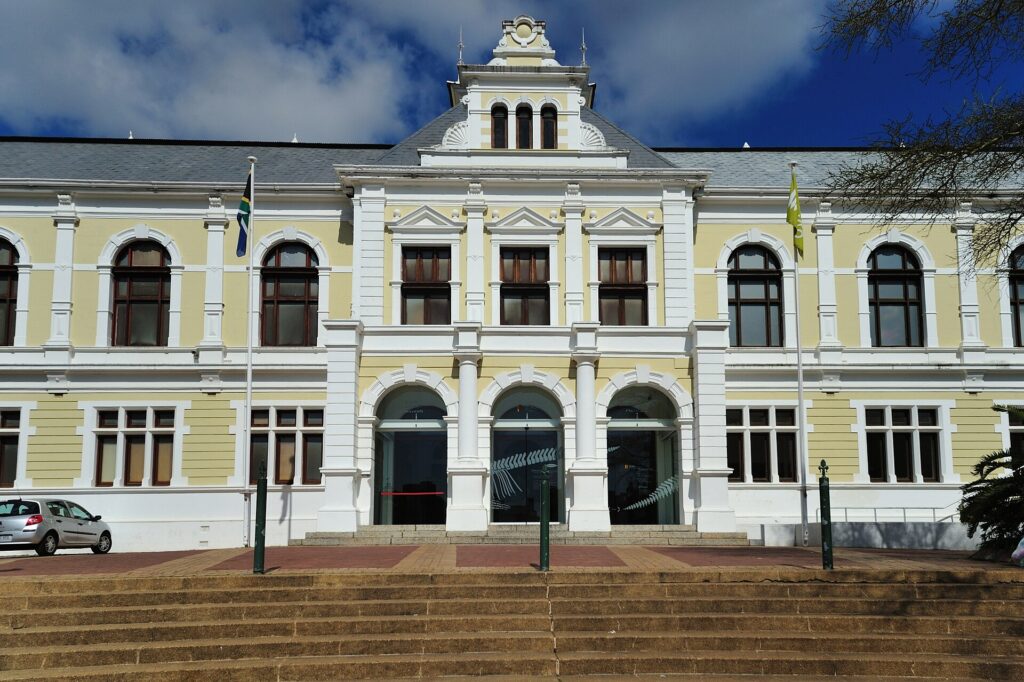
The Iziko South African Museum and Planetarium is located directly across the street from our accommodation, making it easily accessible and convenient to visit. Upon entering, we moved through several natural science exhibits, most of which followed a traditional museum format—glass cases, preserved specimens, and labeled displays.
We were specifically looking for an exhibit titled The Sea and Me. It took some time to locate, as it was embedded within the broader natural science displays rather than clearly set apart. Once found, the exhibit stood out visually as being designed for children, particularly through its scale and use of suspended and mounted marine animals. A manta ray hung from the ceiling, a sunfish (mola mola) sat on a shelf alongside an African penguin, and an albatross appeared to fly above a research boat structure that functioned as a play element. A Cape fur seal was positioned higher up, while a red Roman fish and other species were mounted along the walls.
While the exhibit visually signaled a child-focused space, the experience itself revealed several tensions. One of the most immediate challenges was language accessibility. The information presented on the walls covered complex topics—acidification and warming, the blue economy, shipping, mining, overfishing, subsistence fishing, and the impacts of colonization—but the language and density of information did not always align with the intended audience.
There was also a noticeable mismatch between design intention and actual engagement. Elements such as sandboxes suggested a space for younger children, likely under the age of six, yet beyond these features and a few video displays, there were limited opportunities for meaningful interaction. Children were primarily positioned as recipients of information rather than active participants. The exhibit delivered content, but did not provide many pathways for children to explore, question, or make meaning on their own.
This became even more apparent when considering the overall use of the space. I visited the museum on two separate occasions, and both times this exhibit remained largely empty, despite the museum itself being filled with a mix of visitors, including school groups. The lack of engagement in this specific area stood in contrast to the rest of the museum’s activity.
Another striking observation was the difference in experience between school groups. More affluent schools arrived with hired guides, who facilitated interpretation and supported engagement. In contrast, a group from a less advantaged school moved through the space independently. There was visible stress among the teachers as they tried to manage logistics, including an unexpected financial challenge. They had assumed that younger children (around ages four to five) would enter for free, only to be informed at reception that five-year-olds were required to pay an entrance fee of R20 each. As we left, the teachers were still trying to figure out how to cover the cost.
This moment highlighted how access to interpretation is not evenly distributed. While the exhibit itself presented information about systems such as exploitation, subsistence, and inequality, these dynamics were also playing out in real time within the museum space. The ability to fully engage with the exhibit was shaped not only by its design, but by broader factors such as financial access, institutional support, and the presence—or absence—of guided interpretation.
Preliminary Analysis
The Sea and Me exhibit at the Iziko South African Museum and Planetarium reveals a significant disconnect between educational intent and meaningful engagement, particularly when examined through a trauma-informed and youth-centered lens. While the exhibit visually signals that it is designed for children, the structure and delivery of content do not align with how young learners—especially those from historically marginalized communities—engage with complex environmental and historical material.
A key issue lies in language accessibility and cognitive demand. The exhibit introduces topics such as subsistence and artisanal fishing, ocean acidification, the blue economy, and colonization through dense, text-heavy panels. For example, the panel on subsistence and artisanal fishing emphasizes community livelihood and traditional practices, while the colonization panel acknowledges the introduction of industrial fishing and legal systems that restricted access to marine resources. Although these are critical themes, the language used tends to generalize and soften the realities of dispossession, framing colonization in terms of “introduction” and “implementation” rather than explicitly addressing systemic exclusion and loss.
This reflects a broader issue identified in the work of Joseph P. Gone, who describes historical trauma as cumulative and intergenerational, shaped by colonization and its enduring impacts. Similarly, bell hooks emphasizes how racism disrupts belonging at the community level. Within the exhibit, these dimensions are implied but not fully engaged. The result is a form of interpretation that presents important information without creating pathways for visitors—particularly youth—to connect that information to lived experience, identity, or present-day realities.
The lack of interactive and participatory elements further limits engagement. While the exhibit includes visual features such as suspended marine animals and a research boat structure, opportunities for hands-on learning, inquiry, or dialogue are minimal. Children are positioned as recipients of knowledge rather than active participants in meaning-making. This stands in contrast to more immersive environments like the Two Oceans Aquarium, where engagement is built through sensory interaction, facilitator involvement, and real-time observation of living systems.
Issues of equity and access compound these design limitations. Observations of school groups revealed unequal experiences within the same space. More affluent schools were supported by guides, enabling facilitated learning, while students from less advantaged communities—such as those from Langa—navigated the exhibit independently. Financial barriers, including unexpected entrance fees for young learners, created additional stress for teachers and limited students’ ability to fully participate. These barriers are not incidental; they reflect broader structural inequalities rooted in apartheid spatial planning and forced removals from areas such as District Six.
Taken together, these observations suggest that the exhibit does not fully account for the historical and social conditions that shape how youth encounter museum spaces. Without intentional attention to accessibility, participation, and context, the exhibit risks reproducing forms of disconnection rather than fostering meaningful engagement.
Synthesis & Interpretation
This experience marks a critical turning point in my research trajectory. My initial dissertation focus, “The Perils of Apartheid: How Forced Removals and Land Dispossession Shape Environmental Responsibility in South Africa,” centered primarily on understanding the historical and structural impacts of dispossession. Through visits to sites such as the Iziko South African Museum and Planetarium, the District Six Museum, and the Two Oceans Aquarium, my focus has shifted from analysis of impact to designing pathways for reconnection and engagement. This shift reframes my dissertation as:
“From Dispossession to Stewardship: Trauma-Informed Design for Youth Engagement in South Africa’s Heritage and Environmental Learning Spaces.”
Rather than asking only how dispossession has shaped environmental responsibility, I now explore how heritage and environmental learning spaces can be intentionally designed to re-engage youth from historically displaced communities, particularly through trauma-informed and inclusive practices.
Drawing on bell hooks, belonging: a culture of place is not simply about being present in a space, but about feeling recognized, valued, and connected within it. For youth from communities shaped by forced removals and racial segregation—such as Langa—museum spaces can either reinforce exclusion or create opportunities for reconnection. Joseph P. Gone’s concept of historical trauma further highlights that these experiences are cumulative and intergenerational, shaping how communities relate to institutions, knowledge, and environmental systems over time.
When considered alongside the Two Oceans Aquarium and the District Six Museum, the Iziko exhibit reveals a critical gap in current interpretive practice. The aquarium demonstrates how engagement can be immediate, sensory, and participatory, while District Six offers deeply contextualized, narrative-driven interpretation rooted in lived experience and memory. In contrast, Iziko presents important environmental and historical content but lacks the interactive and relational depth necessary to make that content meaningful for diverse youth audiences.
This comparison underscores that effective engagement requires more than content delivery—it demands intentional design that bridges knowledge, experience, and identity. Trauma-informed design, in this context, involves creating environments that:
- Foster a sense of belonging rather than alienation
- Support agency, curiosity, and active participation
- Acknowledge structural barriers such as cost, language, and access
- Connect historical processes, such as colonization and forced removals, to present-day realities
The presence of students from Langa at the museum is particularly significant. These students come from communities shaped by the legacy of displacement from areas like District Six, where access to land, resources, and opportunity was systematically restricted. The challenges they faced within the museum—financial barriers, lack of facilitation, and limited engagement—mirror broader patterns of exclusion. In this way, the museum experience can either reproduce historical inequities or act as a site for reconnection and empowerment.
This realization shifts the focus toward designing for sustained engagement. Museums and aquariums must move beyond one-time visits and static displays to become part of broader learning ecosystems. This includes empowering teachers before, during, and after visits, developing accessible and culturally relevant programming, and creating opportunities for youth to participate as co-creators of their learning experiences. Models such as those developed by the Institute of Museum and Library Services demonstrate the potential of long-term, community-centered approaches to deepening learning and fostering equity.
Ultimately, moving from dispossession to stewardship requires more than presenting environmental knowledge—it requires rebuilding relationships between youth, communities, and ecosystems. By centering belonging, access, and participation, trauma-informed design offers a pathway for transforming heritage and environmental learning spaces into sites of empowerment. In doing so, these spaces can support youth not only in understanding the world around them, but in recognizing their role within it and their capacity to shape its future.
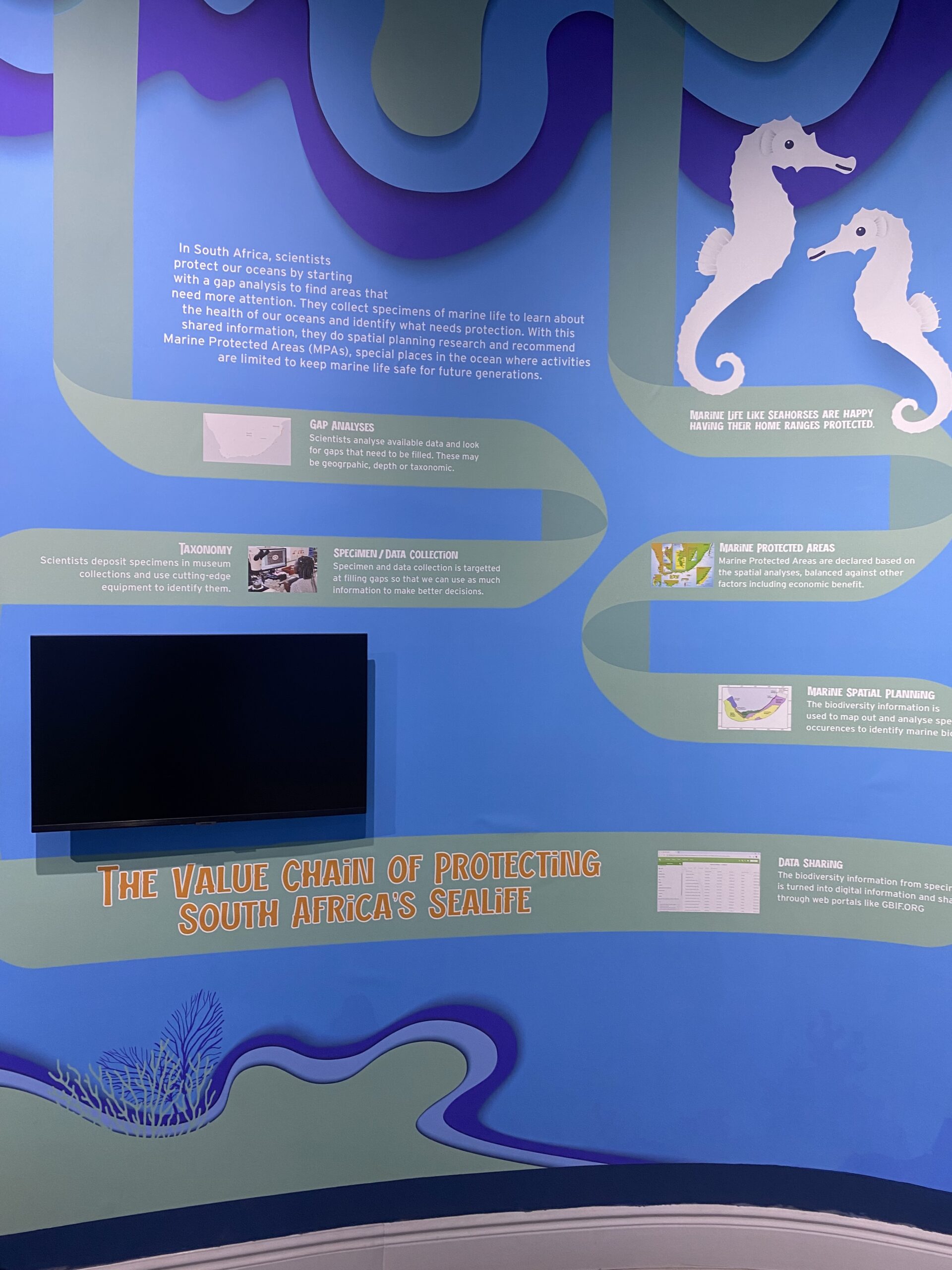
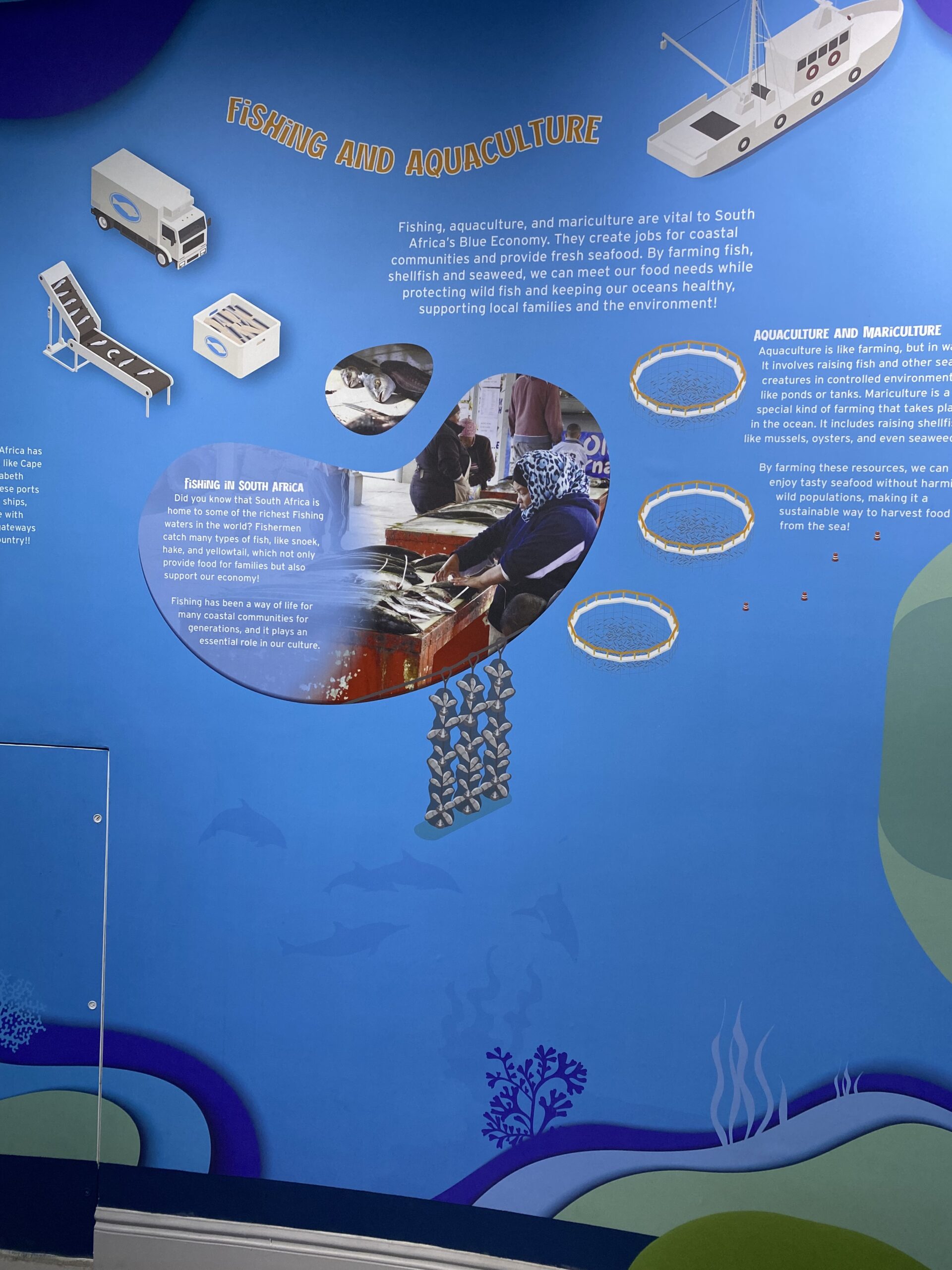
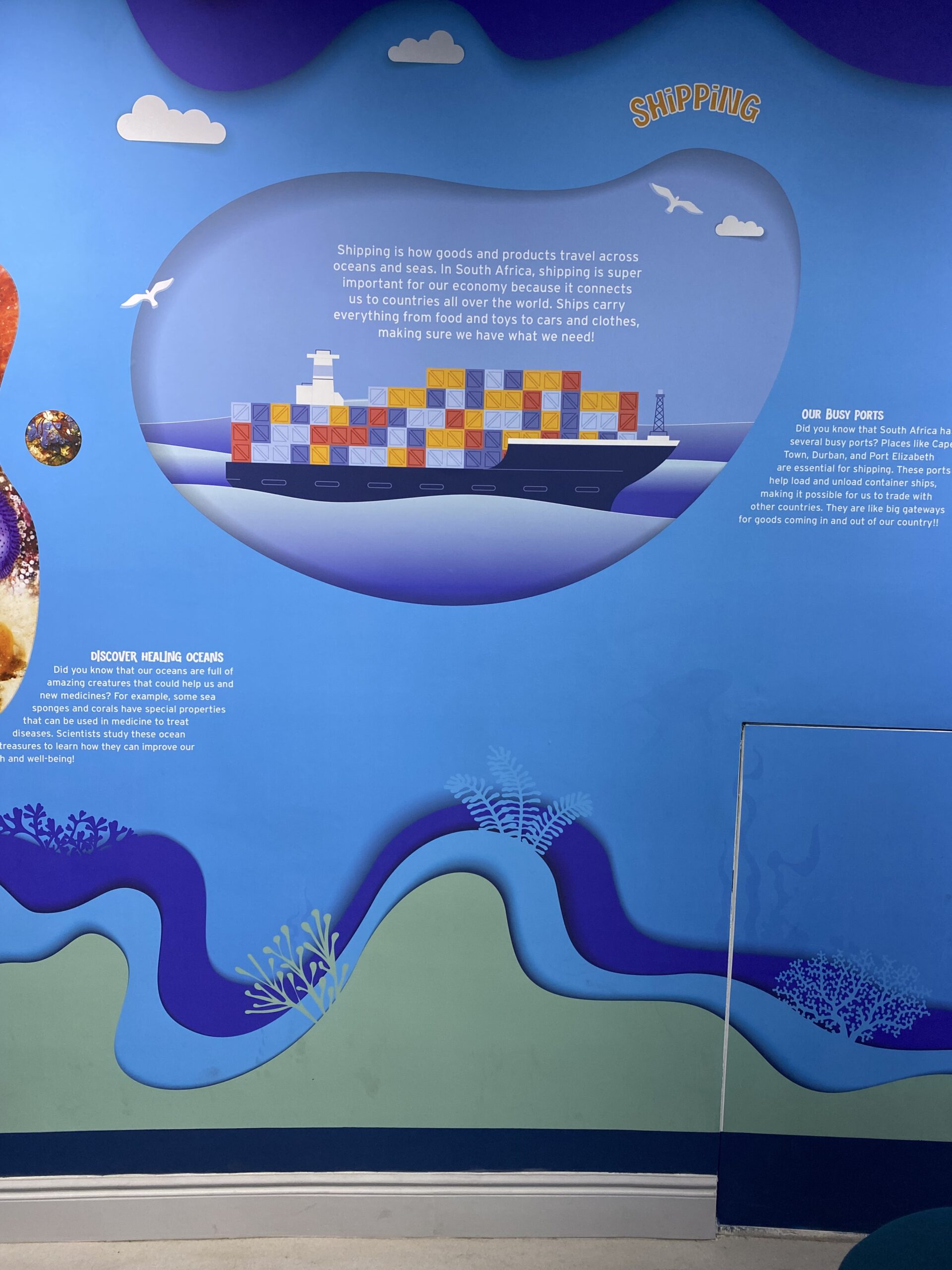
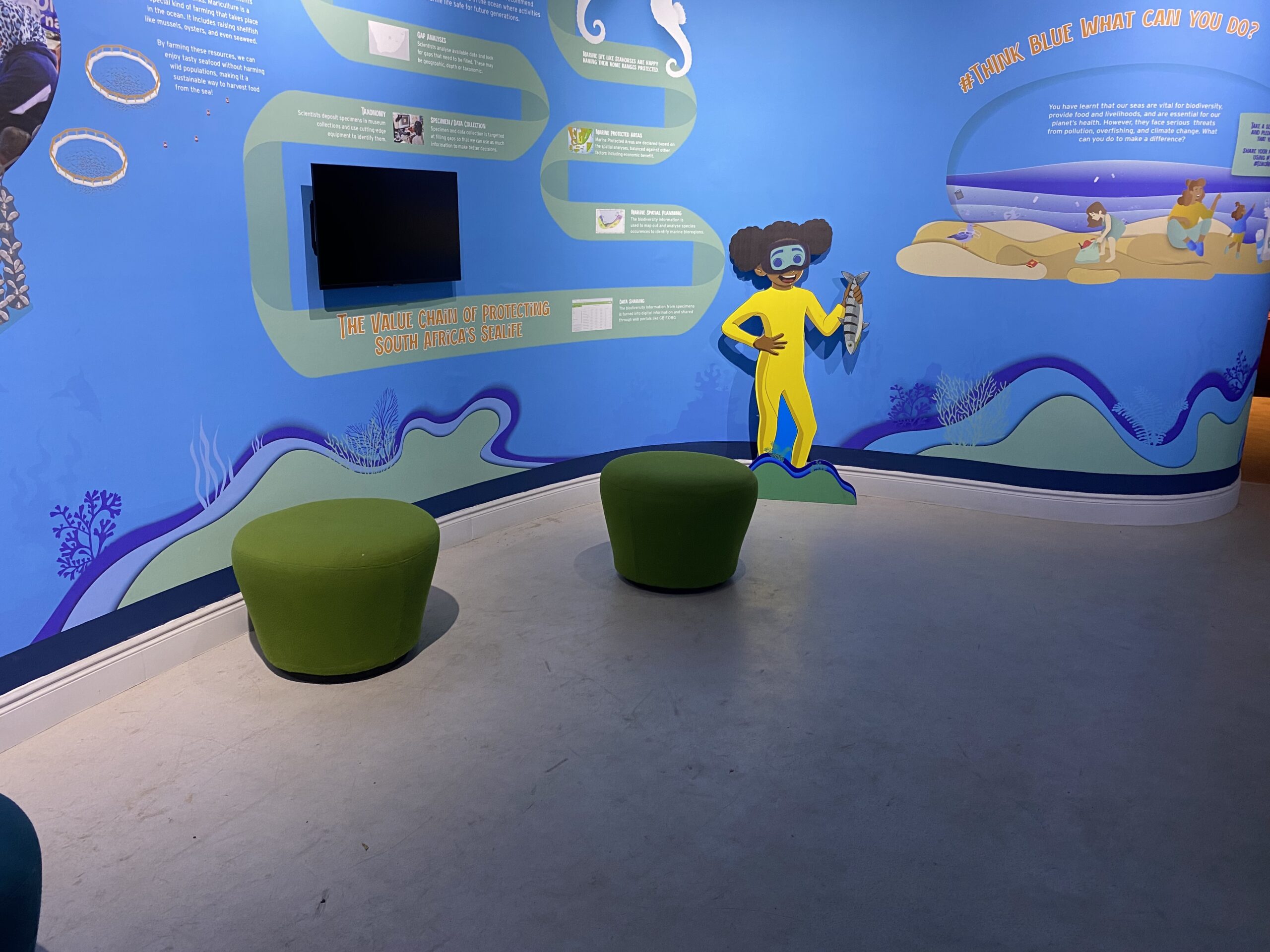
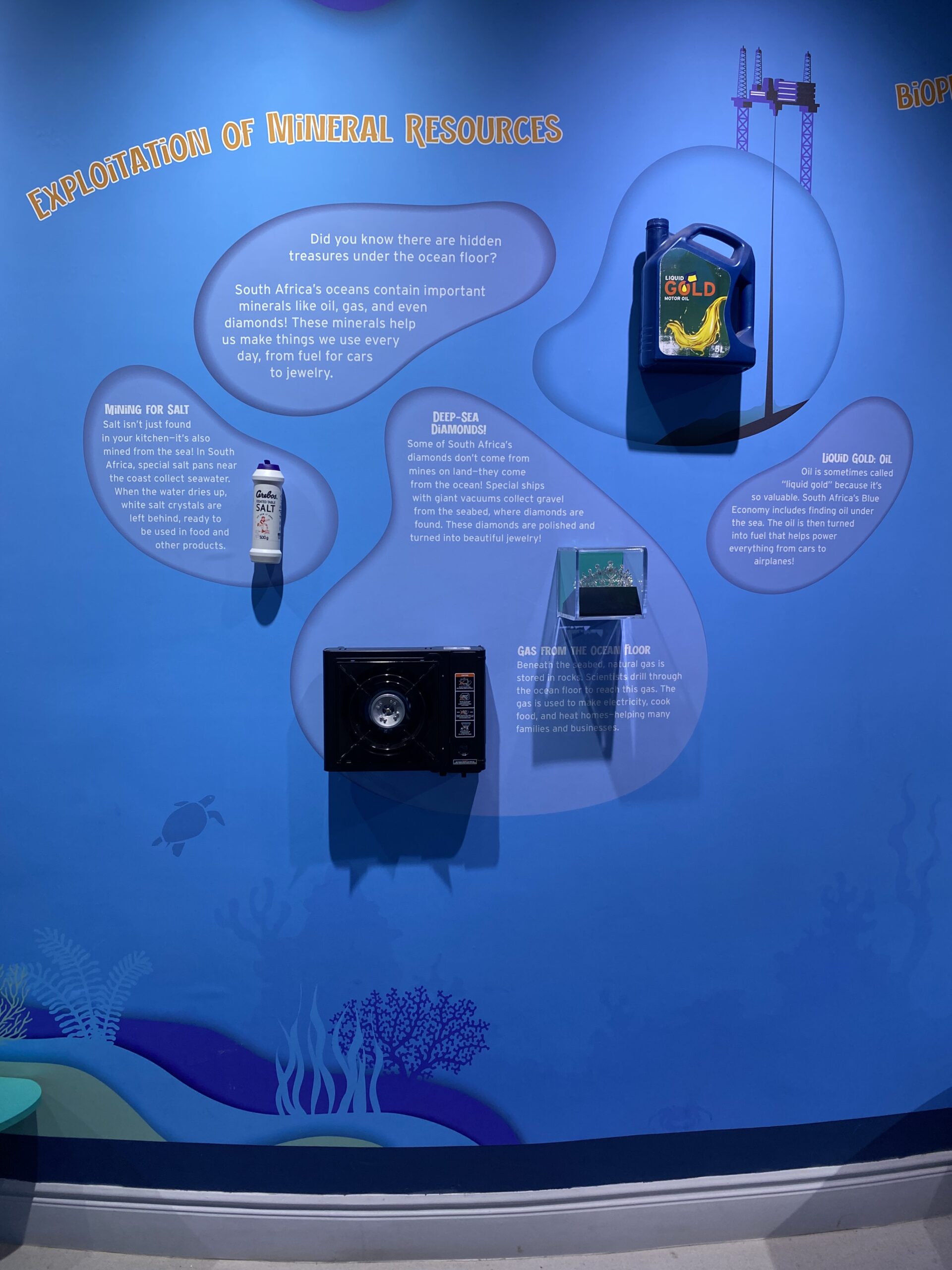
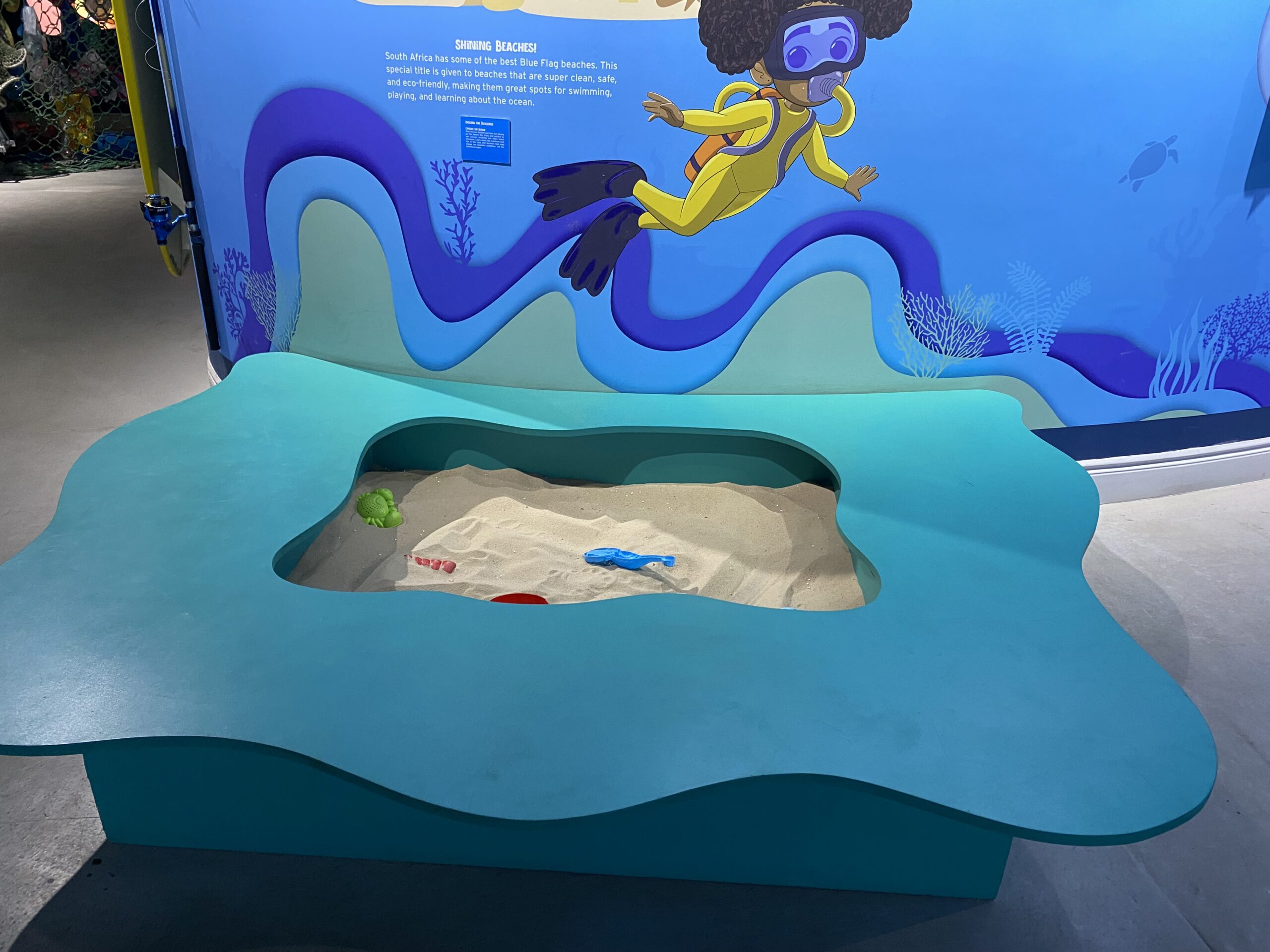
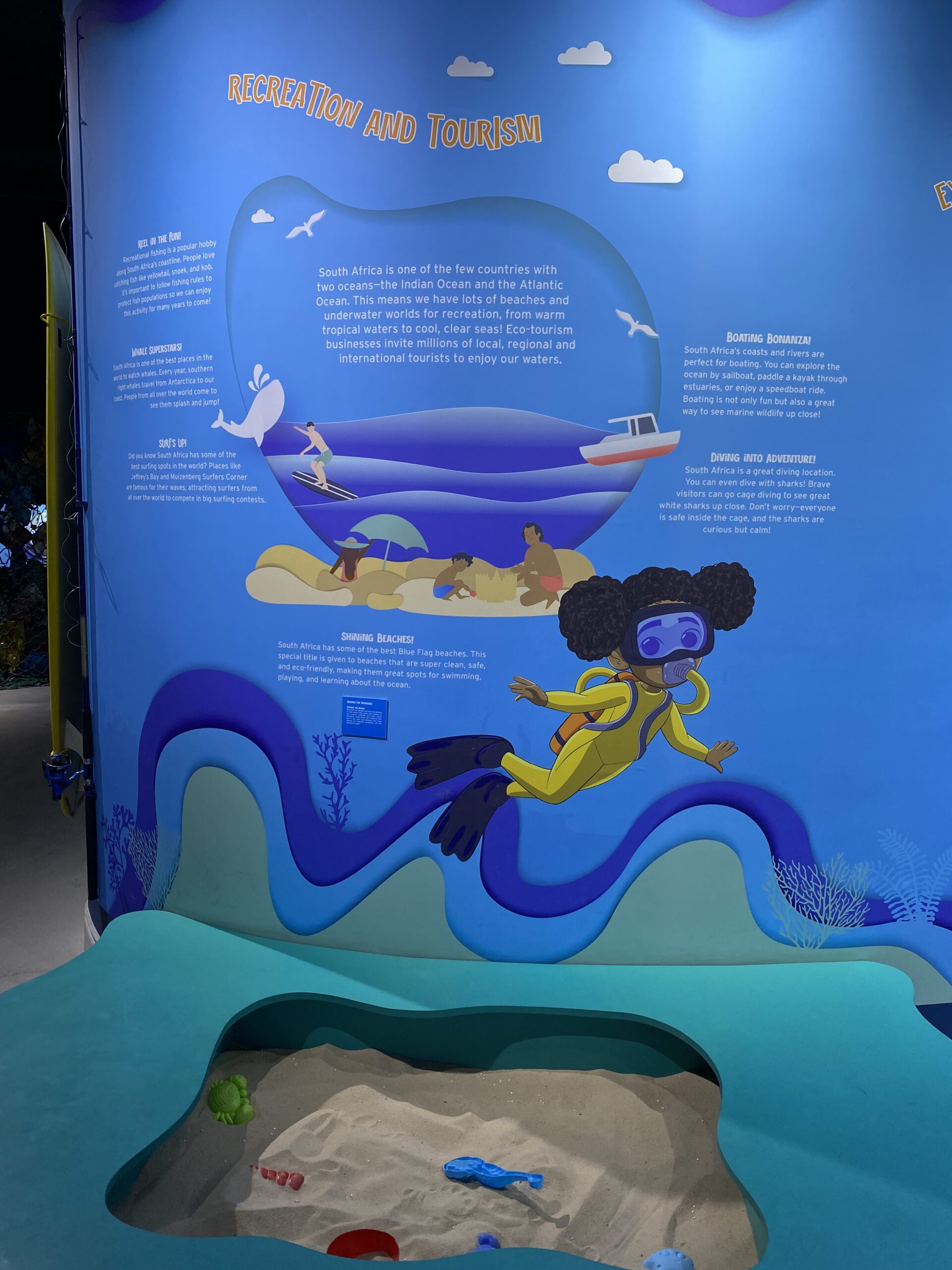
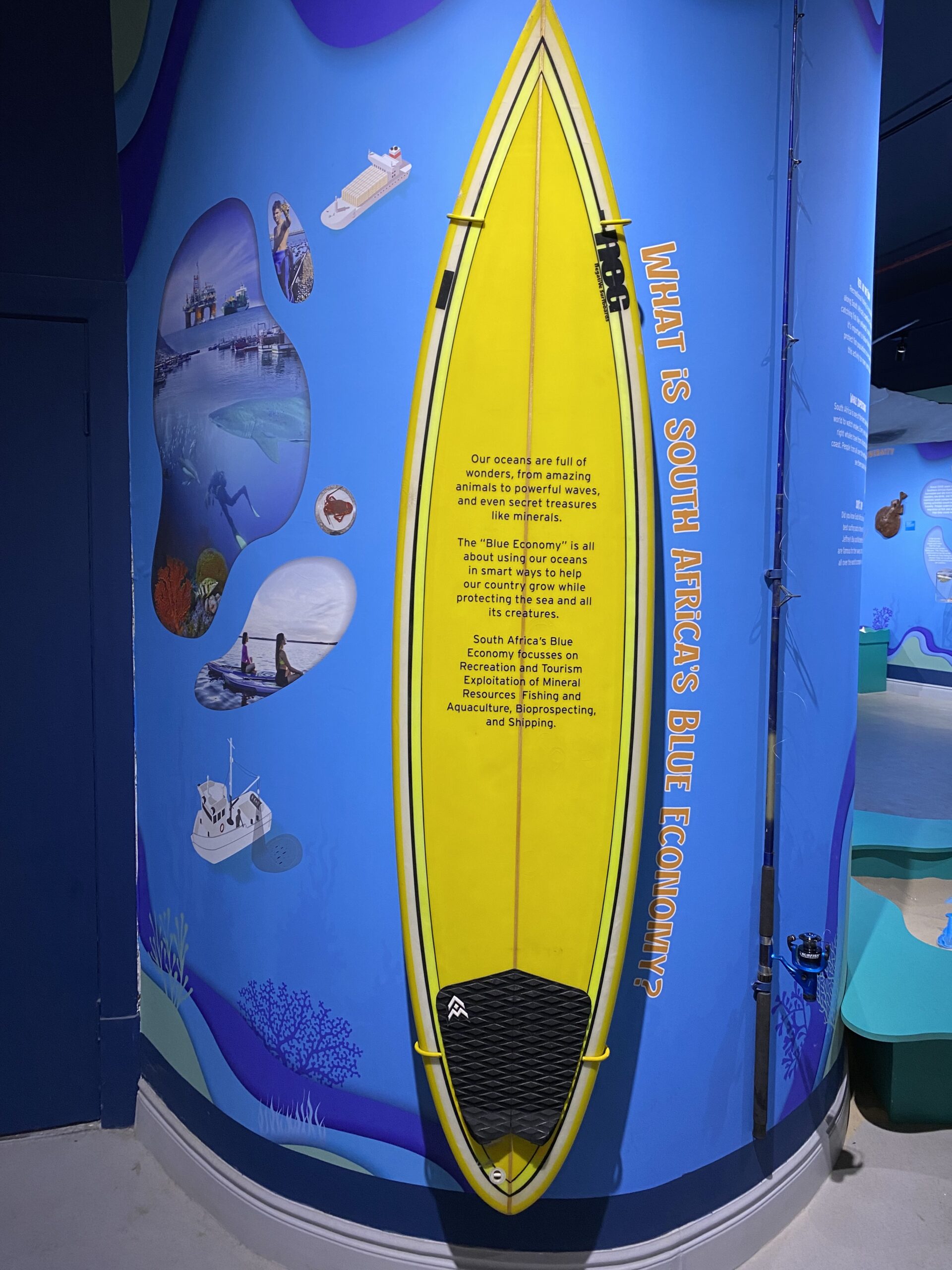
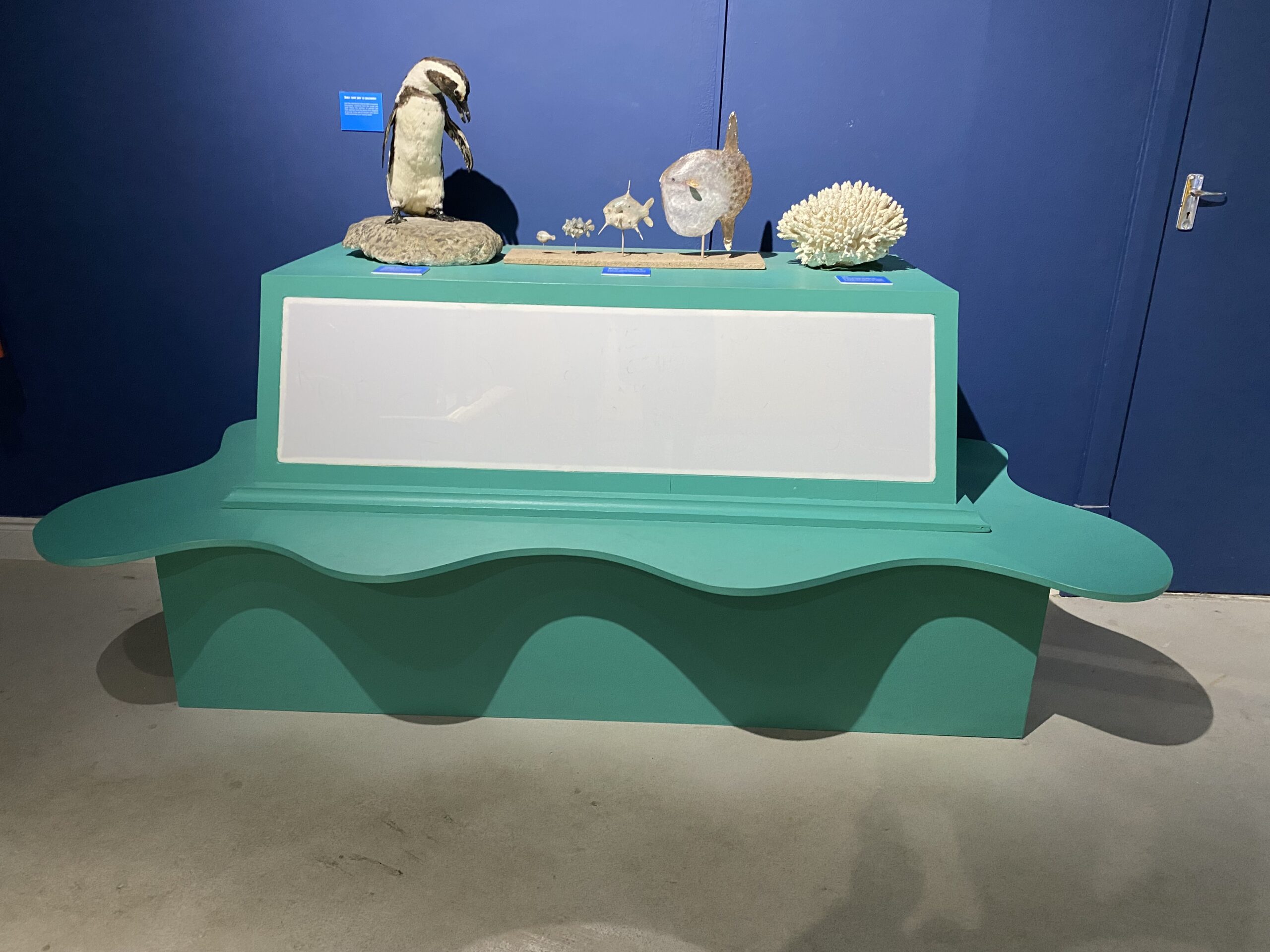
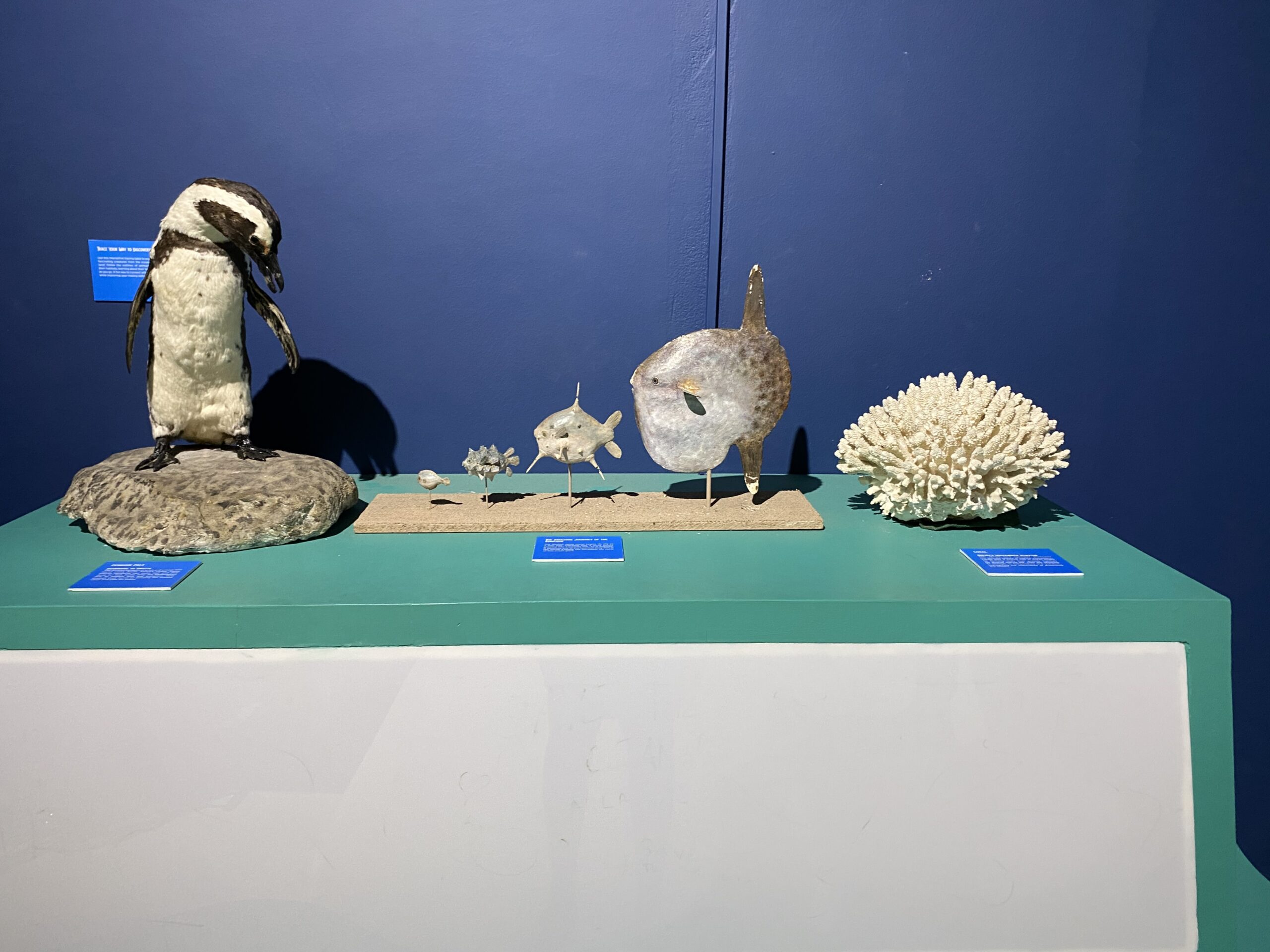
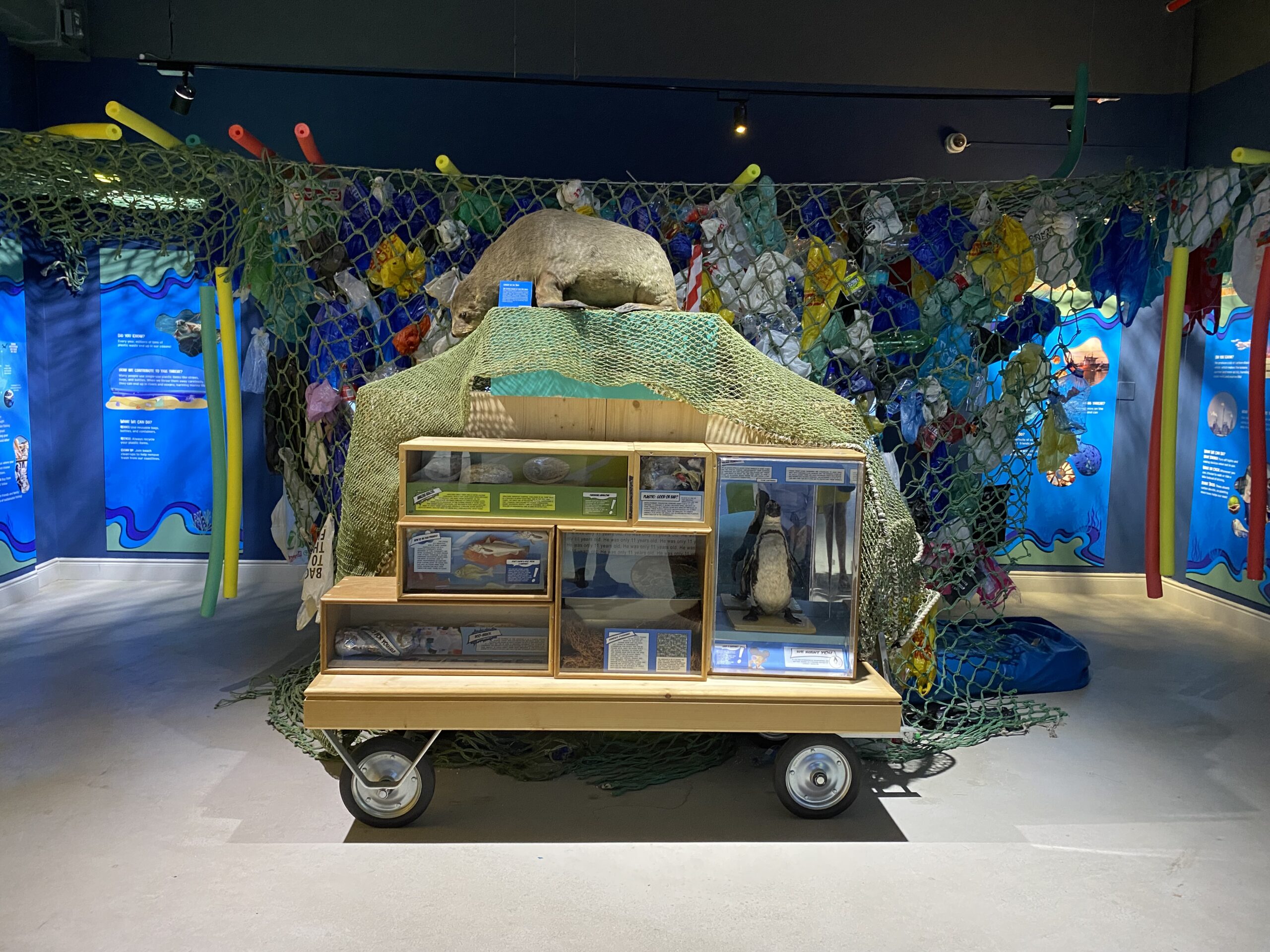
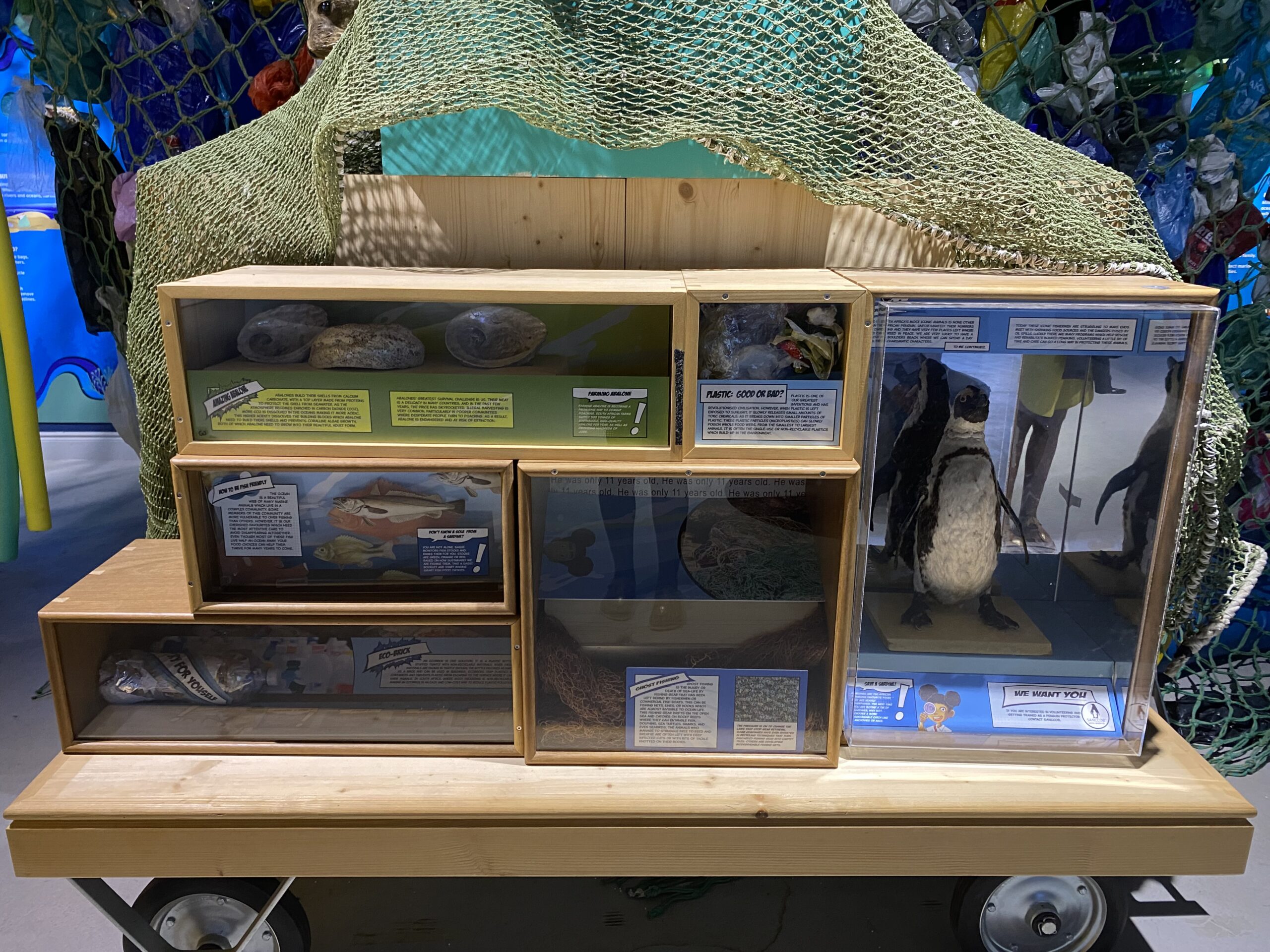
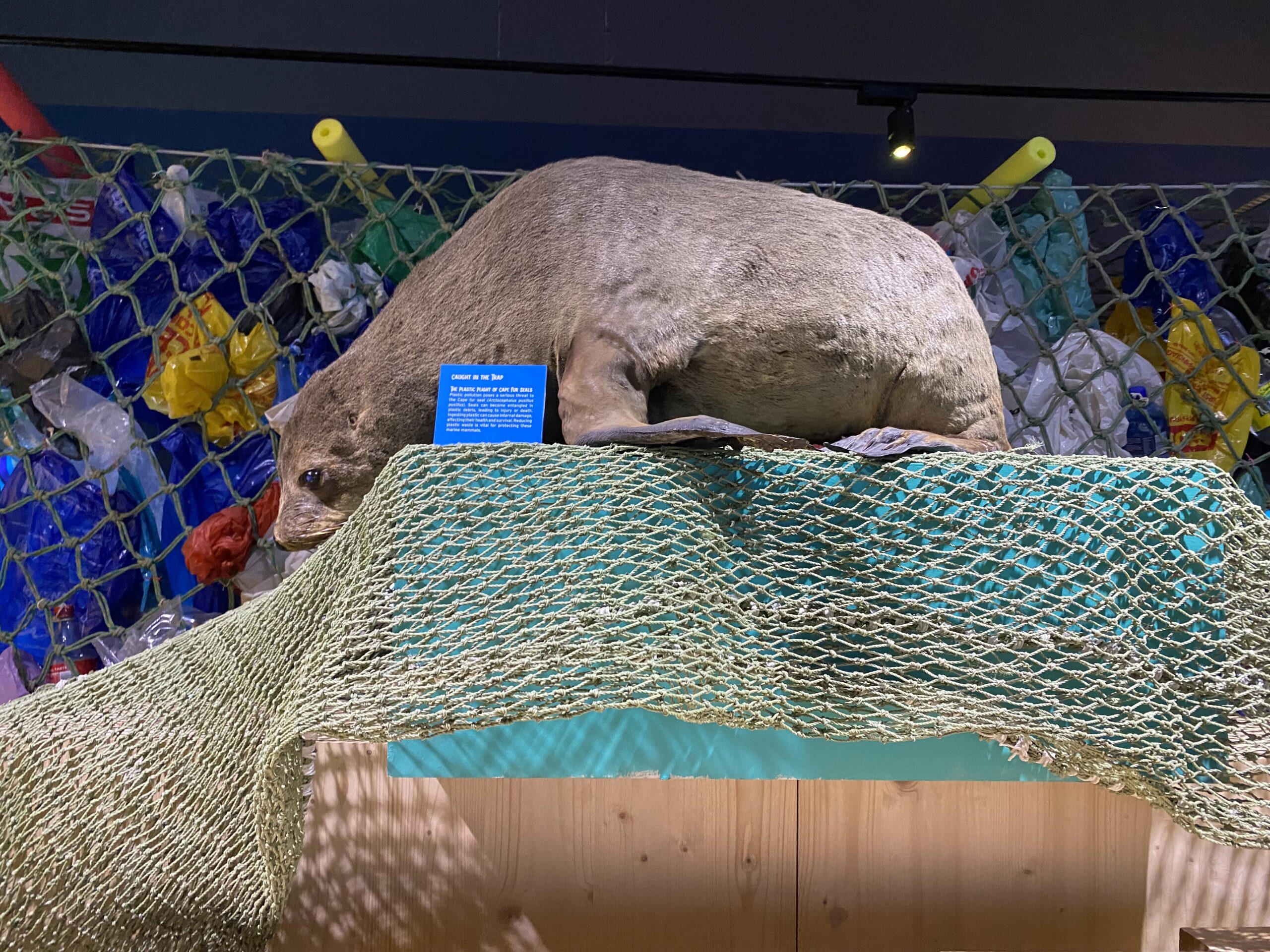
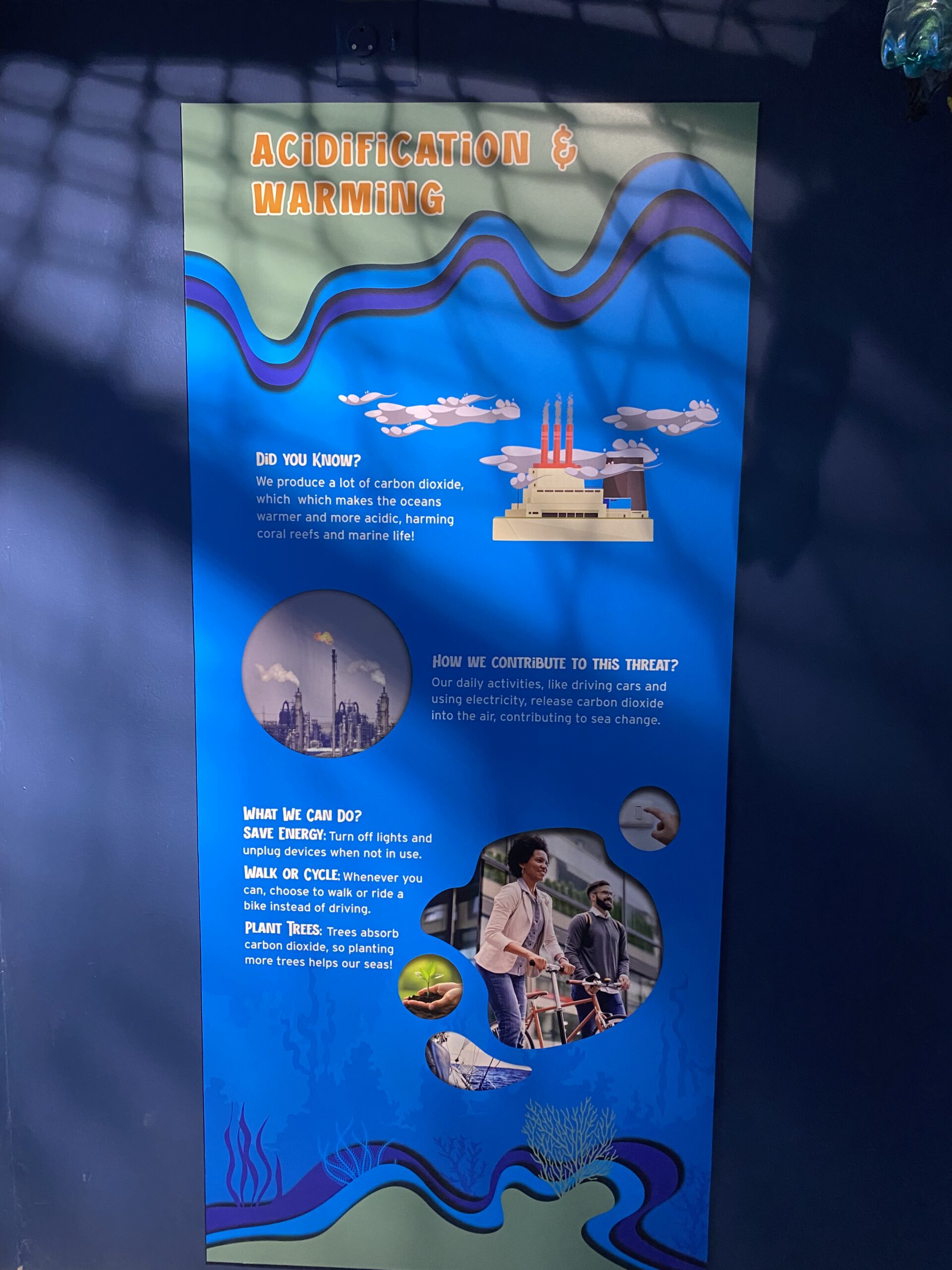
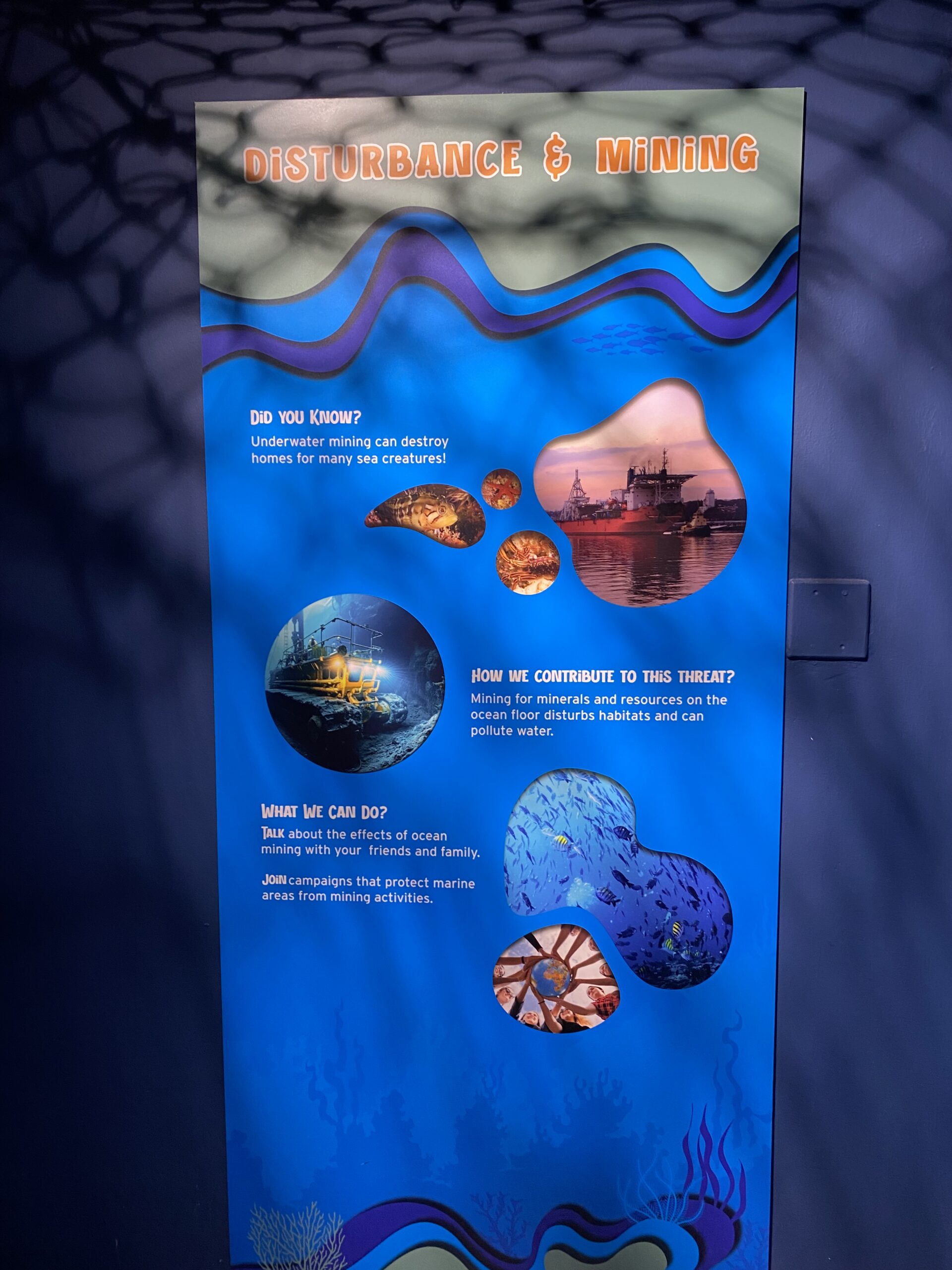
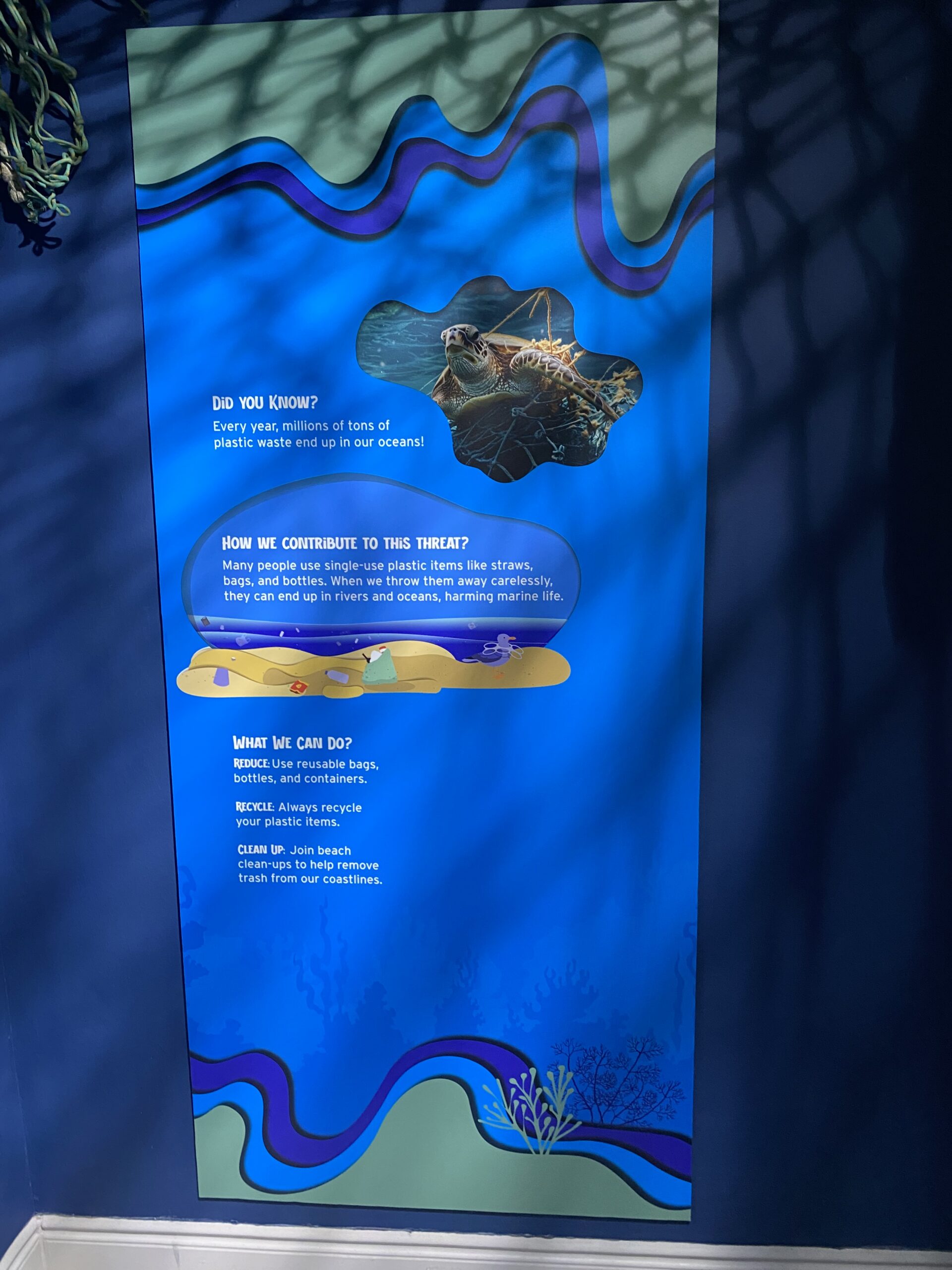
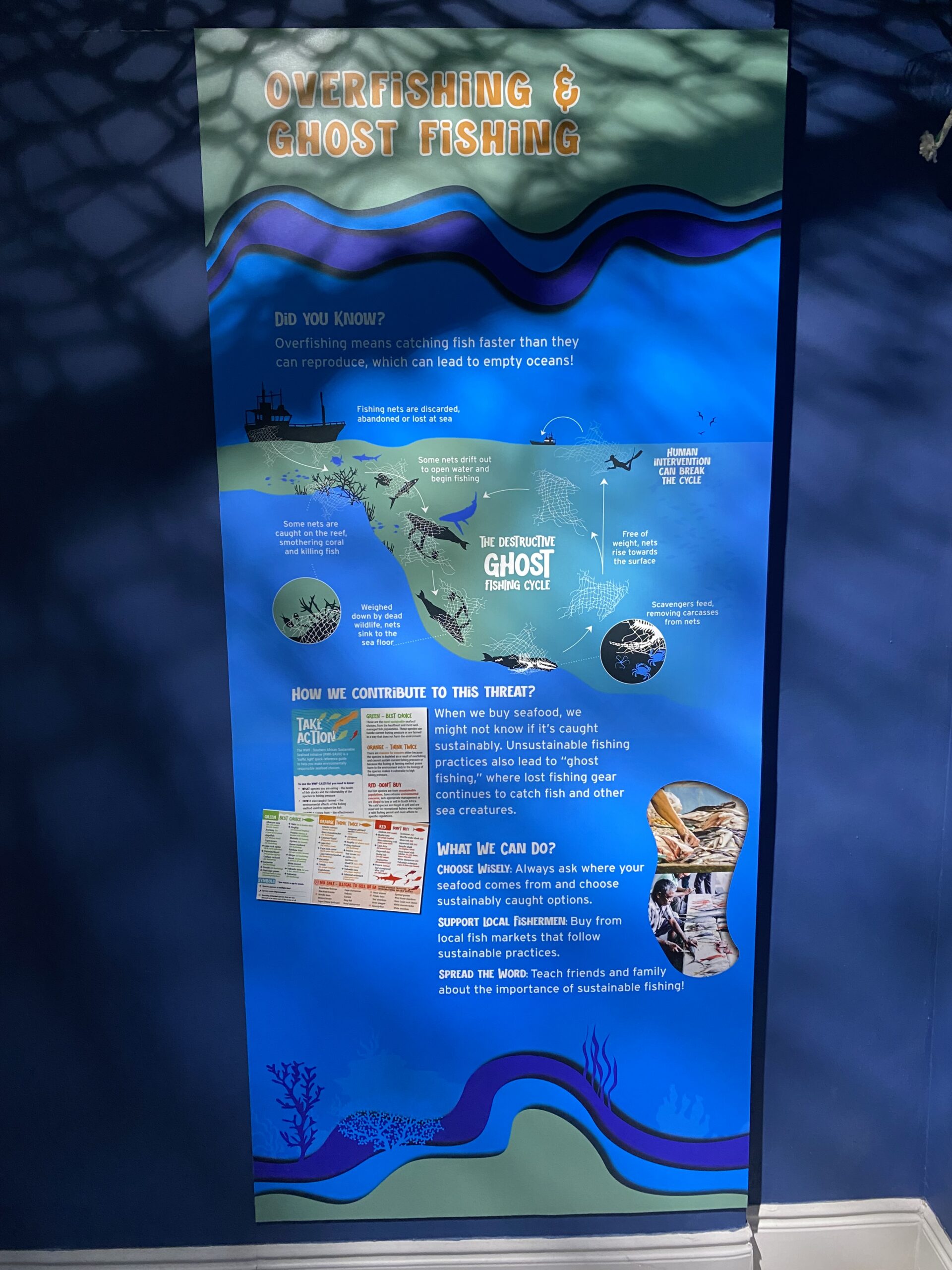
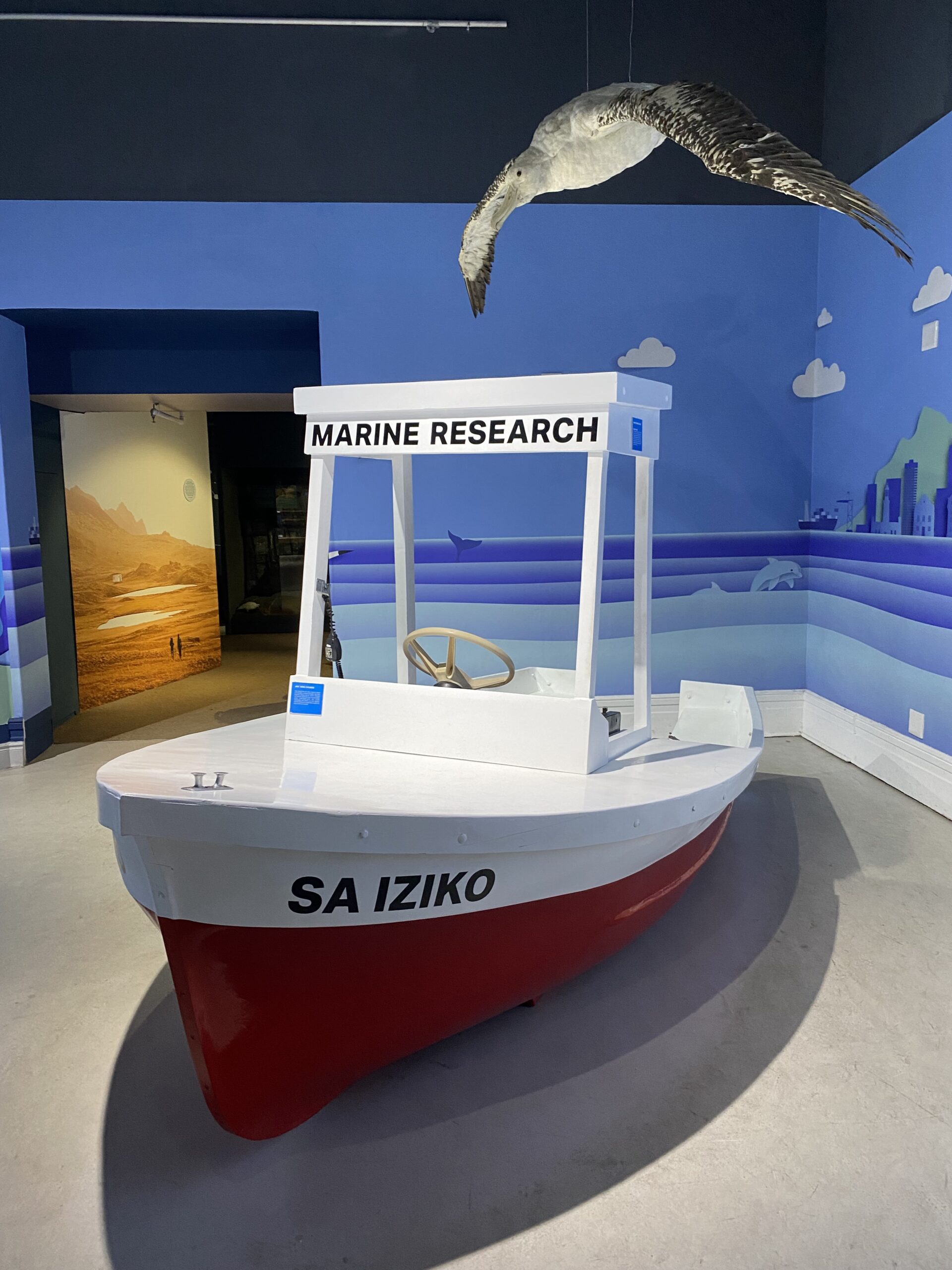
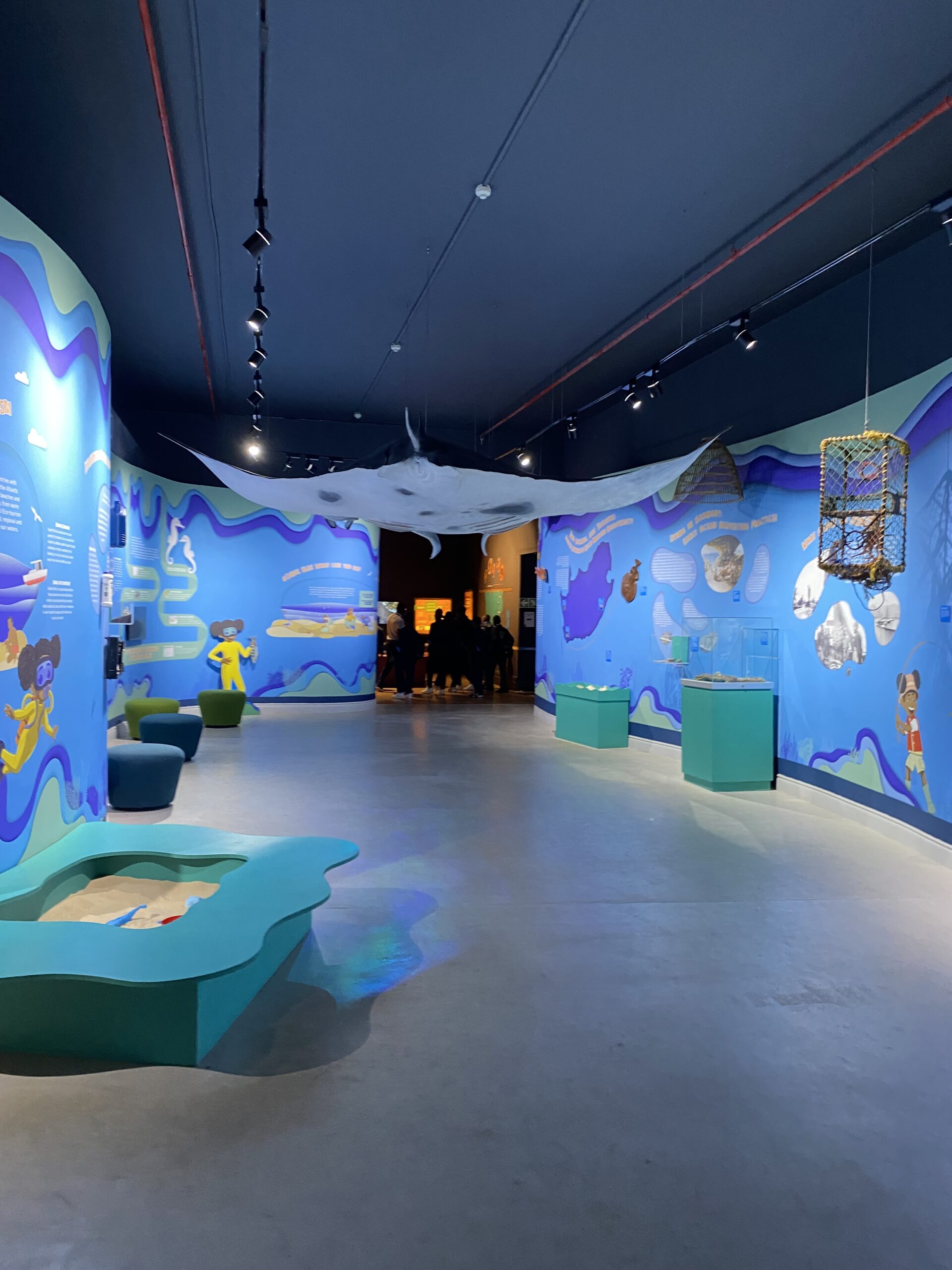
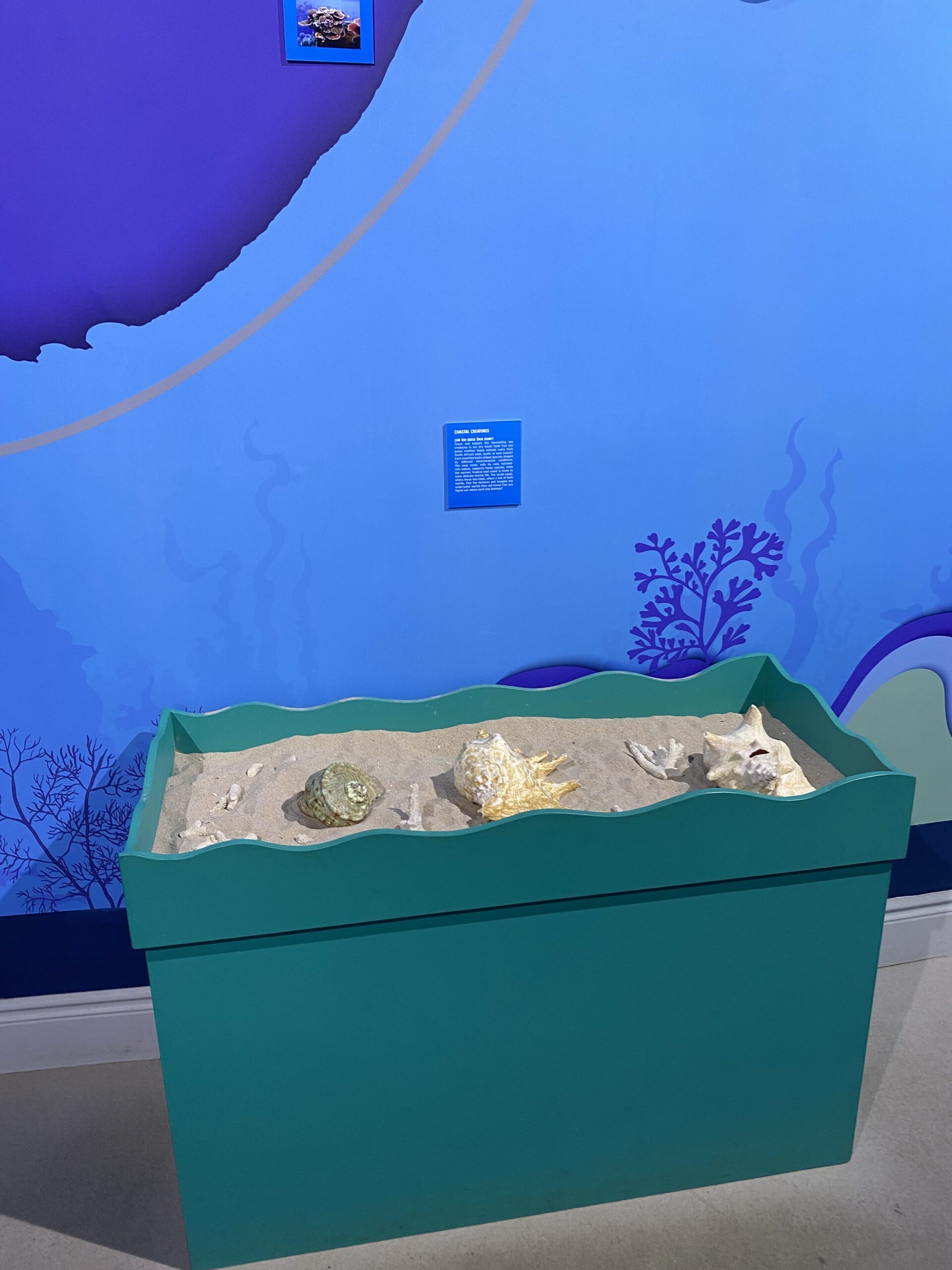
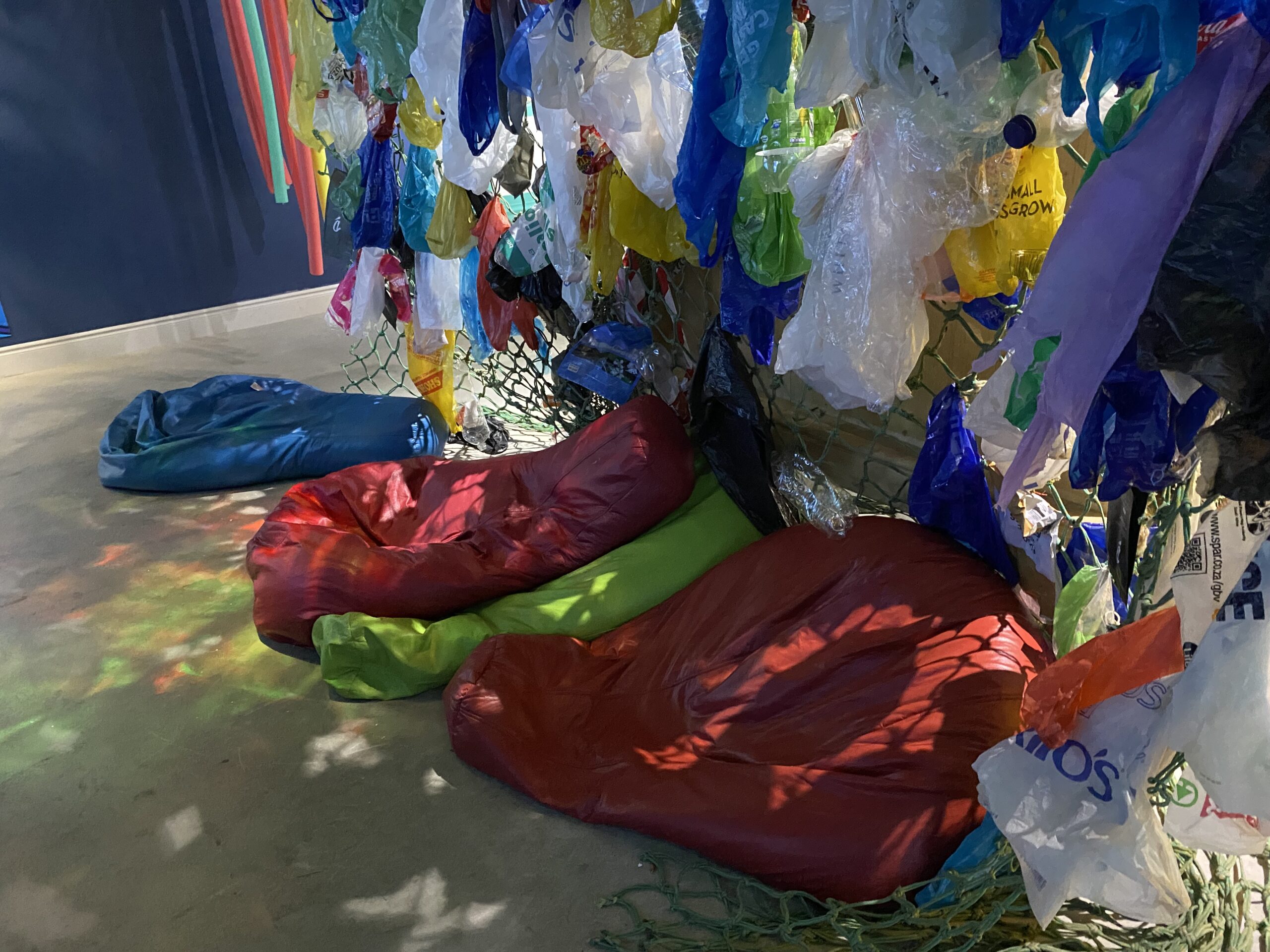
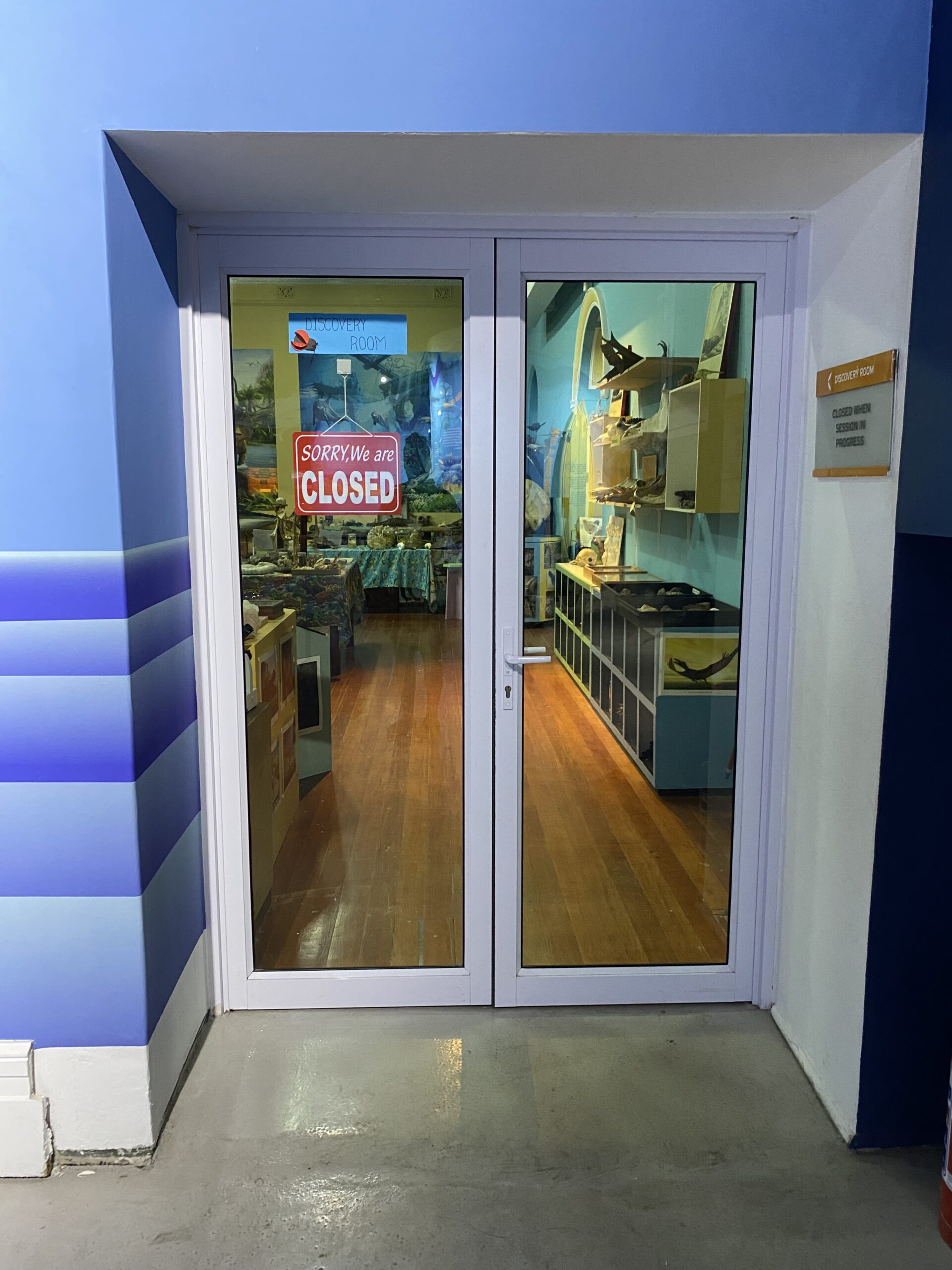
Across my earlier South African heritage site visits and the six St. Louis engagements, a consistent tension emerges between erasure and engagement as competing forces in how heritage is constructed, experienced, and sustained. In South Africa, this tension surfaced across a wide range of sites—from institutional spaces such as the South African Museum and Planetarium and Bayworld, to historically charged locations such as the District Six Museum and South End Museum, as well as community- and ecology-based sites including SANCCOB in Gqeberha, Loskop Nature Reserve, and cultural villages such as Kagodwana Cultural Village and Botshabelo Cultural Village. Across these sites, heritage is often shaped by layered histories of colonialism, forced removal, ecological framing, and curated cultural representation, where certain narratives are foregrounded while others remain partially visible or mediated through interpretation.
In St. Louis, these same dynamics reappear but are expressed through a more explicit focus on urban restructuring, racialized displacement, and institutional rebuilding. Sites such as The Ville and Mill Creek Valley highlight how once-thriving Black communities were physically and socially dismantled, while contemporary spaces attempt to reassemble memory, identity, and presence through education, exhibition, and community-led programming. Against this backdrop, engagement becomes the counter-movement to erasure: the deliberate creation of spaces, methods, and experiences that invite participation, narration, and co-authorship of meaning rather than passive consumption of history.
Taken together, these experiences have shaped my doctoral lens toward understanding heritage as an active process of engagement within landscapes marked by selective memory and structural absence. Rather than treating heritage sites as fixed repositories of the past, I now approach them as dynamic systems where meaning is continuously negotiated through interpretation, design, and community participation. This comparative framing has strengthened my focus on site engagement as a methodological practice—one that responds directly to erasure by enabling co-created, situated, and participatory forms of remembering and representation.
Heritage Dance Card 11: The Ville Walking Tour
The walking tour through The Ville on June 17 with Marvin Alonzo, Aaron, and Ms. Julia provided one of the most profound examples of crucial engagement I experienced during our week in St. Louis. Being physically present in the neighborhood fundamentally shaped my understanding of its history. Walking the streets made it easy to visualize how intentionally designed and remarkably walkable the community once was. Schools, businesses, churches, homes, and gathering places were situated in ways that reflected a thriving, self-sustaining Black community, including landmark institutions such as Sumner High School, which stood as a key educational anchor and symbol of academic excellence within The Ville. This was not simply a story told through photographs or maps—it was a story embedded in place.
The tour surfaced multiple truths by celebrating The Ville as a center of Black excellence while also confronting the policies and systems that contributed to its decline. Rather than portraying the neighborhood solely through a lens of victimhood, the interpreters emphasized the extraordinary accomplishments, resilience, entrepreneurship, and civic leadership that flourished there. At the same time, they invited us to grapple with the reality that such success existed within a broader context of racial segregation and structural discrimination.
The experience honored story as sacred through the voices of those who know the community intimately. Hearing Ms. Julia’s memories while standing in the places where those stories unfolded transformed history into lived experience. This fostered both historical empathy and critical civic empathy by encouraging me to consider not only what happened in The Ville, but why it happened and how those decisions continue to shape communities today.
Emotionally, I found the experience both inspiring and deeply unsettling. It was inspiring to witness the scale of Black excellence that once defined The Ville. It was also painful to recognize how a flourishing community was systematically undermined through policies and decisions rooted in racial inequity. Standing in the neighborhood made that loss tangible in a way that reading about it never could.
As I reflected on the experience, I found myself drawing immediate parallels to South Africa. Communities such as South End experienced similar forms of displacement, where vibrant neighborhoods were dismantled and generations were disconnected from place, identity, and memory. The Ville reinforced my conviction that heritage conservation must actively involve young people in rediscovering these stories. Through co-design, games, and community partnerships, heritage can become more than remembering the past—it can help communities reclaim identity, strengthen intergenerational connections, and imagine a different future.
Heritage Dance Card 12: Mill Creek Valley Exhibit
The Mill Creek Valley exhibit at the Missouri History Museum on June 18 offered a powerful example of how heritage institutions can operationalize crucial engagement through curated narrative, material culture, and layered interpretation. Unlike the embodied experience of walking through The Ville, this encounter was mediated through exhibition design, photographs, oral histories, and interpretive panels that reconstructed a community that no longer physically exists.
The exhibit was beautifully curated, with clear attentiveness to both aesthetic presentation and narrative depth. It surfaced multiple truths by presenting Mill Creek Valley not only as a site of displacement, but also as a once-thriving Black urban community shaped by entrepreneurship, cultural life, and strong social networks. It resisted a singular narrative of loss by balancing what was destroyed with what was built and sustained. This tension between vibrancy and erasure created space for visitors to engage with the complexity of urban renewal policies and their long-term consequences.
A particularly significant layer of crucial engagement came through the presence of a live interpreter who shared her own family story while engaging visitors with the exhibit content. This shifted the experience from institutional narration to personal testimony, reinforcing that Mill Creek Valley is not only historical but also intergenerationally lived. Her storytelling bridged archival history with embodied memory, deepening the sense that heritage is carried through families as well as institutions.
The exhibit also created opportunities for visitor participation through reflective prompts at the conclusion of the experience. A wall invited engagement through questions such as: What do you like about your neighborhood?; Share your own memory of or connection to Mill Creek; How will this exhibit change how you think about neighborhood stereotypes?; and What person or story in this exhibit did you especially connect with? These prompts extended interpretation beyond passive viewing and encouraged visitors to situate themselves within broader conversations about place, identity, and memory.
This reflective engagement was further extended through the Mill Creek Valley Gallery bus tour, which moved us physically through the transformed landscape of the former neighborhood. Seeing contemporary development overlaid on what was once a thriving community made absence visible in a tangible way. The installation of six hourglass pillars served as a symbolic interpretive device, marking time, loss, and transformation while attempting to hold memory within a changed urban environment. This juxtaposition of redevelopment and memorialization highlighted both continuity and rupture in the landscape.
The RAD Atlas (Radical Atlas of Ferguson, USA) provided an essential interpretive lens for making sense of this experience. It encouraged a reading of Mill Creek Valley not as a neutral or naturally evolving place, but as a spatial system shaped by policy, infrastructure, zoning, and structural decision-making. This cartographic perspective helped make visible how communities are produced, disrupted, and remembered through deliberate spatial and political processes rather than accidental change.
The experience honored story as sacred through the integration of personal narratives, archival material, and community memory. Rather than treating Mill Creek Valley as an abstract case study, it invited visitors to encounter it as a lived emotional geography. This supported historical empathy by encouraging reflection on what it means for a community to be physically erased while remaining culturally and historically present.
The exhibit also created opportunities for critical civic empathy by connecting past policy decisions to present-day urban inequities. It did not isolate displacement as a closed historical event, but instead encouraged viewers to consider ongoing patterns of spatial inequality, housing displacement, and racialized urban planning.
I did, however, find the exhibit uneven in terms of accessibility for diverse audiences, particularly in how different learning needs and engagement styles were accommodated. While the interpretive content was strong, there were moments where broader accessibility could have enhanced inclusion and deepened engagement across visitor groups.
Emotionally, the experience was both powerful and unsettling. The absence of the physical community contrasted sharply with the richness of the stories being told, requiring visitors to actively reconstruct meaning through narrative, memory, and interpretation. As a Black American from California, I also recognize that my own regional experience of Black communities differs significantly from those rooted in the Midwest. This shaped my reading of Mill Creek Valley as something both familiar in its broader themes of displacement and resilience, yet unfamiliar in its specific cultural, historical, and geographic grounding.
It is unfortunate that this is a temporary exhibit. Given its emotional depth, educational strength, and community-centered design, I hope it finds a permanent home in the future, as it is clearly an empowering and necessary contribution to public heritage interpretation.
In reflecting more broadly on this experience, I was left thinking about how thriving communities are actually built and sustained—particularly in contexts like the United States where I do not yet have a deep lived understanding of what enables long-term community stability, opportunity, and cohesion. This raised questions for me about the role of governance, policy, infrastructure, and civic participation in shaping resilient neighborhoods, and where practitioners like myself position ourselves within those systems to enable rather than unintentionally disrupt community life.
In extending the experience beyond the museum, I also purchased a commemorative T-shirt honoring the exhibit and a book from the Black America Series, The Ville: St. Louis by John A. Wright Sr. This act of collecting materials felt like an intentional continuation of engagement, allowing me to carry the narrative forward beyond the physical space. I also hope to obtain additional volumes from the series, as a way of deepening my understanding of Black urban histories in the United States.
As I reflected on this exhibit, I saw direct parallels to forced removals in South Africa, particularly in communities such as South End in Gqeberha. The exhibit reinforced my belief that heritage conservation must extend beyond preservation of physical structures to include the activation of memory, identity, and community narrative. It also strengthened my conviction that young people must be engaged as co-creators in this process, using participatory methods such as storytelling and game-based learning to reconnect fragmented histories to lived identity.
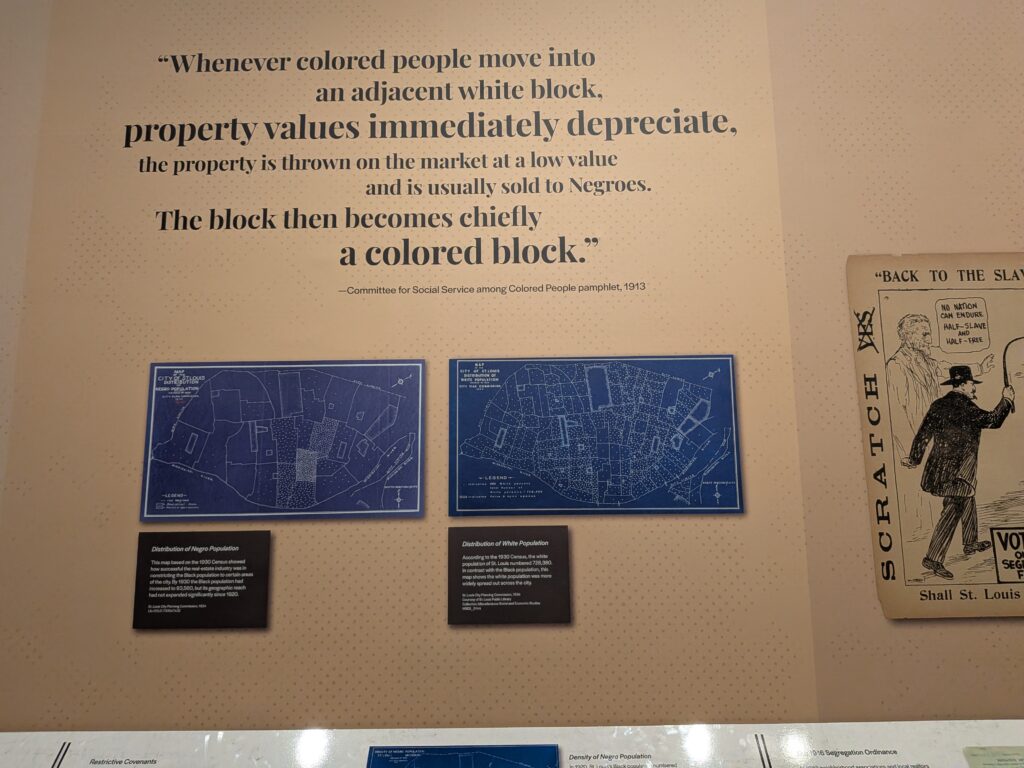
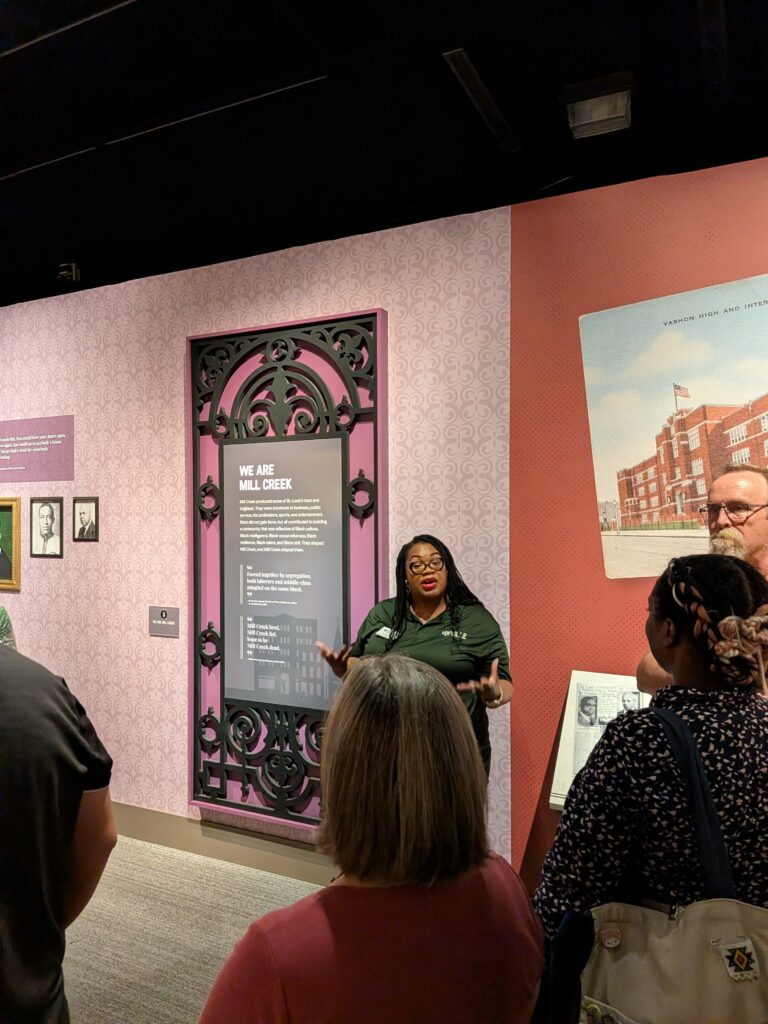
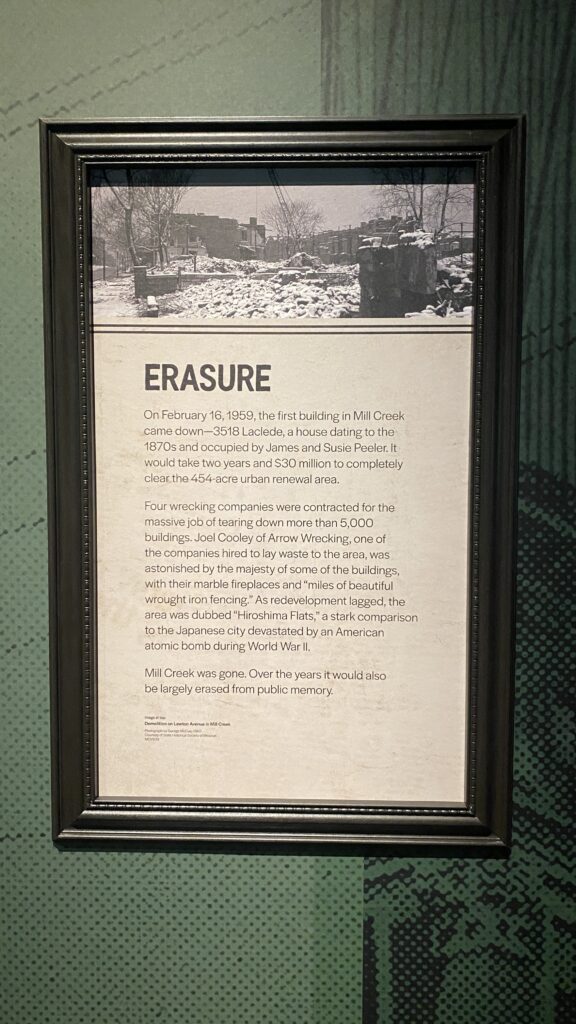
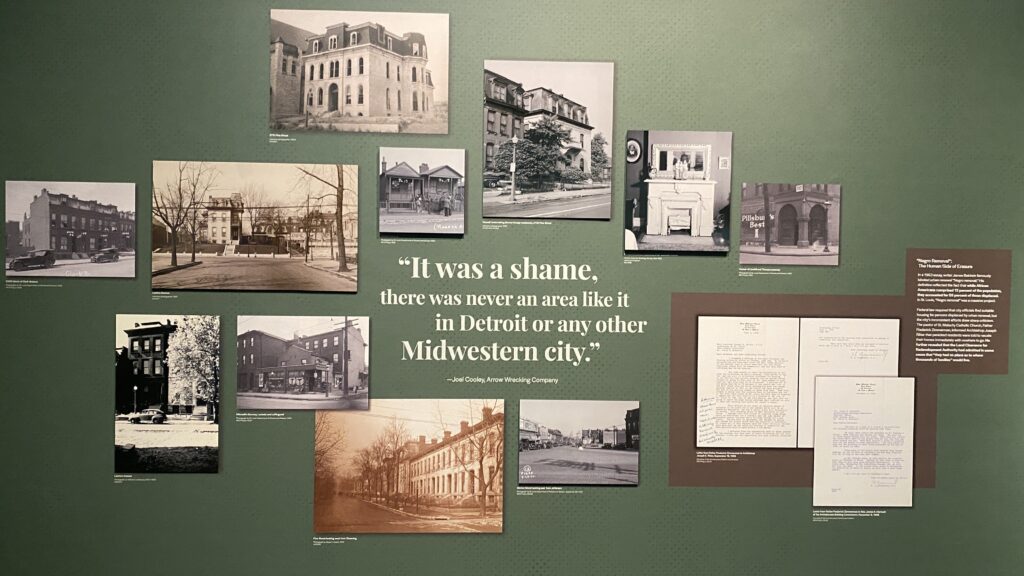
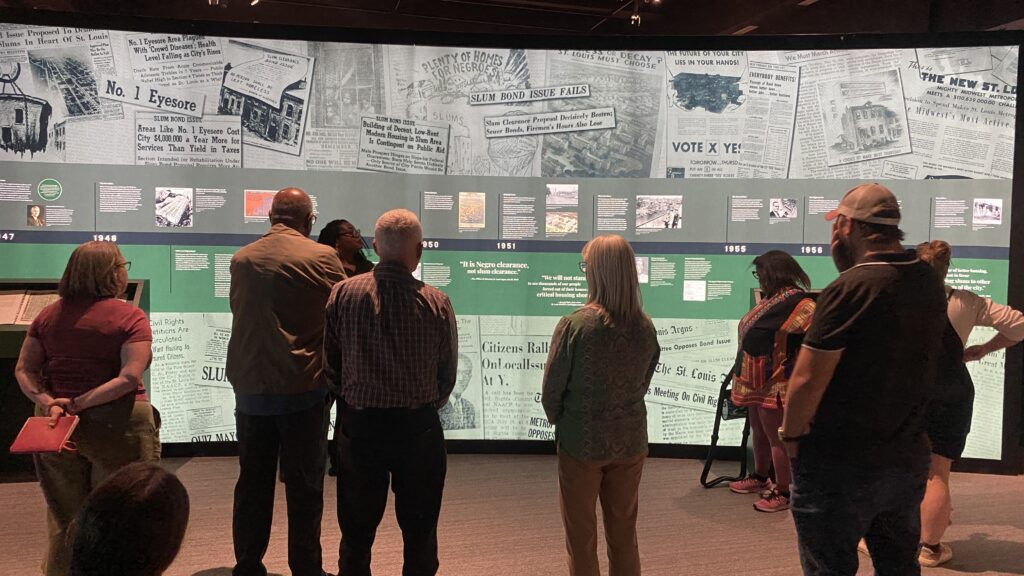
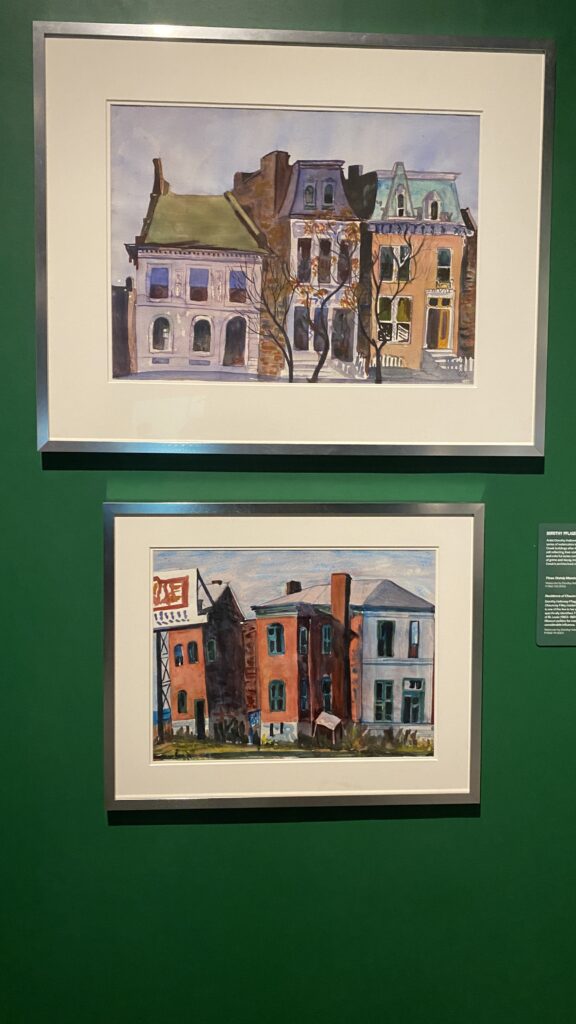
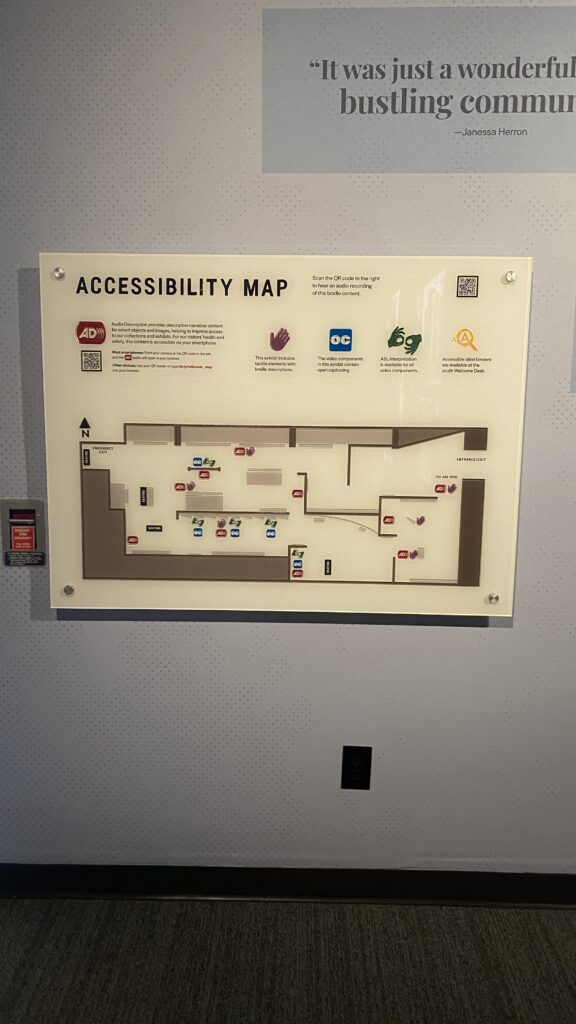
Heritage Dance Card 13: St. Louis Zoo
The Saint Louis Zoo visit on June 19, which coincided with Juneteenth, offered a different kind of public heritage and education experience shaped by environmental interpretation, accessibility, and civic space. The visit was unplanned and relatively brief, as it was uncharacteristically hot that day and many other institutions were closed. I visited with my mother, which also shaped the pace and nature of the experience.
Crucial engagement at the Zoo was present in an emerging and uneven form, primarily through interpretive signage, spatial design, and conservation messaging. One of the exhibits I had hoped to experience more fully was the polar bear installation, which had been referenced by a classmate (Hannah). This exhibit included Indigenous storytelling components and a shaded viewing design that made the visitor experience more comfortable and intentionally structured compared to other areas of the Zoo. However, I found myself wishing that the Indigenous narrative component had been delivered more through audio or oral storytelling rather than primarily through reading text on screens, as this would have created a more immersive and accessible interpretive experience.
The Zoo environment itself highlighted both the strengths and tensions of large-scale conservation spaces. It was free to enter, highly accessible, and extremely well attended, with families, children, and visitors from a wide range of backgrounds. In this sense, the institution functioned as an equalizing civic space within the city, creating opportunities for broad public engagement with animals, ecosystems, and conservation education. The spatial design, natural greenery, and overall atmosphere contributed to a sense of openness and public inclusion.
At the same time, my personal response to the animal environments was conflicted. While some exhibits were engaging, others—particularly the primate and orangutan habitats—left me unsettled, as the animals appeared constrained and possibly distressed, which may have been influenced by the heat and enclosure conditions. This reinforced my existing discomfort with zoos as institutions and my preference for more open ecological spaces such as Kruger National Park, where animals exist in less controlled environments.
Despite this tension, I was interested in observing how interpretation was designed to shape visitor engagement. The Zoo demonstrated how cities can make conservation education widely accessible, but also how interpretation often relies on simplified messaging rather than deeper critical engagement with ethical questions around captivity, habitat, and conservation practice.
Emotionally, the visit was mixed. The polar bear exhibit was unexpectedly compelling, particularly watching the young animal swim and move comfortably in the water, which created moments of lightness and curiosity within the visit. At the same time, the broader experience raised questions for me about animal welfare, the ethics of display, and the limits of interpretation in mediated natural environments.
Overall, the Zoo functioned as a highly accessible public space that brings together diverse audiences and introduces conservation ideas at scale. However, from a crucial engagement perspective, interpretation remained partial—effective in accessibility and awareness-building, but limited in its ability to facilitate deeper critical reflection on the systems that structure human–animal relationships.
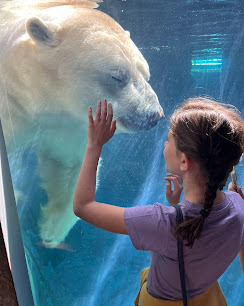
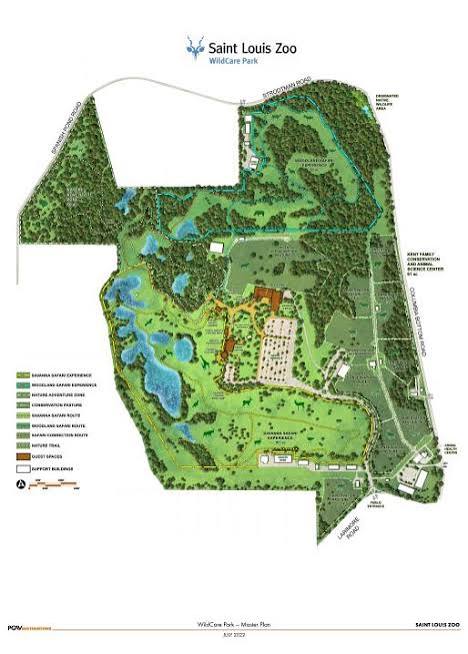
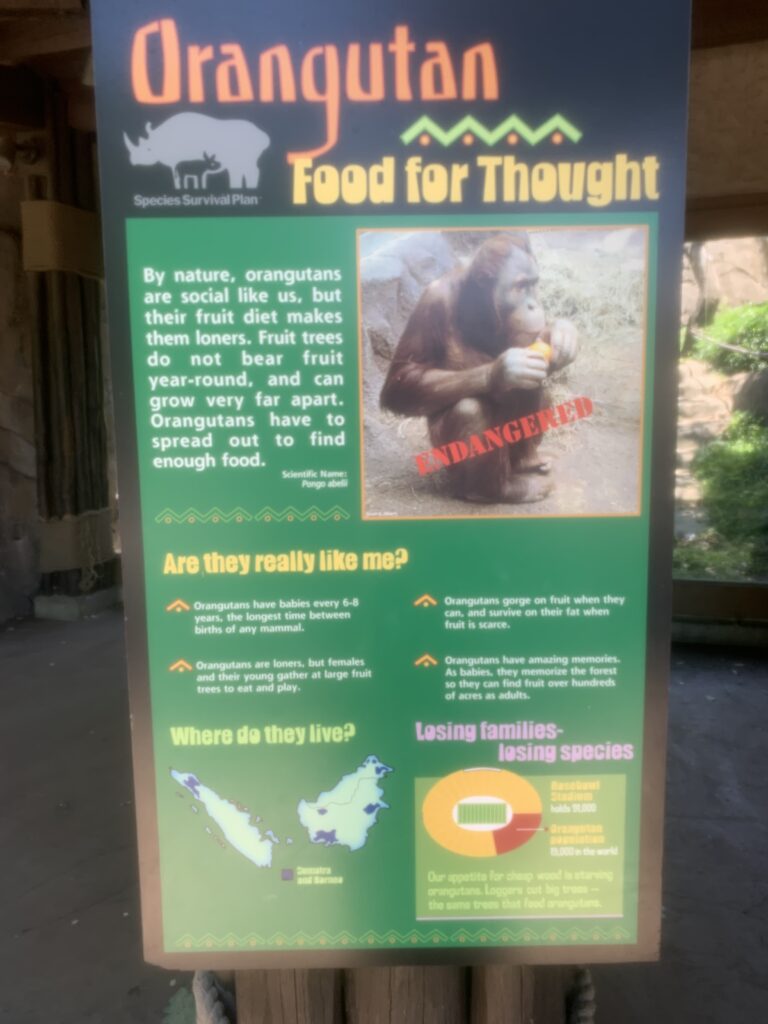
Heritage Dance Card 14: The Drip
The Drip, visited on June 16, offered a distinctly informal yet highly curated example of how heritage-like meaning can be expressed through contemporary cultural and social space rather than institutional interpretation. Unlike museums or structured heritage sites, this environment functioned as a living space where identity, memory, and political consciousness were embedded in design, imagery, and interaction.
My first response upon entering the space was one of sensory and emotional overstimulation. The environment immediately presented strong visual references to oppression, lived experience, and historical trauma, including imagery connected to the owner’s personal and community history. This created an atmosphere that was both confronting and intentionally evocative, setting a tone that shaped how the rest of the space was experienced.
Crucial engagement in this context was not mediated through formal interpretation, but through spatial design and layered environmental storytelling. As one moved through the passage, the experience shifted from intensity to intentional care and accessibility. The passage itself was designed to feel inclusive and welcoming, with elements that suggested comfort and safety alongside reflection. This included spaces that incorporated informal sexual health education within restroom areas, reframing even private spaces as sites of care, information, and bodily awareness.
The space also intentionally reflected community diversity through representation of different cultural identities, including Asian American community presence alongside other neighborhood identities. A curated library of banned books further positioned the space as politically aware and intellectually engaged, signaling resistance to censorship and an investment in knowledge access. These elements collectively framed the environment as one that sought to hold multiple truths simultaneously.
Within the coworking and eating area—designed to feel like a shared living room—there were layered visual representations of different people, identities, and cultural expressions. This created a sense of communal multiplicity, where identity was not singular but co-present and visible. The inclusion of a children’s play area in the back corner further extended the space across generations, reinforcing its intention to serve as both social and familial infrastructure.
A particularly striking moment of reflection came from noticing how symbols within the space could carry multiple meanings depending on the viewer. I found myself perplexed by how figures could be read differently by different people, especially when I encountered representations of both Nelson Mandela and jazz great Billie Holiday, who I understand to be a distant relative through oral histories shared by my great grandmother. This raised questions about how cultural icons function in shared spaces—not as fixed meanings, but as layered symbols shaped by personal memory, ancestry, and collective interpretation. It highlighted how heritage is not only constructed by institutions, but also actively reinterpreted through lived experience and familial narrative.
From a heritage interpretation perspective, The Drip operated as a form of “living narrative space,” where meaning is not separated into exhibits but embedded in environment, design, and use. However, this also creates unevenness in interpretation. While the space is rich in symbolic and emotional content, it relies heavily on personal interpretation rather than structured framing, which can make engagement deeply subjective and at times overwhelming.
Emotionally, the experience moved between discomfort, curiosity, and appreciation. The initial intensity of imagery and narrative gave way to recognition of intentional care in how different audiences were considered and accommodated within the space. It demonstrated how cultural environments can simultaneously hold trauma, resistance, community care, and everyday life within a single spatial experience.
As I reflected on this visit, I considered how heritage can exist beyond formal institutions and into designed social environments that actively shape how people feel, learn, and interact. It also reinforced the importance of intentional design when working with layered histories and diverse audiences, particularly when spaces aim to hold both memory and present-day community needs.
Heritage Dance Card 15: Missouri History Museum & Wallace H. Smith Gallery Experience
On June 15, at the beginning of our St. Louis heritage experiences, I visited the Missouri History Museum and the Wallace H. Smith Gallery of Art within the St. Louis Mercantile Library at the University of Missouri–St. Louis. This early encounter provided an important foundation for understanding how interpretive design shapes visitor engagement across formal heritage and museum spaces.
Within the Missouri History Museum, I observed an interpretive session where a museum interpreter presented historical content directly to visitors. The delivery relied heavily on reading from prepared notes, which created a structured and highly scripted form of interpretation. While the content was informative and accessible, the reliance on written text limited opportunities for dialogue, responsiveness, and deeper interaction with visitors. From a crucial engagement perspective, the experience functioned primarily as information delivery rather than participatory meaning-making.
Emotionally, I found myself largely disengaged from this interpretive moment. Rather than feeling moved or intellectually stimulated, the experience felt flat and repetitive, which reduced my level of attention and connection to the content. I also became aware of a sense of sympathy toward the interpreter, who appeared constrained by the format of delivery and limited in their ability to adapt or expand beyond the script. This highlighted the emotional labor involved in interpretive work and the impact that structural constraints can have on performance and audience engagement.
This interpretive moment existed within a broader curated environment at the Wallace H. Smith Gallery of Art, where Casting a Long Shadow: Frederick Oakes Sylvester & His Circle framed artistic production through networks of influence, mentorship, and cultural relationship. Rather than presenting artworks or historical materials in isolation, the exhibition positioned them within interconnected lineages of creative and intellectual exchange, emphasizing how meaning is constructed through relationships across time and institutions.
Taken together, this visit highlighted how different interpretive modes shape crucial engagement within a single institutional landscape. The scripted interpreter session demonstrated the limitations of rigid delivery in fostering interaction, while the curated exhibition demonstrated the reflective potential of archival and artistic framing. Both approaches offered insight into interpretive practice, yet both also revealed limits in participatory engagement, reinforcing that crucial engagement is uneven and highly dependent on interpretive design.
Emotionally, the experience was largely observational and detached, with moments of frustration at the lack of interpretive dynamism. This reinforced my awareness of how interpretive choices influence not only what is communicated, but how audiences are positioned within the learning and meaning-making process.
Overall, this visit established an early reference point for the broader St. Louis heritage journey, reinforcing that heritage interpretation is not inherent in content alone, but produced through method, framing, delivery, and audience engagement design.
Heritage Dance Card 16: North County Innovation Center
On June 16, I visited the North County Innovation Center with Dr. Darius Williams as part of our St. Louis heritage learning experience. Dr. Williams is part of HL2, which added an additional layer of continuity and relational connection to the broader program ecosystem we are engaged in.
This site offered a different but important form of engagement, situated outside traditional museum or gallery environments and instead grounded in community development, innovation, and youth-focused programming. What stood out most was how learning, identity, and community empowerment were being actively embedded into a working innovation space rather than being presented as abstract concepts.
A central component of the experience was Dr. Williams’ invitation for members of our cohort to create a mini-museum as part of the engagement process. As part of our doctoral studies, we are examining effective site engagement, and Theresa has positioned NCIC as a site of exploration where we are considering how we might design and support the center in representing its own community narratives. This shifted the experience from observation to co-creation, positioning us as active participants in constructing meaning rather than passive recipients of content. It reinforced the idea that heritage interpretation can be produced through design, storytelling, and participatory practice.
This approach strongly resonated with models such as the Polklore Micro-Museum, which demonstrates how community members can contribute personal objects, oral histories, and lived experience to shape collective memory-making. In both cases, heritage is not treated as something delivered by institutions, but something assembled through participation, storytelling, and local authorship. This provides a useful parallel for thinking about The Ville and similar historically significant communities, which functioned not only as cultural spaces but also as important economic hubs. In this sense, NCIC reflects an attempt to reimagine and recreate that kind of community-based economic and cultural infrastructure in a 21st-century context, where lived experience, memory, and entrepreneurship intersect as active forms of place-making.
The broader campus context also contributed to the interpretive significance of the site. The presence of a bank on campus, alongside infrastructure such as a church-owned hub and preschool, illustrated how multiple systems—financial, spiritual, and educational—were intentionally integrated into a single community ecosystem. The fact that the church had purchased and developed the hub emphasized a model of community-led investment and long-term infrastructural commitment rather than short-term programming. This also reflects the historical role of the Black church as a foundational institution in thriving Black communities, often serving not only as a spiritual center but also as an anchor for economic development, education, mutual aid, and political organizing. In this context, the church-led development of the hub continues a legacy of institution-building that has historically supported community resilience and collective advancement.
From a crucial engagement perspective, the experience demonstrated an action-oriented form of interpretive practice. Rather than engaging with preserved heritage materials or curated narratives, meaning-making emerged through dialogue, visioning, and applied discussion about community development and future-building. The emphasis was less on interpreting the past in a traditional sense and more on shaping pathways for present and future community transformation.
Dr. Williams also emphasized the importance of generational wealth and ensuring that Black communities have access to the tools, systems, and opportunities needed to build and sustain it. This introduced a direct connection between heritage, economic justice, and structural agency, positioning community development not only as cultural work but also as material and financial empowerment.
The center also included a dedicated podcast room for members, reinforcing the importance of narrative production and giving participants tools to generate and distribute their own stories. Throughout the space, visual art and multimedia installations created a layered interpretive environment that blended aesthetics, identity, and narrative construction.
The center itself is deeply connected to the legacy of Ferguson and the broader context of Mike Brown’s murder, which frames the space as part of an ongoing response to racialized violence, community disruption, and structural inequality. This grounding gives the innovation space a strong historical and political context, where innovation is not neutral but directly tied to questions of justice, memory, and rebuilding community futures.
What struck me personally was a strong sense of excitement and motivation. I was “stoked” to observe how ideas around leadership, education, and community development were being translated into real-world practice within a local context. This energy was connected to seeing how youth and community engagement were not theoretical goals but active priorities within the space.
The experience also reinforced key themes from the broader St. Louis heritage journey, particularly the importance of youth co-design, place-based identity work, and community-driven narrative building. It highlighted how crucial engagement can extend beyond heritage institutions into spaces that actively work on rebuilding community capacity and agency.
Overall, the visit to the North County Innovation Center demonstrated that heritage-related practice is not limited to preservation or interpretation of the past, but can also involve the creation of futures through education, leadership development, and community-based innovation rooted in lived histories, structural awareness, and ongoing struggles for justice.